
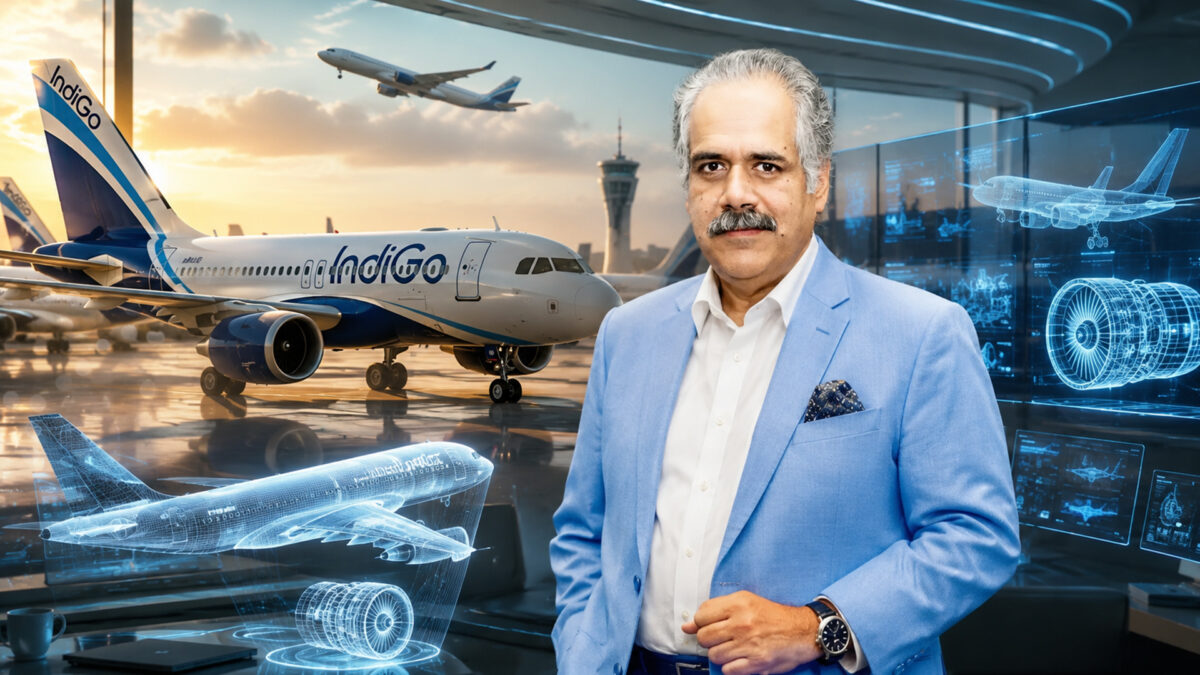
IndiGo will likely wait until 2030 before deciding on its next major aircraft order, as the airline wants to assess developments in next-generation aircraft before making another long-term fleet commitment.
Rahul Bhatia, Managing Director and promoter of IndiGo, said the airline would evaluate emerging aircraft technologies and their operational benefits before placing its next large order. The decision comes as IndiGo already has a substantial aircraft order book that provides enough capacity for its expansion plans over the coming years.
IndiGo has grown into India’s largest airline and currently operates more than 440 aircraft. The carrier has also built one of the world’s largest commercial aircraft order books. In 2023, it placed a landmark order for 500 Airbus A320 family aircraft, with deliveries scheduled to begin from 2030.
With such a large pipeline already secured, IndiGo does not face an immediate requirement to place another major order. Instead, the airline plans to use the next few years to monitor developments in aircraft technology and determine which models can offer better fuel efficiency, operating economics and range.
Bhatia’s comments underline IndiGo’s intention to remain an early adopter of new aircraft technology. The airline is particularly interested in understanding how next-generation aircraft evolve before committing to another major purchase that could shape its fleet for decades.
The timing is significant because aircraft manufacturers are working on technologies aimed at improving fuel efficiency and reducing emissions. By waiting until 2030, IndiGo expects to have greater clarity on the performance, availability and commercial viability of these newer aircraft.
The airline’s existing fleet strategy also gives it flexibility. IndiGo has traditionally relied heavily on Airbus single-aisle aircraft, benefiting from fleet commonality in areas such as pilot training, maintenance and spare parts. Its large existing order book means it can continue expanding while avoiding an immediate decision on a new generation of aircraft.
International expansion remains a major priority for the airline. IndiGo has increasingly expanded beyond its traditional domestic network and is building a larger international presence. The carrier has started using Airbus A321XLR aircraft for longer international routes, giving it the ability to connect Indian cities with more overseas destinations without relying exclusively on wide-body aircraft.
IndiGo is also preparing for the arrival of Airbus A350-900 wide-body aircraft as it looks to strengthen its long-haul network. The airline has been reshaping its international strategy while balancing aircraft availability, leasing costs and demand.
The carrier’s existing fleet provides significant room for growth. IndiGo added several aircraft during the last financial year and continues to receive deliveries from its existing order book. This gives the airline time to assess whether future growth should be supported by additional A320-family aircraft, newer-generation narrow-body models or larger aircraft for long-haul operations.
The decision to wait until 2030 is therefore not an indication that IndiGo is slowing its expansion. Instead, it reflects a strategic approach to fleet planning. Aircraft purchases involve billions of dollars in long-term commitments, and choosing a particular generation too early can leave an airline operating older technology while newer and more efficient models enter the market.
For IndiGo, the next major aircraft order could consequently be more important than simply adding capacity. It could determine the technology, economics and operating model of the airline’s fleet for much of the 2030s.
Bhatia’s comments suggest that IndiGo is comfortable using its existing order book to support growth while keeping its options open. By 2030, the airline expects to have a clearer picture of which next-generation aircraft can best support its ambitions in India and international markets.