
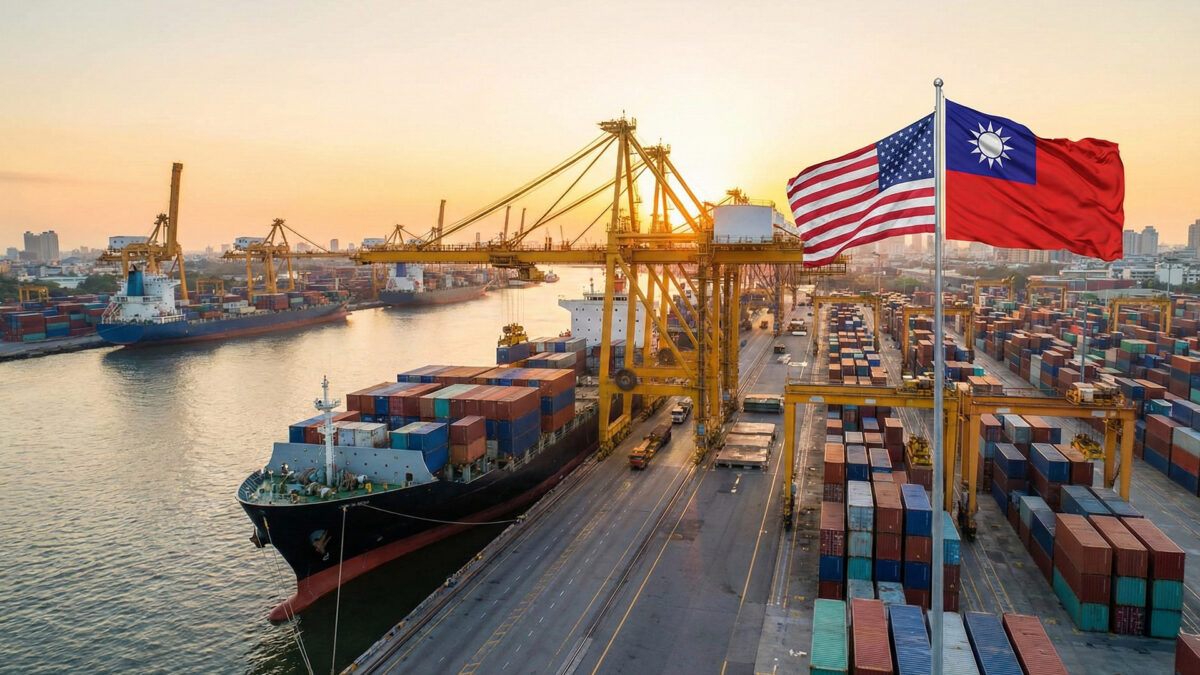
The United States and Taiwan have reached a landmark trade agreement worth $250 billion, aiming to strengthen economic ties and boost high-tech investment. The deal reduces tariffs on Taiwanese goods entering the US and secures substantial commitments from Taiwanese companies to invest in American industries, especially semiconductors, artificial intelligence, and energy.
Under the agreement, the US tariff on most Taiwanese imports will drop from 20% to 15%, bringing Taiwan’s trade treatment closer to that of other major Asia-Pacific partners, including Japan and South Korea. Certain goods, such as generic medicines and aircraft parts, will be fully exempt from tariffs. These measures are designed to encourage the expansion of Taiwanese production in the US while making imports more affordable for American consumers.
A major focus of the pact is strengthening domestic semiconductor manufacturing. The US Commerce Department described the deal as a strategic move to “reshore” advanced chip production and create high-tech industrial zones in the country. Taiwanese firms investing in US production facilities will benefit from favorable tariff treatment and support for establishing cutting-edge technology hubs.
The agreement is particularly significant for Taiwan Semiconductor Manufacturing Company (TSMC), which plans to expand its US operations, including new facilities in Arizona. This expansion aligns with Taiwan’s broader commitment to invest in American industries, supporting jobs and innovation in critical technology sectors.
While the pact has been welcomed in Taipei and Washington, China has criticized the agreement, reiterating its opposition to moves that it sees as undermining the “one-China” principle. Beijing has called on the US to adhere to its stance on Taiwan.
The deal still needs approval from Taiwan’s legislature and comes amid legal discussions in the US regarding presidential authority over tariffs. Analysts say that, once implemented, the agreement could reshape the global semiconductor supply chain, strengthen U.S.-Taiwan economic relations, and attract billions in investment, benefiting both countries’ technology and energy sectors.