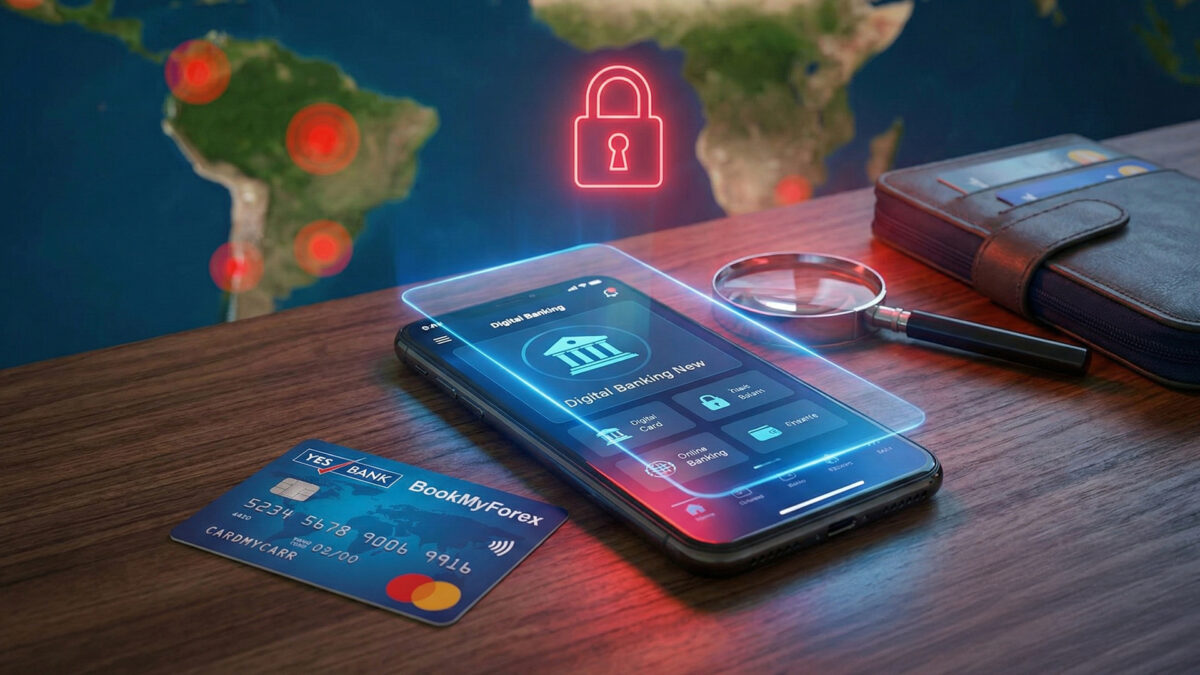
A major data breach at BookMyForex has left many customers dealing with unauthorised transactions on their prepaid forex cards, raising fresh concerns over the safety of digital payment systems.
Several users reported that money was deducted in foreign currencies from their cards for purchases made in countries they had never visited. In most cases, the cards were still with the customers, indicating that their details had been compromised rather than physically stolen.
The forex cards were issued in partnership with Yes Bank, which has now blocked the affected cards to prevent further misuse. The bank has asked customers to immediately report any suspicious transactions and has started processing chargeback requests for the disputed amounts.
BookMyForex said the breach appears to be linked to a third-party system and not its main platform. The company has begun informing impacted users and is working with the bank and payment network providers to investigate the issue and strengthen security.
Many customers, however, said they received alerts only after the fraudulent transactions had taken place. Some also claimed the cards were used internationally even though overseas usage had been disabled, pointing to possible gaps in safeguards.
Such fraud usually happens when card details , such as the number, expiry date or CVV, are leaked or accessed through vulnerable systems. They advise users to switch off international usage when not required, set spending limits and check statements regularly.
The incident has highlighted the growing risks in the fast-expanding fintech and travel card segment, which is widely used by students and international travellers.
Both BookMyForex and Yes Bank have assured customers that eligible losses will be compensated after verification and said steps are being taken to prevent a repeat of the breach.