
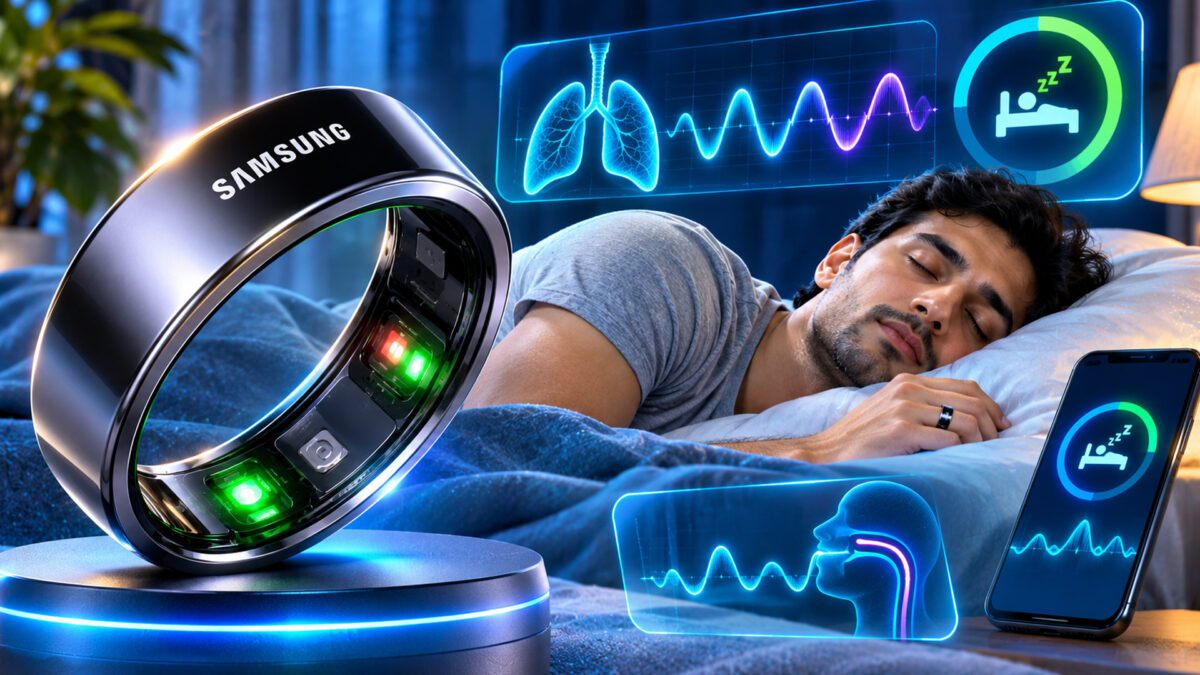
Samsung has expanded its sleep health features with the rollout of an upgraded sleep apnea detection system for the Galaxy Ring and compatible Galaxy Watches in the United States. The update, announced on November 3, 2026, gives users more detailed information about possible breathing disruptions during sleep, moving beyond the basic risk assessment offered by the earlier version.
The new feature is available through Samsung’s Health Monitor app and uses an improved algorithm to examine vital signs recorded while a person is asleep. These include changes in blood oxygen levels and body movement. By analysing these measurements, the system estimates the number of breathing disruptions occurring per hour and provides users with a clearer picture of their potential sleep apnea risk.
The biggest development is the arrival of the feature on the Galaxy Ring. Samsung says it is the first company to bring FDA-cleared, over-the-counter sleep apnea risk detection to a smart ring. The addition gives users an alternative to wearing a smartwatch overnight, particularly those who find a ring more comfortable for sleep tracking.
The Galaxy Ring is designed to be lightweight and can be worn throughout the night. This makes it a convenient option for people who want to monitor their sleep without wearing a watch. Samsung says the updated feature can provide useful information with just two nights of monitoring within a 10-day period.
Sleep apnea is a condition in which breathing repeatedly becomes interrupted or restricted during sleep. These interruptions can reduce sleep quality and leave people feeling tired during the day. Obstructive sleep apnea, the form targeted by Samsung’s screening feature, occurs when the upper airway becomes partly or completely blocked during sleep.
The condition can sometimes go unnoticed because the person experiencing it may not be aware of repeated breathing interruptions. Loud snoring, gasping during sleep, frequent waking and daytime tiredness can be warning signs. Early awareness can encourage people to seek medical advice and undergo appropriate testing.
Samsung’s upgraded system is intended to identify signs of moderate to severe obstructive sleep apnea in adults aged 18 and above. To receive a result, users must record two successful nights of sleep data within a 10-day period. Each night must include at least five hours of usable sleep measurements.
Once the required data has been collected, the Samsung Health Monitor app analyses the readings and displays the result. The feature is designed for occasional screening rather than continuous monitoring. It automatically switches off after providing a result or when the 10-day monitoring period ends.
The latest rollout follows regulatory approvals in the United States and South Korea. Samsung received US Food and Drug Administration (FDA) clearance for the upgraded feature in July 2026. South Korea’s Ministry of Food and Drug Safety (MFDS) approved it in October, allowing the company to expand its availability in both markets.
The development builds on Samsung’s earlier sleep apnea monitoring feature, which received FDA De Novo authorisation in February 2024. That approval marked an important step for wearable technology, as it allowed a consumer device to screen for signs of moderate to severe sleep apnea. The upgraded version adds more detailed information about breathing disruptions rather than offering only a basic risk assessment.
For now, Samsung has confirmed support for the Galaxy Watch9 running Wear OS 7.0 or later and the Galaxy Ring in the US. Owners of the Galaxy Watch7 and Galaxy Watch8 are also expected to receive the updated feature through future software updates. Users will need a compatible Samsung Galaxy smartphone running Android 12 or later, along with the required version of the Samsung Health Monitor app.
However, the feature comes with important limitations. Samsung has made it clear that the technology is not designed to diagnose sleep apnea or replace a medical examination. It can help identify possible warning signs, but users who receive concerning results should consult a doctor or sleep specialist for a proper assessment.
The screening tool is also not intended for people who have already been diagnosed with sleep apnea. Samsung advises certain people with existing medical conditions, including atrial fibrillation, congestive heart failure and chronic obstructive pulmonary disease, not to use the feature. It also warns that some temporary breathing problems and other circumstances may affect the accuracy of readings.
A result showing no signs of moderate to severe sleep apnea does not necessarily mean that a person is free from the condition. Wearable devices cannot identify every case, and people experiencing symptoms should seek medical advice even if their device reports no significant risk.
Samsung has said it plans to expand the feature to more countries. However, its November 3 announcement confirmed availability in the United States and regulatory approval in South Korea; it did not announce a launch date for India. Indian users will therefore have to wait for confirmation of local availability.
The update reflects the growing role of wearable technology in personal health monitoring. By bringing sleep apnea screening to both smartwatches and a smart ring, Samsung is attempting to make overnight health tracking more accessible. Its usefulness, however, will depend on users understanding that the readings are an early screening aid and not a substitute for professional medical care.