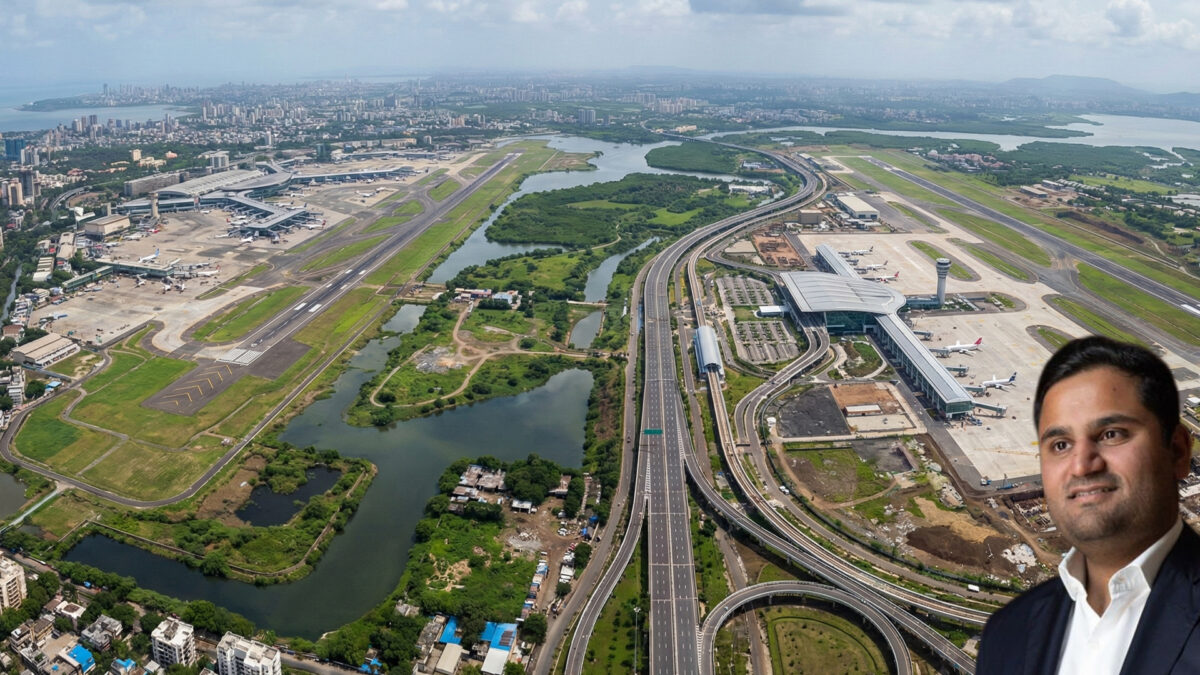
 Navi Mumbai International Airport (NMIA) marked a historic moment this week as it moved closer to full operations, celebrating the milestone with a grand drone show and the start of commercial flights. The new airport is expected to significantly reduce the burden on Mumbai’s existing Chhatrapati Shivaji Maharaj International Airport, which has been operating at near full capacity for several years.
Ahead of its operational launch, NMIA hosted a spectacular mega drone show, with more than 1,500 drones lighting up the night sky. The coordinated aerial display showcased visuals symbolising India’s progress, sustainability, aviation growth and the future of Mumbai’s connectivity. Images of aircraft, green energy themes and the airport logo were formed in the sky, drawing large crowds and creating excitement around the launch.
Commercial operations officially began on December 25, making it a landmark Christmas Day for Indian aviation. The first flight to land at the airport was an IndiGo service from Bengaluru, which was welcomed with a traditional water cannon salute. Soon after, the airport saw its first departure, with a flight heading to Hyderabad. These inaugural flights marked the start of regular passenger services at the long-awaited airport.
Speaking on the occasion, Adani Group Chairman Gautam Adani said Mumbai had been struggling with airport congestion for nearly a decade. He noted that the new airport would provide much-needed relief to passengers and airlines, while also supporting the city’s growing economic and travel needs. He described the launch as a proud moment for Mumbai and Maharashtra.
The Navi Mumbai International Airport is being developed under a public-private partnership, with Adani Airports Holdings Limited as the majority stakeholder and CIDCO, a Maharashtra government body, as the public partner. Once fully completed, the airport is planned to handle up to 90 million passengers annually, making it one of the largest airports in the country.
Airport officials highlighted that passenger comfort, smooth operations and accessibility have been key priorities in planning. Facilities have been designed to cater to both domestic and international travellers, with a focus on efficiency and affordability.
With flights now operational, NMIA is expected to play a major role in strengthening air connectivity, boosting regional development and supporting India’s fast-growing aviation sector in the years ahead.
Also Read: Gold near ₹1.39 lakh, Silver at ₹2.33 lakh