Categories
Leaders

Mukesh  Ambani announces $110 billion for AI in India

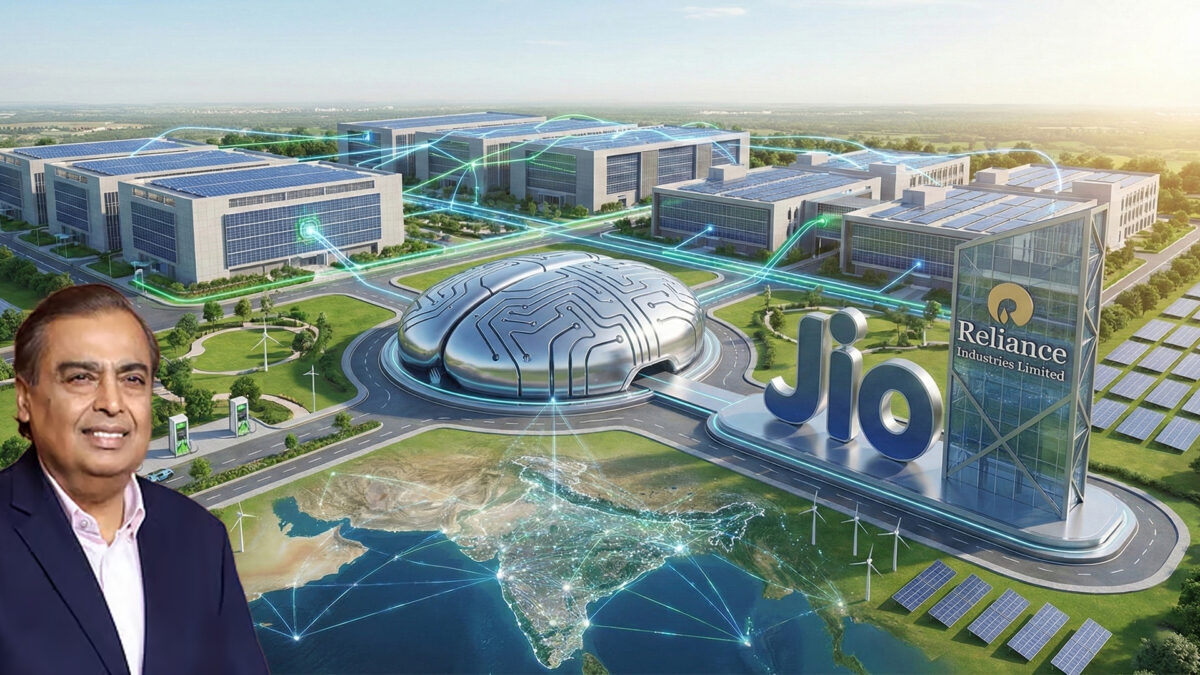
Reliance Industries, led by Mukesh Ambani, announced a $110 billion (₹10 lakh crore) investment in artificial intelligence over the next seven years. The plan, revealed at the India AI Impact Summit 2026 in New Delhi, aims to make AI services as accessible and affordable in India as mobile data has become.

Ambani highlighted that the main barrier to AI adoption in India is not talent but the high cost of computing power. To tackle this, Reliance and its telecom arm Jio are building large AI-ready data centres in Jamnagar, Gujarat, starting with 120 megawatts in 2026 and gradually expanding to gigawatt scale. The initiative will also include a nationwide edge computing network, ensuring faster AI services for both urban and rural areas.

Reliance plans to use its green energy surplus, including 10 gigawatts of solar power from Kutch and Andhra Pradesh, to reduce the cost of running these centres. Ambani stressed that the goal is to make AI tools affordable for education, healthcare, agriculture, and small businesses across India.

The summit also saw commitments from other companies. The Adani Group plans to invest $100 billion in AI-powered, renewable energy data centres by 2035. Global tech giants such as Microsoft, Google, Amazon, and Nvidia announced investments and partnerships to expand cloud services and AI infrastructure in India.

Union IT Minister Ashwini Vaishnaw said the summit secured infrastructure investment pledges exceeding $250 billion, showing strong global confidence in India’s AI potential. Leaders emphasized that India is emerging as a trusted hub for AI innovation, combining digital infrastructure with scalable technology deployment.

Also Read: OpenAI–Tata partner for 100mw AI data centre in India
Categories
Leaders

Mukesh Ambani commits Rs 7 Lakh cr to Gujarat for 5 years

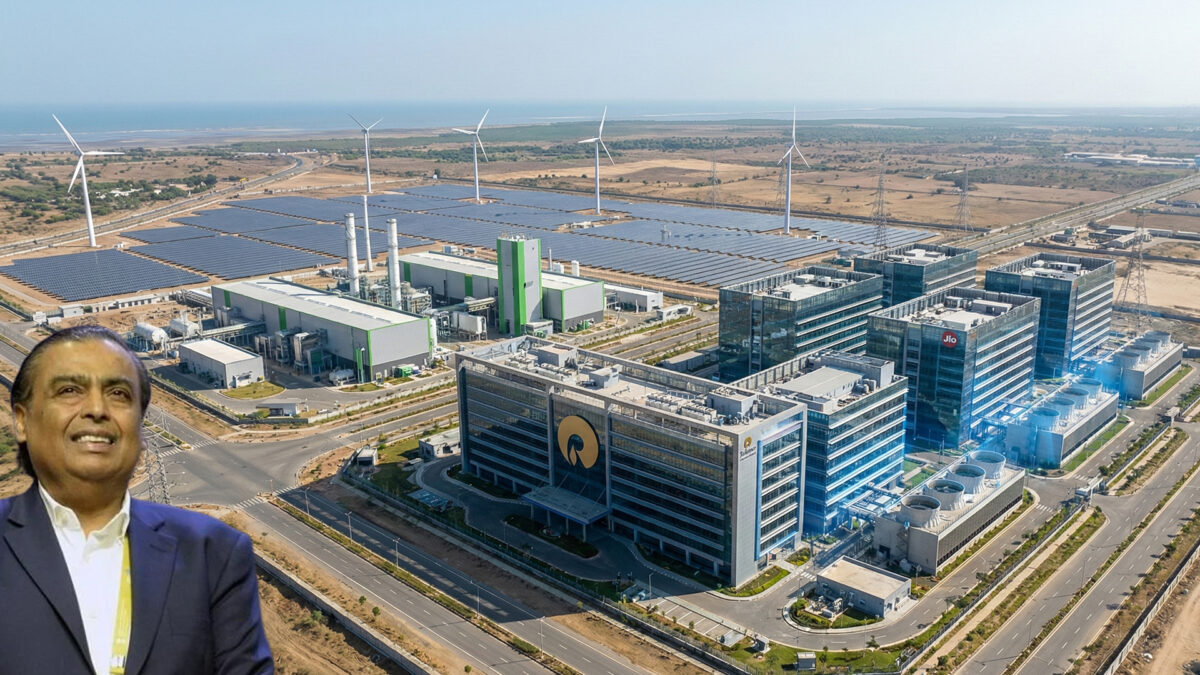
Reliance Industries Chairman Mukesh Ambani on Sunday announced an investment of Rs 7 lakh crore in Gujarat over the next five years, reaffirming the group’s long-term commitment to the state. The announcement was made at the Vibrant Gujarat Regional Conference held in Rajkot, which focused on development in the Kutch and Saurashtra regions.

Ambani said the proposed investment is nearly double what Reliance invested in Gujarat over the previous five years. He described the commitment as a strategic push to strengthen Gujarat’s role in India’s growth story, while creating large-scale employment and boosting industrial capacity.

A major share of the investment will go into transforming Jamnagar into a global clean energy hub. Reliance plans to expand projects related to solar power, green hydrogen, energy storage and advanced materials. The Jamnagar complex, already a key refining and petrochemicals centre, is expected to evolve into a major exporter of clean energy solutions.

Reliance also plans to set up one of India’s largest AI-ready data centres in Gujarat and roll out an India-specific artificial intelligence platform through Jio. The platform is aimed at making AI accessible in Indian languages and supporting digital services across sectors.

In addition to energy and technology, the investment roadmap includes healthcare, education and sports infrastructure. Ambani said Reliance would support Gujarat’s preparations for hosting the 2036 Olympic Games, if India’s bid succeeds.

At the same event, Adani Ports and SEZ Managing Director Karan Adani announced a Rs 1.5 lakh crore investment plan for Mundra, including port expansion and a large renewable energy park. Together, the announcements underscored Gujarat’s position as a major destination for private investment.

Also Read: Adani plans ₹1.5 lakh cr investment in Kutch

Categories
Corporate

Mukesh Ambani’s Jio eyes 2.5% IPO in 2026

Mukesh Ambani-led Reliance Jio Platforms is preparing for an initial public offering (IPO) in 2026 that could become the largest in India’s history. The company is considering selling a 2.5 per cent stake, potentially raising over $4 billion (around ₹33,000 crore) if valuations hold.

The IPO is among the most anticipated in the Indian market, reflecting Jio’s rapid growth since its launch and its expansion into telecommunications, digital services, and AI. With more than 500 million subscribers, Jio is India’s biggest mobile network operator.

Valuation talks are ongoing. Investment bank Jefferies estimated Jio Platforms’ value at roughly $180 billion late last year. At that level, a 2.5 per cent stake could fetch about $4.5 billion, surpassing previous record IPOs in India. Some bankers have suggested even higher valuations, up to $200–240 billion, but final decisions on pricing and structure are yet to be made.

A key factor in the plan is a pending regulatory change that would reduce the minimum public float requirement for large IPOs from 5 per cent to 2.5 per cent. This would allow Jio to sell a smaller portion initially, generating higher investor interest and pricing tension.

Reliance executives have not publicly commented on the IPO. It remains unclear whether the offering will involve new shares, an offer-for-sale by existing shareholders, or a combination of both. Morgan Stanley and Kotak have been engaged to prepare the IPO prospectus, a regulatory requirement for listing.

If completed, the listing would energize India’s IPO market, which ranked among the world’s top markets in 2025. Jio’s entry could set a new benchmark for technology and telecom valuations in India and provide an exit for early investors who backed the company during its rapid growth phase.

The IPO would also highlight Mukesh Ambani’s strategy to unlock value from Reliance Jio Platforms while maintaining strong control over the company’s long-term vision.

Also Read: US lets India buy Venezuelan oil

Categories
Leaders

India’s Top Philanthropists Give ₹10,380 Cr

India’s wealthiest are giving bigger donations than ever, with a clear focus on education and social impact. According to the EdelGive Hurun India Philanthropy List 2025, total contributions by the country’s top philanthropists rose to ₹10,380 crore in 2024–25, up 85% over three years.

Shiv Nadar, founder of HCL Technologies, tops the list, donating ₹2,708 crore this year, around ₹7.4 crore per day. Over the past five years, Nadar and his family have contributed more than ₹10,120 crore, mainly through the Shiv Nadar Foundation, which supports education and social development.

Mukesh Ambani and family are second, giving ₹626 crore, largely through the Reliance Foundation, for healthcare, rural development, and education. Gautam Adani donated ₹376 crore, followed by Nandan Nilekani with ₹304 crore. Other top donors include the Hinduja family (₹298 crore), Rohini Nilekani (₹204 crore), India’s leading woman philanthropist, Sudhir and Samir Mehta (₹189 crore), and Cyrus and Adar Poonawalla (₹173 crore).

The top 25 donors have contributed nearly ₹50,000 crore in the past three years, averaging about ₹46 crore per day. Education remains the largest focus, followed by skills development and community healthcare.

Experts say the rise in structured philanthropy shows that India’s wealthy are increasingly aiming for long-term social impact, rather than one-off charity. By using foundations and institutional channels, donations are becoming more transparent, measurable, and aligned with national development goals. Large-scale contributions like these could play a crucial role in strengthening India’s education, healthcare, and research systems.

Also Read: Infosys Sets Nov 14 Record Date for ₹18,000 Cr Buyback