
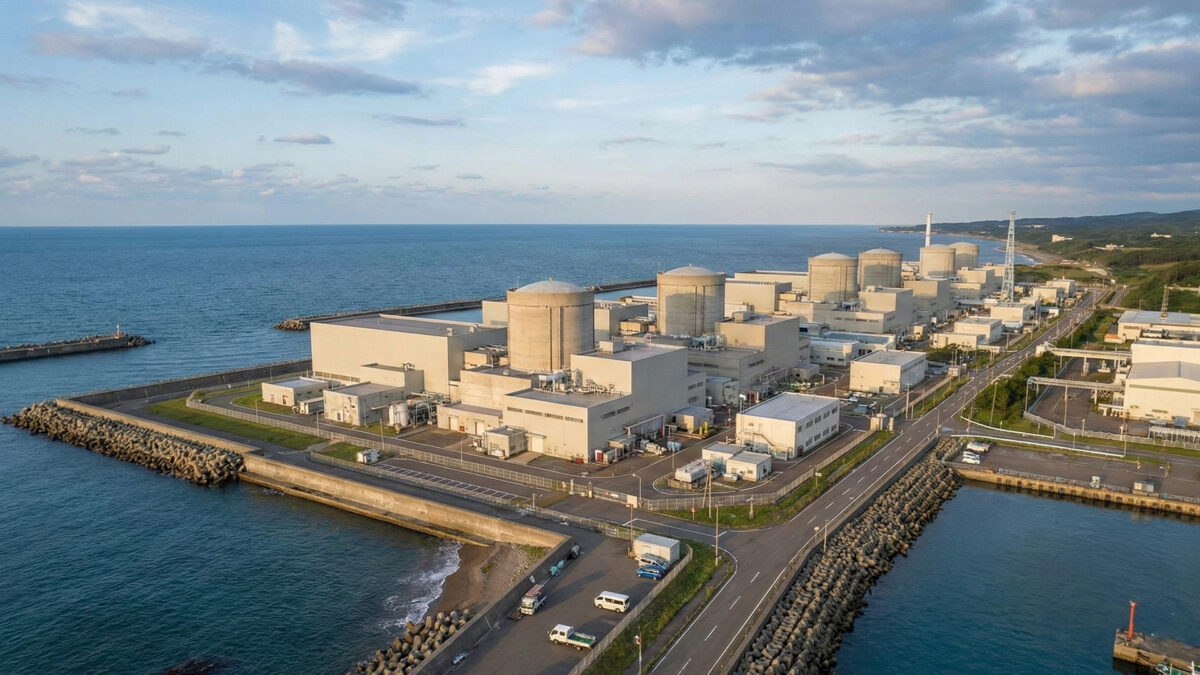
Japan has officially taken a major step toward restarting the Kashiwazaki-Kariwa nuclear power plant, the world’s largest in terms of electricity-generating capacity. The plant, located in Niigata Prefecture about 220 km northwest of Tokyo, has been idle since the 2011 Fukushima disaster, which led to the suspension of nearly all nuclear reactors in Japan.
On 22 December 2025, the Niigata Prefectural Assembly approved Governor Hideyo Hanazumi’s decision to allow the plant’s restart, effectively clearing the final local requirement needed for operations to resume. The decision enables Tokyo Electric Power Company (TEPCO), the plant’s operator, to move forward with safety inspections, operational checks, and preparation for restarting the reactors.
The facility has a total generating capacity of nearly 8,000 megawatts, making it a crucial source of electricity for Japan. TEPCO expects to bring at least one reactor online by early 2026, pending final regulatory and safety approvals. Restarting the plant could help the country reduce its reliance on imported fossil fuels and stabilize electricity costs, a pressing concern given Japan’s energy demands and global energy price volatility.
The restart comes amid Japan’s broader energy strategy, which aims to increase nuclear power’s share of electricity production to enhance energy security and meet climate goals. Since 2011, Japan has gradually restarted 14 of its 33 operable reactors under stringent safety protocols, but Kashiwazaki-Kariwa is the first major TEPCO plant to return to service.
Public opinion remains divided. Some residents and safety advocates continue to express concerns about nuclear risks, recalling the Fukushima accident’s devastating effects. Others, however, support the restart due to the potential economic and energy benefits, highlighting the importance of a reliable domestic power supply for households and industries.
In summary, the restart of Kashiwazaki-Kariwa represents both a milestone in Japan’s post-Fukushima nuclear journey and a critical step in its efforts to secure stable, sustainable energy. With local backing and careful planning, the plant is poised to play a central role in meeting the country’s future electricity needs while balancing public safety concerns.