Categories
Beyond

ISRO launches heaviest commercial satellite on LVM3

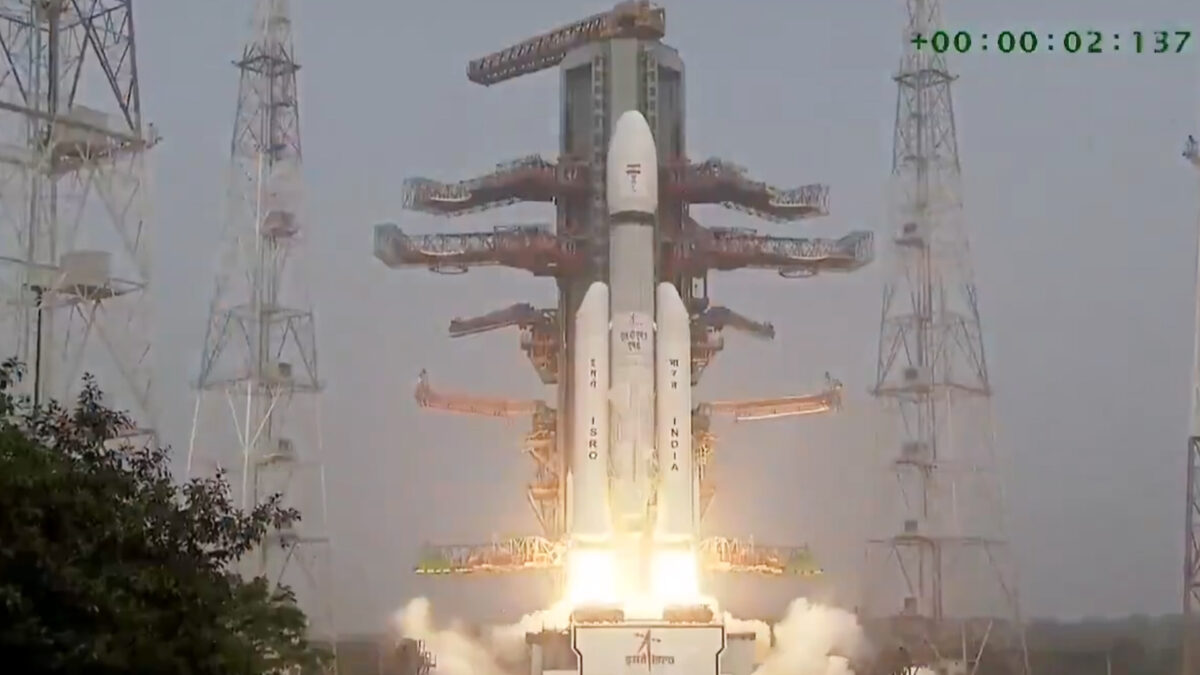
ISRO added another major success to its record on December 24 with the launch of BlueBird Block-2, the heaviest commercial satellite ever carried by India’s LVM3 rocket. The mission, executed from Sriharikota, signals India’s steady rise as a trusted player in the global space market.

Weighing about 6,100 kg, the satellite was placed into low earth orbit using the LVM3-M6 launch vehicle. This was the rocket’s sixth operational flight and one of its most demanding missions so far, underlining ISRO’s growing capability to handle large and complex commercial payloads.

BlueBird Block-2 is designed to deliver direct-to-mobile broadband connectivity, allowing standard mobile phones to receive signals from space without special equipment. The technology is expected to help improve digital access, especially in remote and underserved regions, making the mission both commercially important and socially relevant.

The launch was carried out through NewSpace India Ltd, ISRO’s commercial arm, reflecting India’s increasing focus on monetising its space expertise. With global demand rising for low-earth-orbit satellites and cost-effective launch services, India is positioning itself as a reliable and competitive option.

Prime Minister Narendra Modi described the mission as a proud milestone, praising ISRO’s scientists and engineers for pushing India higher in advanced technology and innovation. His remarks echoed the wider national sentiment around India’s expanding footprint in space.

Beyond the technical achievement, the mission reinforces confidence in India’s space economy. Each successful commercial launch strengthens India’s reputation, attracts international partnerships, and opens new business opportunities across satellite services, manufacturing, and downstream applications.

The BlueBird Block-2 launch is another reminder that India’s space story adds so much to think beyond exploration by tapping on possibilities that create impact, trust, and global relevance.

Also Read: Nikhil Kamath, Kishore Biyani launch The Foundery for startups
Categories
Beyond

Seven launches put ISRO on fast track for March 2026

The Indian Space Research Organisation (ISRO) is gearing up for one of its most demanding operational phases in recent years, with seven space missions planned up to March 2026. The ambitious launch schedule reflects India’s expanding role in space science, commercial launches, and advanced technology development.

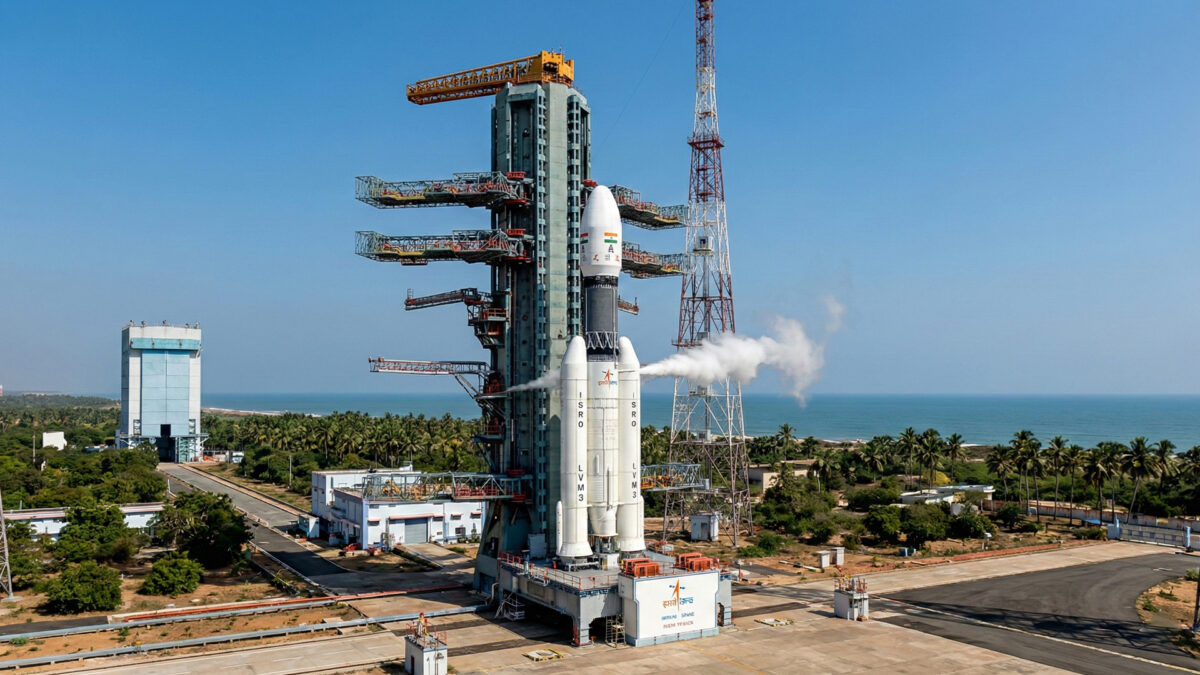
The campaign is expected to begin shortly with the launch of Bluebird-6, a large communication satellite built for US-based company AST SpaceMobile. The satellite will be carried aboard India’s heavy-lift LVM3 rocket, marking another milestone for ISRO’s commercial arm, New Space India Limited (NSIL), which is managing the international contract.

A key focus during this period will be the Gaganyaan human spaceflight programme. ISRO plans to conduct the first uncrewed Gaganyaan mission early next year. The flight will carry a humanoid robot, Vyommitra, and will test crucial systems such as launch performance, on-orbit operations, and safe re-entry and recovery of the crew module. A second uncrewed test mission is also planned before India aims to send astronauts into space by 2027.

Another major development is the growing role of Indian industry in rocket manufacturing. For the first time, a PSLV built by private industry will be launched. This mission will place Oceansat, an earth observation satellite, into orbit along with the Indo-Mauritius Joint Satellite and LEAP-2, developed by space startup Dhruva Space. The move follows a contract awarded to a consortium led by HAL and Larsen & Toubro to manufacture multiple PSLV rockets.

ISRO will also conduct additional PSLV and GSLV-Mk II missions during this period. These include launching EOS-N1, carrying several small satellites for Indian and foreign customers, and placing EOS-5 (GISAT-1A) into orbit, replacing a satellite lost due to a launch failure in 2021.

Technology demonstration will remain a priority. The PSLV-63 mission will test high-thrust electric propulsion, quantum communication techniques, and indigenous satellite components. ISRO also plans a mission using the Small Satellite Launch Vehicle (SSLV), strengthening India’s ability to serve the growing small-satellite market.

Also Read: Vodafone Idea may get 4–5 years to pay AGR dues