
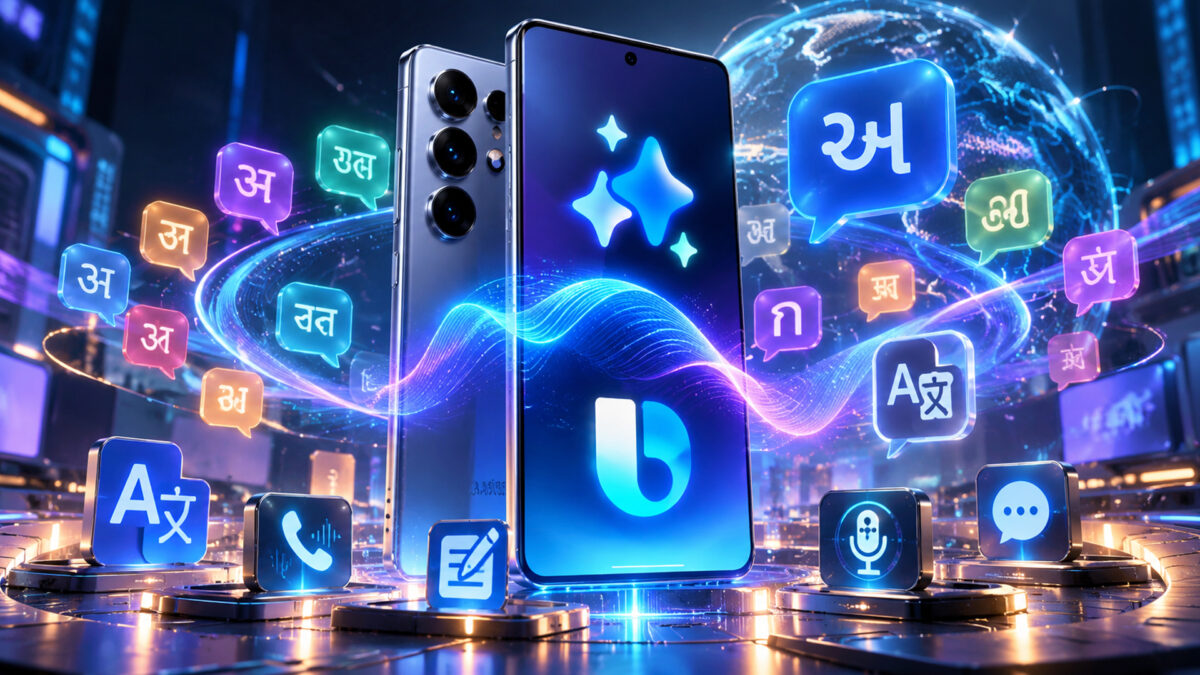
Samsung is expanding language support across its Galaxy AI tools and Bixby voice assistant, bringing its artificial intelligence features to more users worldwide. The update adds Hungarian and Malay to selected Galaxy AI features, while Bixby gains Polish, Thai and Vietnamese. The expansion is designed to make smartphone functions such as translating calls, transcribing conversations and controlling device settings more accessible to people who prefer using their own language.
Announced on October 14, the update covers several Galaxy AI tools, including Call Assist, Note Assist, Interpreter and Transcript Assist. With Hungarian and Malay added, these features now support 24 languages, expanding access to tools that help users communicate across language barriers and manage information more efficiently.
Live Translate, part of Call Assist, can translate phone conversations between supported languages. The feature can be useful for people communicating with colleagues, customers or family members who speak different languages. Interpreter is designed to support face-to-face conversations, while Note Assist and Transcript Assist help users organise notes, transcribe speech and summarise information.
The additional language options could make these tools more useful for travel, education and workplace communication. Rather than relying entirely on manual translation, users can access AI-assisted language functions directly through compatible Galaxy devices.
Samsung is also expanding Now Nudge, a Galaxy AI feature that suggests relevant actions based on the content displayed on a user’s screen. The update adds Dutch, Filipino, Gujarati, Hungarian, Malay, Romanian, Swedish and Turkish, bringing the feature’s total language support to 24.
Now Nudge is designed to make smartphone interactions more convenient by identifying possible next steps from the information on screen. The feature aims to reduce the need to navigate through menus or switch repeatedly between applications. The addition of Gujarati is particularly relevant to Indian users who prefer using a regional language for certain digital interactions.
However, language support differs between Galaxy AI features. The announcement does not mean that every AI function supports all 24 languages, and availability will depend on the particular feature, device and market.
Samsung’s Bixby voice assistant is receiving three additional languages: Polish, Thai and Vietnamese. The expansion brings Bixby’s total supported language count to 12.
Bixby allows users to control supported device functions through natural conversation. Users can describe what they want to do without needing to remember the exact name of a setting or where to find it in the phone’s menus. This can make routine tasks simpler, particularly for people who prefer speaking to navigating through multiple screens.
The addition of Polish, Thai and Vietnamese is intended to make this form of voice-based device control accessible to more users. Bixby requires a Samsung Account login and an internet connection, and its available functions can vary by country, region, language and device.
The rollout is taking place in stages. Samsung said Bixby’s new languages would begin rolling out on October 14, while the additional Galaxy AI languages would follow in the coming weeks. Some new Galaxy AI languages can be downloaded as language packs through the Settings app. The timing and availability of features may vary across compatible devices and markets.
The expansion forms part of Samsung’s broader effort to make AI-powered smartphone experiences more accessible to users across different regions. As smartphone manufacturers compete to develop more capable AI assistants, supporting more languages has become an important part of making these tools practical for everyday use.
Language support can help bridge communication gaps, but it does not guarantee identical performance in every situation. Samsung notes that Bixby may not recognise all accents, dialects or expressions. Results can vary depending on pronunciation, speaking volume and background noise. Certain device modes and activities may also limit the assistant’s availability.
The latest announcement therefore represents an expansion of existing capabilities rather than a complete overhaul of Galaxy AI. By adding languages to translation, transcription, contextual suggestions and voice controls, Samsung is seeking to make its AI tools useful to a wider group of customers.
For Galaxy users, the next step will be checking when the new language options become available on their devices. The rollout schedule, supported functions and need for separate language downloads will determine when individual users can access the expanded features.
Samsung’s expanded language support reflects its push to make Galaxy AI more accessible to users across markets. By adding regional and international languages to its AI features and Bixby, the company aims to reduce language barriers and improve everyday interactions. The rollout also strengthens Samsung’s efforts to make AI more practical and inclusive.