Categories
Beyond

Rupee rises 11 paise to ₹91.57 against dollar

Indian rupee showed a positive sign as it rose by 11 paise to ₹91.57 per US dollar in early trade on Wednesday. This came as the US dollar weakened slightly and optimism grew after India and the EU agreed on a new trade deal. The rupee opened around ₹91.60 and recovered a little to ₹91.57. Stock markets also reacted positively in early trade.

However, the rupee’s overall trend remains weak and unstable. In recent days, it has hit record lows near ₹91–₹92 per dollar because of global uncertainties and foreign investors pulling out money from India.

Trade tensions with the United States are adding pressure. Threats of tariffs have made investors cautious, leading them to prefer the US dollar over emerging market currencies like the rupee.

Foreign investment flows also play a big role. Continuous selling by foreign investors increases demand for dollars, which weakens the rupee. Analysts warn that unless more foreign money comes in or global conditions improve, the rupee may continue to struggle.

High demand for dollars for imports like oil and capital goods is another factor keeping the rupee under pressure. A slight weakening of the US dollar gives only short-term relief.

Investors are now watching key factors, such as global interest rates, foreign investments, and trade talks with the US, to see where the rupee will go next. The Reserve Bank of India is expected to step in if the currency becomes too volatile.

Also Read: Gold falls to ₹1,61,940, Silver rises to ₹3,70,100

Categories
Beyond

Rupee slides to ₹92, raising costs for imports

Rupee fell sharply to a record low of ₹92 per US dollar on January 23, 2026, before recovering slightly to ₹91.88. Experts attribute the slide to foreign investors pulling out funds and continued strong dollar demand from importers.

This depreciation affects both households and businesses. Imported goods, particularly crude oil, electronics, and machinery, are becoming more expensive. With India importing nearly 85% of its crude oil, fuel prices and inflation are expected to rise. Families face higher costs for overseas travel and education, while Non-Resident Indians (NRIs) benefit slightly as their remittances now convert into more rupees.

Exporters stand to gain from the weaker rupee, receiving more rupees for every dollar earned. However, companies that rely heavily on imported materials may see their benefits limited. Sectors such as textiles, which are less import-dependent, are likely to benefit the most.

Looking ahead, a Business Standard poll suggests the rupee could trade near ₹92.50 per dollar by the end of March 2026 if current trends persist and foreign outflows continue. Analysts point to delays in a US‑India trade deal and ongoing global uncertainties as key factors keeping the currency under pressure.

The Reserve Bank of India (RBI) has intervened at times to curb volatility, but broader global and domestic forces continue to influence the rupee. Policymakers face the challenge of balancing currency stability with inflation control and economic growth, as households, businesses, and exporters navigate the effects of a weaker rupee.

Also Read: ChatGPT cites Elon Musk’s Grokipedia in responses

Categories
Beyond

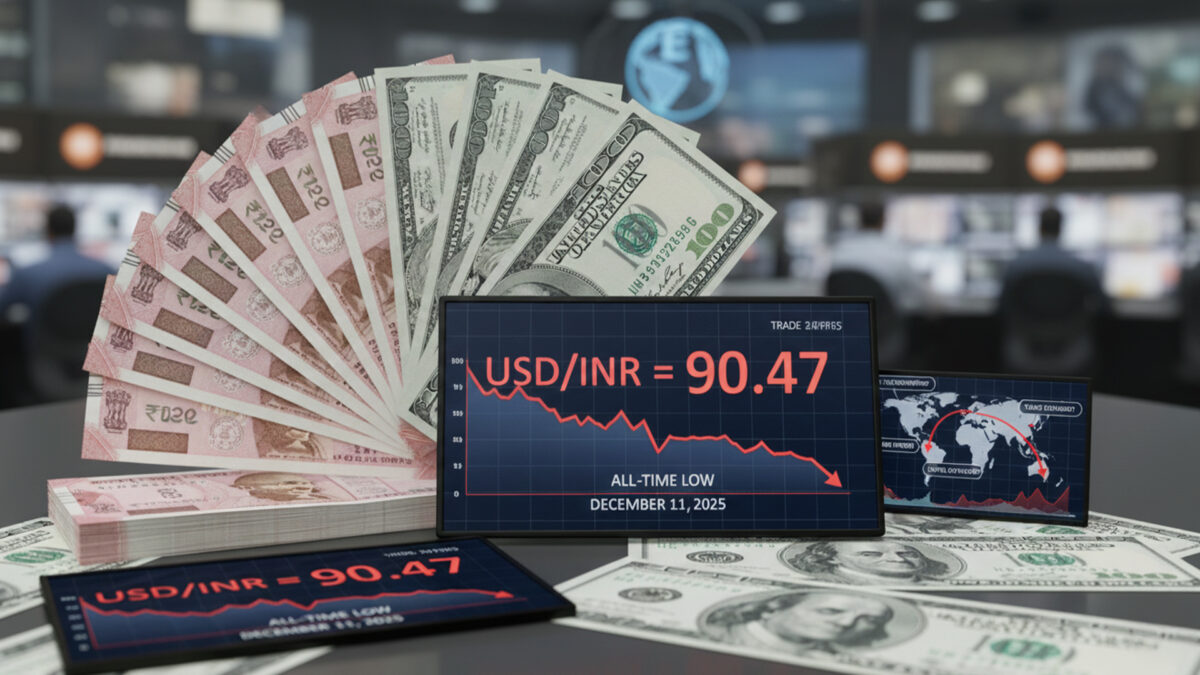
Indian Rupee hits historic low of ₹90.46 against US Dollar

The Indian rupee weakened further on Thursday, December 11, 2025, touching a historic low of ₹90.46 against the US dollar. This marks the steepest level the rupee has reached in its history, continuing the depreciation trend seen over the past few months.

Several factors contributed to the sharp fall. Ongoing global uncertainties and slow progress in trade negotiations with the United States have rattled investor confidence. At the same time, domestic demand for US dollars from companies making international payments increased pressure on the rupee. Additionally, foreign investors have been pulling funds from Indian markets, adding to the volatility.

This year, the rupee has fallen by over 5 per cent, making it one of the worst-performing Asian currencies in 2025. Analysts say the currency’s decline has been influenced by rising global crude oil prices, high import bills, and widening trade deficits, which have further strained India’s foreign exchange reserves.

In response to the slide, the Reserve Bank of India (RBI) reportedly intervened in the forex market, buying and selling dollars to stabilize the rupee. Such measures are intended to reduce sharp fluctuations and maintain market confidence.

Economists warn that the rupee may continue to face pressure in the near term unless there is progress in trade negotiations, improved foreign investment inflows, and easing of global market uncertainties.

Investors and businesses are closely monitoring the currency movements, as the fall in rupee value impacts import costs, inflation, and international trade. With the year-end approaching, all eyes are on the RBI’s interventions and global market trends to determine if the currency can recover.

Also Read: IndiGo offers Rs 10,000 vouchers to passengers