Categories
Technology

Chrome update brings bookmarks bar to Android

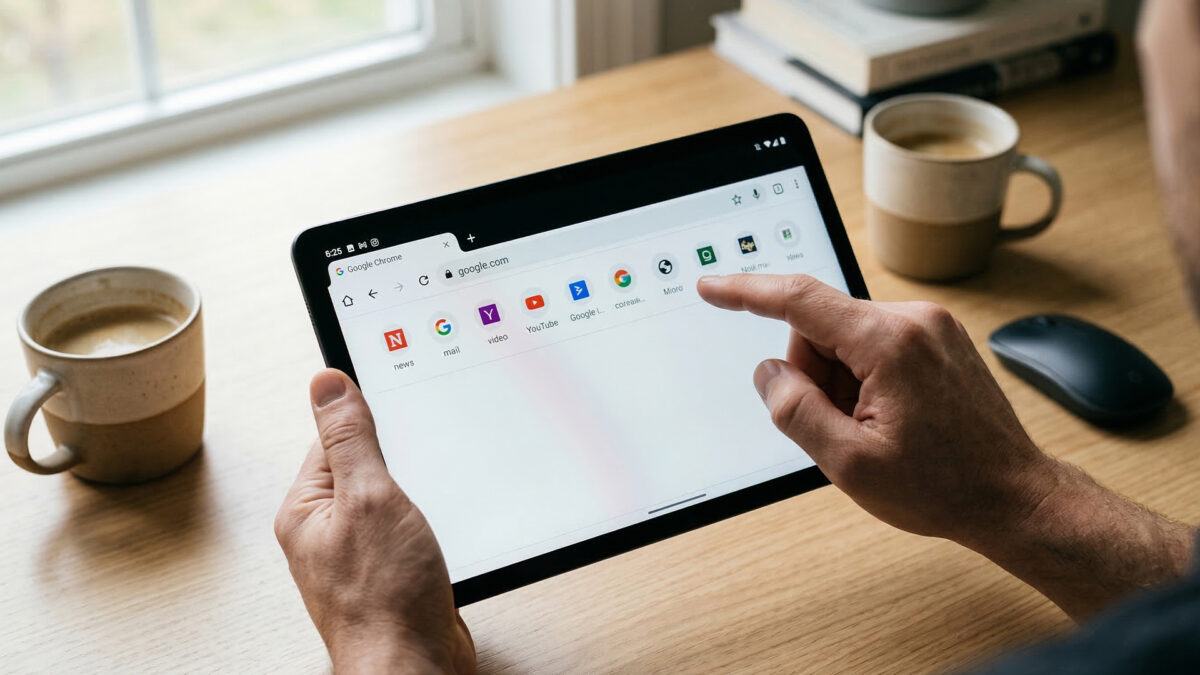
Google has begun rolling out a new update to its Chrome browser on Android that introduces a bookmarks bar for tablets and foldable devices, making it easier for users to access their favourite websites.

The feature, commonly used on desktop browsers, appears just below the address bar and displays saved websites for quick access. With a single tap, users can open frequently visited pages without navigating through the bookmarks menu.

Until now, Android users had to open the bookmarks section separately to reach saved links. The new bookmarks bar reduces that extra step, allowing quicker browsing and easier navigation—especially on devices with larger displays.

Users can also organise bookmarks into folders, helping them group websites based on categories such as work, news or entertainment. If the number of saved links exceeds the space available on the screen, an arrow icon appears at the end of the bar to show additional bookmarks.

The feature is available in the latest version of Chrome for Android and can be enabled in the browser’s settings. Users can turn it on by going to the “Appearance” section and selecting the option to show the bookmarks bar. However, the feature is mainly designed for tablets and foldable phones, meaning it may not appear on smaller smartphone screens.

As tablets and foldables become more common for productivity and multitasking, companies are increasingly adapting software to take advantage of bigger screens.

Also Read: upGrad to acquire Unacademy

Categories
Technology

Apple raises privacy concerns over Chrome

Apple has urged iPhone users to reconsider their use of Google Chrome, warning that the browser does not provide the same level of privacy protection as Apple’s Safari. The concern centres on how Chrome manages user tracking on iPhones, with Apple suggesting that certain forms of data collection may continue even when users believe they have limited tracking.

According to Apple, Safari is designed to block sophisticated tracking tools by default, including covert fingerprinting techniques that can quietly follow users across multiple websites. Chrome, by contrast, does not automatically prevent all such methods, raising questions about how much personal data may be shared without users being fully aware.

The warning comes as independent research adds weight to Apple’s claims. A recent global browser security study ranked Google Chrome as the second-poorest performer among major browsers when it comes to privacy and security. Researchers evaluated browsers on key parameters such as tracker blocking, resistance to fingerprinting and secure connections. Chrome’s high risk score indicates a greater likelihood of user data being tracked or exposed.

Despite being the most widely used browser worldwide, Chrome’s popularity has not translated into stronger privacy protections. The study found that Safari offered better safeguards straight out of the box, although it did not emerge as the best-performing browser overall.

The research also highlighted growing concerns around AI-powered browsers. One such browser ranked last for privacy after failing several basic tracking and security tests, fuelling worries that rapid innovation in AI-driven browsing may be outpacing essential privacy protections.

Also Read: Satya Nadella skips managers to hear engineers on AI