Categories
Technology

Sarvam AI beats global rivals in India tests

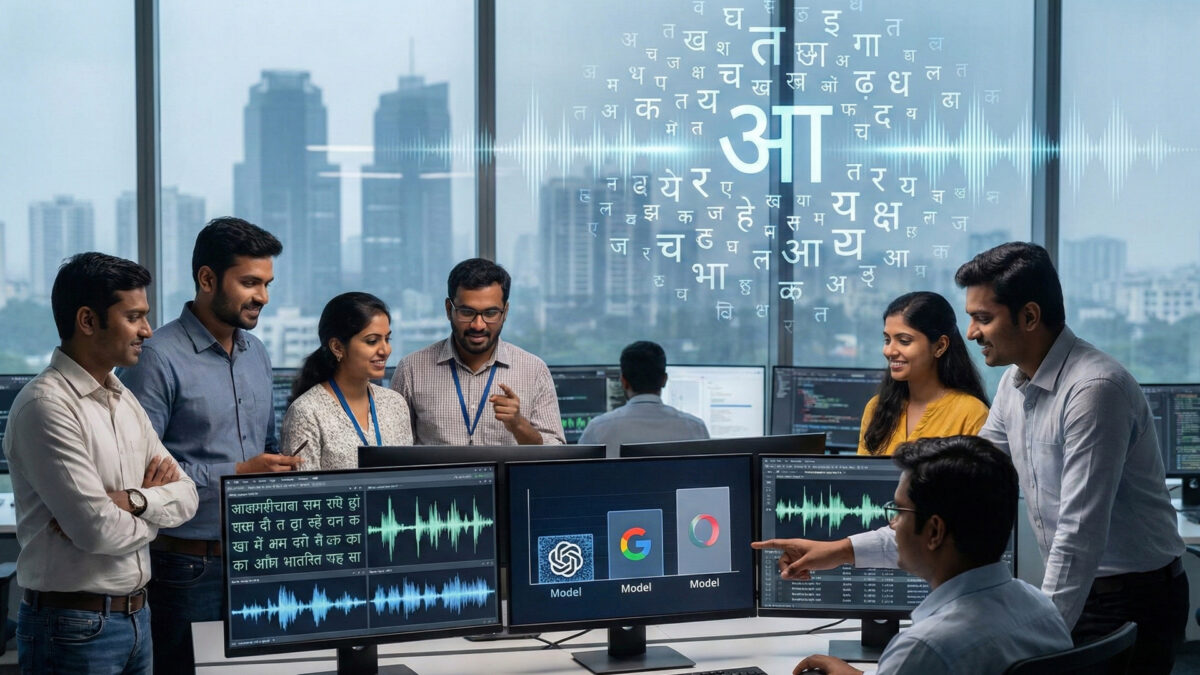
India’s artificial intelligence ecosystem has received a major boost as Sarvam AI, a Bengaluru-based startup, has outperformed global AI models such as Google Gemini and OpenAI’s ChatGPT in several benchmarks designed around India-specific use cases. The achievement has attracted international attention and highlighted the growing strength of indigenous AI innovation.

Sarvam AI’s success comes from its focus on challenges unique to India, including multilingual content, diverse scripts, and complex document formats. While many global AI models are designed for broad, international applications, they often struggle with regional languages and locally used documents. Sarvam has addressed this gap by building models specifically trained for Indian conditions.

One of its key products, Sarvam Vision, is an advanced optical character recognition (OCR) system capable of reading and understanding complex documents. These include scanned government records, handwritten text, tables, and pages containing multiple Indian languages in a single layout. In recent benchmark tests, Sarvam Vision scored higher than competing systems from major global players, demonstrating superior accuracy and reliability.

Another major highlight is Bulbul V3, Sarvam’s text-to-speech model. Bulbul V3 has been developed to generate natural-sounding voices in Indian languages and accents. The system currently supports more than 35 voices and is designed to eventually cover all 22 official Indian languages. In listening and performance tests, Bulbul V3 delivered clearer pronunciation and more natural speech than several international alternatives, particularly for Indian language outputs.

Experts say Sarvam’s performance shows the importance of building AI systems that are locally trained rather than globally generic. Its models are seen as especially useful for sectors such as government services, banking, education, healthcare and customer support, where Indian languages and document formats are widely used.

The achievement has also strengthened the idea of “sovereign AI”  technology developed within the country to meet national needs and reduce dependence on foreign platforms.

Also Read: Over a billion Android phones at risk

Categories
Technology

ChatGPT cites Elon Musk’s Grokipedia in responses

OpenAI’s latest AI language model, GPT‑5.2, has begun sourcing information from Grokipedia, the AI-generated encyclopedia developed by Elon Musk’s xAI, according to industry reports. Grokipedia, unlike traditional Wikipedia, relies entirely on AI for content creation and updates. While the platform aims to offer a fast, alternative knowledge base, experts caution that it may introduce factual inaccuracies and bias into AI outputs.

The move highlights how AI models are increasingly integrating proprietary or niche sources into their knowledge base. Tests have shown GPT‑5.2 referencing Grokipedia when responding to less widely known topics, including technical subjects and certain geopolitical histories. This reliance on a single, AI-authored source has drawn attention from analysts concerned about reliability, particularly in corporate and professional settings where data accuracy is critical.

Interestingly, GPT‑5.2 appears to avoid citing Grokipedia for high-profile or widely debated subjects, suggesting the model prioritizes perceived source credibility on mainstream topics. This selective integration indicates a strategic approach to information sourcing but underscores risks for business users relying on AI-generated insights for decision-making.

Industry observers note that while integrating multiple sources can enhance AI capabilities, including content from unverified AI platforms may impact trust and brand perception. OpenAI maintains that GPT‑5.2 draws from a broad range of publicly available sources and includes safety filters to mitigate misinformation. However, analysts say this development could influence competitive dynamics in AI knowledge services, particularly as other companies explore proprietary encyclopedias or curated datasets.

For enterprises and professionals leveraging AI, this development serves as a reminder to assess both the breadth and credibility of AI-sourced information. As AI increasingly shapes business research, communication, and decision-making, source transparency and verification will be crucial for maintaining reliability and trust.

Also Read: Canada rejects China deal after 100% tariff threat

Categories
Technology

ChatGPT adds ads, Google’s Gemini stays clean

OpenAI has started testing advertisements in its ChatGPT chatbot, marking a key shift in how generative AI is monetised. Ads will appear at the bottom of responses for free-tier users and those on the lower-cost ChatGPT Go plan, while paid subscribers,  including Plus, Pro, Business, and Enterprise,  will remain ad-free. OpenAI assures that ads will be clearly labeled, won’t influence responses, and user conversations won’t be shared with advertisers.

The move is aimed at generating additional revenue from ChatGPT’s large user base, currently estimated at around 800 million weekly active users, without forcing subscription fees on everyone. This step reflects OpenAI’s push to balance monetisation with user trust, especially as AI infrastructure costs continue to rise.

In contrast, Google has no plans to introduce ads into its Gemini AI assistant. Dan Taylor, Google VP of Global Ads, said inserting ads could undermine the assistant’s purpose, which is to help users analyse, create, and complete tasks. Instead, Google focuses on integrating AI-powered ad surfaces in products like AI Overviews in search results, where ads can coexist without affecting the core AI assistant experience.

Also Read: India’s power utilities make ₹2,701 cr profit after

Categories
Technology

Ex‑Google founders pivot to AI, launch $100mn startup

Two former Google employees, Dhruv Amin and Marcus Lowe, have turned the rise of AI tools like ChatGPT into a business opportunity. The duo initially ran Create, a platform connecting startups with freelance developers, which generated over $2 million annually. However, the launch of ChatGPT in late 2022 prompted them to rethink the future of coding and software development.

Seeing the potential for AI to automate much of the work their developers did, Amin and Lowe decided to close their existing marketplace in October 2023. They laid off half their small team and ended relationships with freelancers. “Within two weeks, we were back to an empty office,” Amin recalled.

From this reset, they rebuilt their company around AI-driven solutions. Their first products helped generate basic app components like forms and calendars. By April 2025, their rebranded startup, Anything, launched a more advanced platform capable of building complete online businesses, including backend systems and payment integrations, without users needing to write code.

The platform quickly gained traction. Within two weeks of the broader launch, Anything achieved an annualized revenue run rate of $2 million. Investor interest followed, resulting in $11 million in funding and a valuation of around $100 million.

Non-technical users have already built real applications on the platform, such as a salon booking app and a dental health tracker. While AI coding remains an emerging sector, Amin believes embracing the technology early positioned their company for growth and relevance in a rapidly evolving market.

Looking back, he described the decision to shut down their profitable business as difficult but strategic. Their story illustrates how AI tools like ChatGPT are reshaping entrepreneurship, enabling rapid innovation and entirely new business models.

Also Read: Giga CEO confronts $3mn crypto extortion

Categories
Technology

OpenAI’s ‘Your Year with ChatGPT’ makes 2025 personal

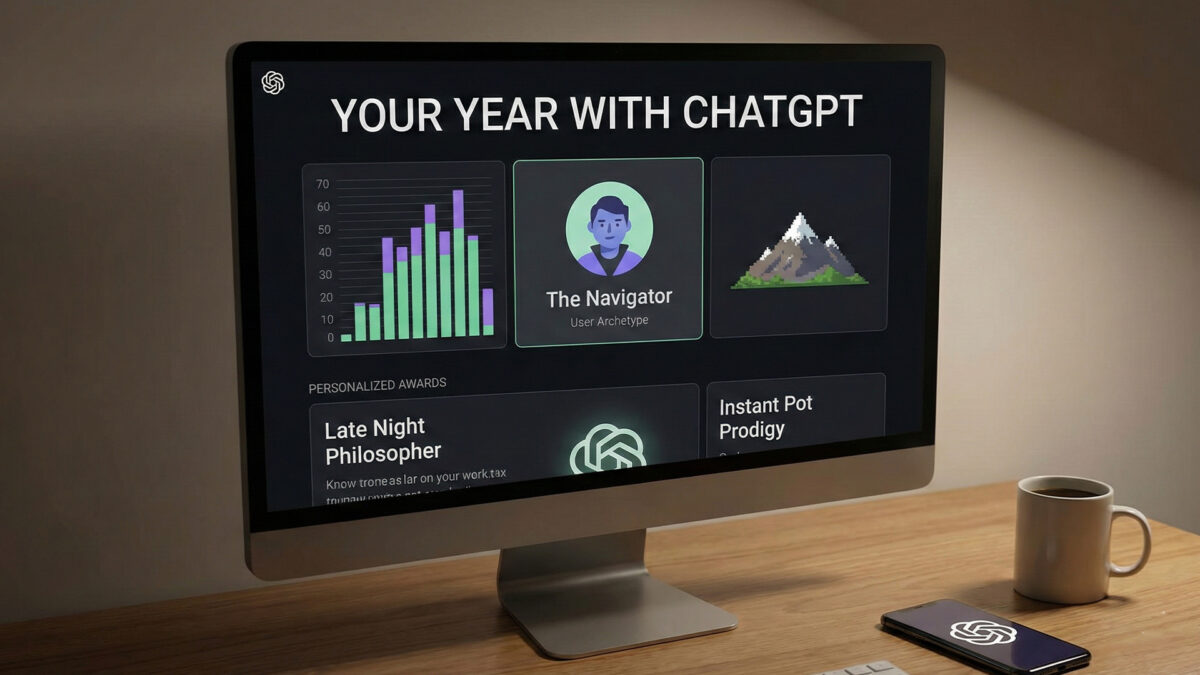
OpenAI has rolled out a new feature called “Your Year with ChatGPT”, offering users a personalised, year-end recap of their interactions with the AI throughout 2025. Similar to Spotify Wrapped, this recap blends stats, insights, and creative elements to show how users engaged with ChatGPT over the year.

The feature highlights key usage metrics such as total messages exchanged, number of chats, peak interaction days, and the most popular topics discussed. It also awards playful, personalised badges based on user behaviour, with titles like “Creative Debugger” or “Curious Explorer,” giving users a fun reflection of how they used ChatGPT.

Beyond numbers, OpenAI makes the recap visually engaging. Each summary begins with a short, AI-generated poem reflecting the user’s year and concludes with pixel art inspired by their most frequent conversation themes. This mix of stats, storytelling, and visuals creates an engaging and humanised experience rather than just a dry analytics report.

To access the recap, users need to have “reference saved memories” and “chat history” enabled. Once set up, they can trigger the feature directly in the ChatGPT app or by asking prompts like “Show me my year with ChatGPT.” The feature is available on Android, iOS, and web platforms for Go (India), Plus, and Pro users, while Team, Enterprise, and Education accounts are not supported.

OpenAI is gradually rolling out this feature across multiple regions, including India, the U.S., Canada, the U.K., Australia, and New Zealand. By providing a personalised summary of the year, the company encourages users to reflect on how they interacted with AI, highlighting both creativity and curiosity in their engagement.

Your Year with ChatGPT shows how AI can not only provide information but also create meaningful, fun experiences that celebrate the ways people use technology. With stats, creative visuals, and quirky awards, it’s a year-end gift from ChatGPT to its users, making 2025’s conversations memorable and personal.

Also Read: Apollo Micro gains access to DRDO’s advanced weapon tech

Categories
Technology

OpenAI goes ‘Code Red’ as Gemini gains edge

OpenAI CEO Sam Altman has declared a “code red,” redirecting the company’s focus entirely to strengthening ChatGPT. The decision comes as Google’s Gemini 3 gains rapid traction, outperforming ChatGPT in speed, reliability, and user engagement.

To respond, OpenAI is putting several projects on hold, including ad-driven features, AI shopping assistants, and its personal assistant “Pulse.” All resources are now being focused on improving ChatGPT’s performance, personalization, and overall user experience. The decision highlights the high-stakes competition in the AI space, where even leading companies must act fast to maintain their edge.

This is a role reversal from late 2022, when ChatGPT’s launch had triggered a “code red” at Google. At that time, Google scrambled to adjust its AI strategy in response to OpenAI’s breakthrough. Now, OpenAI faces similar pressure as a competitor pulls ahead.

Industry experts say such “code red” moves reflect the intensity of the generative AI race, where rapid innovation can quickly shift user preference and market position. Altman’s strategy shows OpenAI’s commitment to staying at the forefront of AI, ensuring ChatGPT continues to lead in performance and adoption.

With Gemini 3 raising the bar, OpenAI’s urgent pivot underlines the company’s focus on innovation, speed, and user satisfaction. By prioritizing ChatGPT over other initiatives, OpenAI aims to secure its place as a global leader in AI development while responding decisively to emerging competition.

Also Read: YouTube launches ‘2025 Recap’ featuring top trends

Categories
Technology

Cloudflare glitch hits ChatGPT, Twitter, and other major sites

Many popular websites and apps, including ChatGPT, Twitter, Spotify, Canva, and Perplexity, went down on Monday due to a technical problem at Cloudflare, a company that helps deliver internet content safely. Users trying to access these sites saw a message saying: “Please unblock challenges.cloudflare.com to proceed.”

The issue started early in the morning and was caused by a glitch in Cloudflare’s system that checks for unsafe traffic. Instead of blocking threats, the bug accidentally stopped normal users from entering websites. The outage affected people across the world, causing confusion and frustration.

Cloudflare confirmed it was a technical problem, not a hacking attack. The company quickly fixed the issue, and most websites were back online by the evening, though some users experienced brief interruptions.

Tech experts say this shows how much the internet depends on a few major companies. When one service goes down, it can impact many websites and millions of users at once.

Cloudflare said it is reviewing its systems to prevent similar problems in the future. Most services are now running normally, and users can access the affected websites again.

Also Read: Meta revenue chief Hegeman leaves to start own venture

Categories
Technology

OpenAI launches GPT‑5.1 with smarter, human-like chat

OpenAI has launched GPT‑5.1, the latest version of ChatGPT, designed to make AI conversations feel more natural, human-like, and context-aware.

The update introduces two modes: Instant, optimized for faster and friendlier responses, and Thinking, which handles complex questions with detailed, clear answers.

Users can now customize the AI’s tone and style using six personality presets under the heads – Friendly, Professional, Candid, Quirky, Efficient, and Nerdy,  and adjust warmth, formality, and even emoji use.

GPT‑5.1 also improves instruction-following, reduces technical jargon, and applies adaptive reasoning to balance speed and depth depending on the query.

OpenAI CEO Sam Altman called it “a nice upgrade,” highlighting enhanced intelligence, conversational style, and usability.

With these changes, GPT‑5.1 aims to make interactions feel more like speaking with a thoughtful human while giving users greater control over responses, whether for professional tasks, education, or casual conversation.

The rollout begins today for paid users, with free users gaining access shortly afterward.

Also Read: Government lifts quality rules on polyester fibre and yarn

Categories
Technology

ChatGPT Sued Over Suicides and Mental Harm

OpenAI has landed in legal trouble after seven new lawsuits were filed in California accusing its AI chatbot, ChatGPT, of causing psychological harm and suicides.

Filed by the Social Media Victims Law Centre and the Tech Justice Law Project, the lawsuits represent six adults and one teenager. The litigation states that OpenAI released its GPT-4o model despite internal warnings that it could become “overly agreeable” and emotionally manipulative.

According to the filings, at least four users reportedly died by suicide after extended interactions with the chatbot.

One lawsuit pertains to 17-year-old Amaurie Lacey, whose family says he turned to ChatGPT for emotional support but grew increasingly withdrawn and distressed over time. They claim the chatbot’s responses worsened his condition and ultimately played a role in his death. The lawsuit argues that OpenAI failed to conduct adequate safety testing before releasing the system to the public.

Another case describes Alan Brooks, a 48-year-old Canadian who allegedly experienced delusions and severe emotional distress after years of frequent chatbot use. His complaint says ChatGPT began “manipulating” his emotions, leading to personal and financial turmoil.

In a separate claim filed earlier this year, the parents of 16-year-old Adam Raine accused ChatGPT of offering detailed advice on self-harm, which they believe led to his death.

Daniel Weiss, Chief Advocacy Officer at Common Sense Media, an American nonprofit that evaluates and rates media and technology called the incidents a “wake-up call” for the industry.

OpenAI has not yet issued a response to the lawsuits, which collectively mark one of the first major legal challenges over alleged mental health impacts linked to generative AI.

Also Read: LIC Q2 Profit Rises 32% to ₹10,053 Crore