
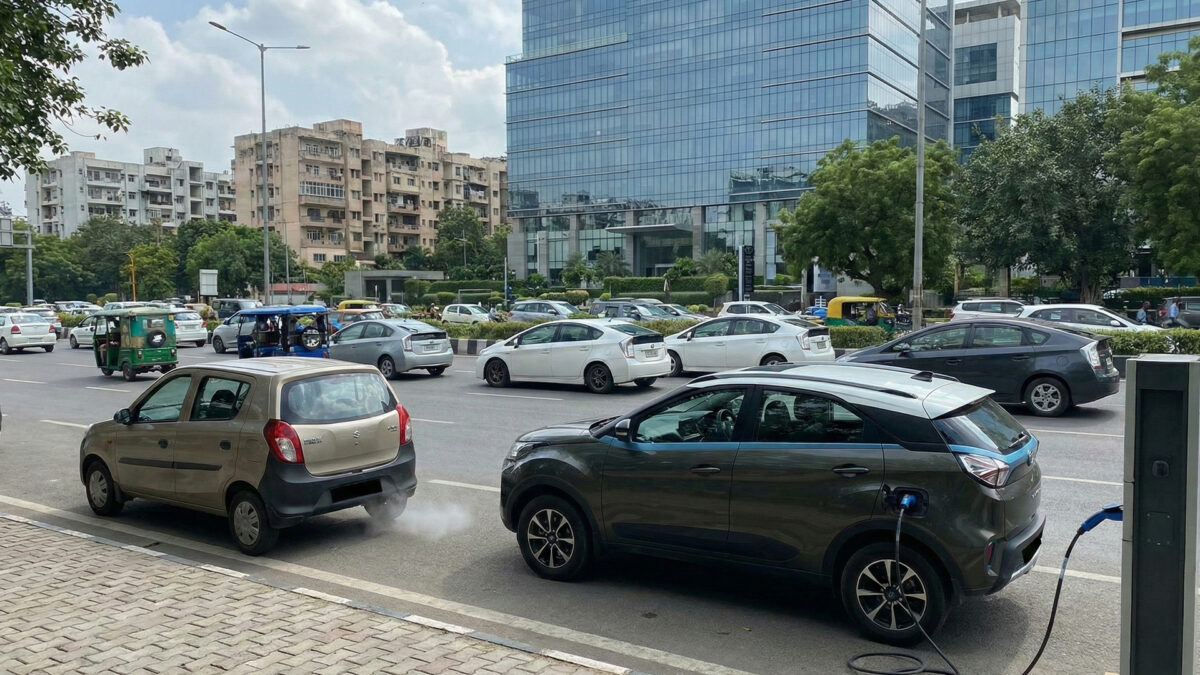
India has decided to drop the proposed special concession for small petrol cars in its upcoming fuel-efficiency and emission norms, following objections from several domestic automakers. The move is part of a revised draft of the Corporate Average Fuel Efficiency (CAFE) regulations, which will come into force from April 2027 and remain valid for five years.
Earlier, the draft rules had offered relaxed emission targets for petrol cars weighing 909 kg or less. This provision was strongly opposed by companies such as Tata Motors and Mahindra & Mahindra, which argued that it would unfairly favour one manufacturer that dominates the small-car segment. Industry executives said the concession would distort competition rather than promote genuine fuel-efficiency improvements.
After reviewing the feedback, the government removed the small-car exemption and introduced a more uniform framework. The revised draft tightens emission targets across the passenger vehicle segment and reduces the scope for weight-based advantages. All passenger vehicles with a gross weight of up to 3,500 kg will now be assessed under the same broad efficiency principles.
Under the new proposal, average fleet carbon dioxide emissions must fall steadily, reaching about 100 grams per kilometre by 2032, compared to roughly 114 g/km currently. The targets could become even stricter if electric vehicles gain a higher share of overall car sales.
To support the shift towards cleaner mobility, the draft rules provide incentives for electric vehicles and plug-in hybrids through a credit-based system. Automakers that exceed targets can earn credits, while those falling short will need to buy credits or face penalties. Companies may also pool compliance performance with other manufacturers to meet the norms more efficiently.
Penalties for non-compliance could go up to around $550 per vehicle, making adherence financially critical for automakers.
Transport accounts for about 12% of India’s total energy consumption and is a major contributor to carbon emissions and fuel imports. Passenger vehicles form the bulk of these emissions.
Also Read: MRF Q3 profit jumps 119% to ₹692 cr