Categories
1 Minute-Read

Banks face three-day strike from Monday

Banks will remain open on Sunday, September 27, ahead of a three-day strike planned from September 28 to 30 by bank employee unions.

The move is aimed at reducing disruption to customers and allowing important transactions to be completed before the strike. Government salaries are expected to be credited by September 25.

The unions are seeking a five-day banking week, pension reforms, higher recruitment and staffing, and changes to performance-linked incentives.

Public sector banks and regional rural banks are expected to see the biggest impact if the strike goes ahead.

Categories
Beyond

Banks to open Sunday ahead of three-day strike

Bank customers will get an extra day to complete branch-related work before a proposed three-day nationwide bank strike. Public sector banks and regional rural banks will remain open on Sunday, September 27, ahead of the strike planned from September 28 to 30.

The special Sunday opening has been arranged to reduce the impact of the proposed strike and help customers complete important transactions before services are disrupted. September 26 is the fourth Saturday and would normally be a bank holiday, followed by Sunday.

With the proposed strike beginning on Monday, customers could otherwise have faced several consecutive days of limited branch services.

The United Forum of Bank Unions (UFBU) has called the three-day strike over a number of employee demands, with the introduction of a five-day banking week among the main issues.

Bank unions have been seeking a five-day working week for several years. Under the proposal, all Saturdays would become holidays for bank employees.

At present, bank branches are closed on the second and fourth Saturdays of every month. Other Saturdays are generally working days.

The unions have said the five-day banking week was part of the wage revision settlement reached in March 2024, but its implementation is still pending.

Employee unions are also seeking changes related to pensions, recruitment, staffing and working conditions.

Another major issue is the Performance Linked Incentive (PLI) scheme. Bank unions have opposed changes to the scheme and are demanding that it be withdrawn.

Pension-related demands include changes to pension benefits and issues affecting retired bank employees. The unions have argued that these matters need to be resolved along with other pending employee concerns.

The proposed strike follows several rounds of discussions between bank unions, government representatives and bank managements.

The government and bank managements have appealed to the unions to withdraw the strike and continue negotiations. However, key issues remain unresolved.

The five-day banking week is among the demands that continue to be discussed. The unions have maintained that the proposal should be implemented as part of the commitments made during the wage settlement.

The timing of the proposed strike is also important because September 30 is the half-yearly closing of banks. A strike at the end of the half-year could affect businesses and financial transactions that need to be completed before the reporting deadline.

The strike is expected to mainly affect physical bank branches.

Customers visiting branches for cash deposits or withdrawals, cheque-related work, demand drafts, document submission and other staff-assisted services could face delays.

People who have important branch-related work are therefore likely to benefit from completing it before September 28 or using the special Sunday opening on September 27.

Digital banking services are expected to continue as usual. UPI, internet banking, mobile banking, IMPS and ATM services generally operate independently of regular branch staffing and are expected to remain available.

However, services that require physical processing or staff intervention could take longer during the strike period.

The impact may also differ from one bank to another. The strike is primarily associated with unions representing employees of public sector banks and other participating institutions. Private sector banks are not expected to be affected in the same way.

The Centre has also taken steps to prevent delays in salary and pension payments because of the proposed strike.

The September salaries, wages and pensions of central government employees and pensioners will be credited on September 25, ahead of the strike.

The advance payment is intended to ensure that government employees and pensioners receive their monthly payments without being affected by possible disruption to banking operations at the end of the month.

This arrangement applies to central government employees and pensioners. It does not mean that salaries for employees in private companies or other organisations will automatically be credited early.

Sunday, September 27, would normally be a holiday for banks. Keeping public sector banks and regional rural banks open gives customers an additional opportunity to complete transactions before the proposed strike begins.

The Reserve Bank of India has also made arrangements for banking operations on the day, including relevant offices and currency-related facilities.

Customers who need cash, have pending documentation or need to submit cheques and other physical documents can use the additional working day where their bank branch is covered by the arrangement.

Those who primarily use digital banking services are less likely to be affected by the strike.

Customers with urgent branch-related work should avoid waiting until the last minute. Cash requirements, cheque deposits, documentation and other services requiring staff assistance can be completed before the strike or on Sunday, September 27, where available.

Routine payments and transfers can continue through UPI, mobile banking, internet banking and ATMs, subject to normal technical availability.

 

Categories
1 Minute-Read

Bank strike disrupts services across India

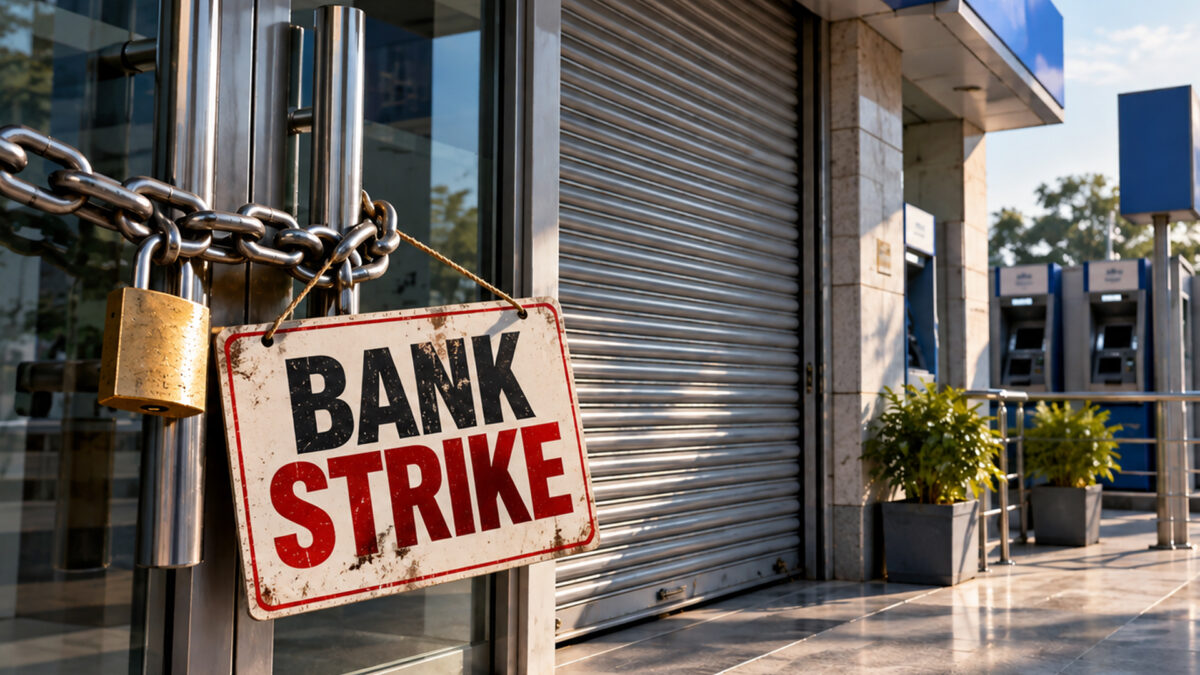
Banking services were disrupted across India on September 11 as employees and officers joined a nationwide strike demanding a five-day workweek.

The United Forum of Bank Unions also raised concerns over the PLI scheme, pension benefits, staffing shortages and other service issues. Public sector bank branches saw disruptions in cash transactions, cheque processing and other counter services, while UPI, ATMs and online banking largely continued.

The five-day week proposal, agreed between unions and the Indian Banks’ Association in 2024, is still awaiting government approval. Unions have announced further strikes on September 28-30 and from October 26.

Categories
Beyond

Bank services hit as unions demand 5-day workweek

Banking services were disrupted across India on Friday as bank employees and officers joined a nationwide strike demanding a five-day workweek and action on several long-pending service-related issues. The strike, called by the United Forum of Bank Unions (UFBU), had its biggest impact on public sector bank branches, where employees stayed away from work in large numbers.

The protest affected branch operations in several parts of the country, including Assam. In Guwahati, Silchar, Dibrugarh, Jorhat, Kokrajhar and other locations, employees of major public sector banks took part in demonstrations and strike activities. Customers visiting branches were left facing delays or unable to complete several routine banking transactions.

The central demand of the bank unions is a five-day banking week, under which banks would remain closed on all Saturdays and Sundays. At present, bank branches are generally closed on the second and fourth Saturdays, while they remain open on the first, third and, where applicable, fifth Saturdays.

The unions have argued that the nature of banking has changed considerably with the rapid growth of digital banking. Internet banking, mobile applications, UPI and ATMs now handle a large share of routine transactions, while branch employees continue to work under a schedule that includes Saturdays.

The proposal for a five-day banking week is also not new. The Indian Banks’ Association (IBA) had agreed to the proposal as part of the 12th Bipartite Settlement and 9th Joint Note signed in March 2024. Under the arrangement, working hours on weekdays would increase by around 40 minutes so that customer service hours could be maintained despite the additional weekly holiday. The proposal, however, has remained pending for government approval.

The delay has become a major point of frustration for bank employees. Unions say they have been waiting for the implementation of an agreement that was reached more than two years ago. They argue that the five-day workweek would improve work-life balance without significantly affecting banking services, particularly as customers increasingly rely on digital channels.

Another major issue behind the strike is the Performance Linked Incentive (PLI) scheme. Bank unions have objected to changes in the incentive structure for public sector bank employees and officers, particularly over differences in payouts across seniority levels.

The revised PLI framework became a flashpoint between employees and the authorities. The government has since kept the implementation of the scheme for 2025-26 in abeyance, with discussions expected to continue as part of the broader wage and service negotiations. The unions, however, have maintained that resolving the PLI issue does not address their primary demand for a five-day banking week.

Bank employees are also seeking action on pension-related matters, recruitment and staffing shortages and other service conditions. Pension updation and improvements in benefits for retired employees remain among the broader demands raised by banking unions.

The strike was expected to affect several branch-based services, including cash deposits and withdrawals, cheque processing, clearing, passbook updates, KYC-related work, documentation and other counter services. Customers needing loans, certificates or other services requiring direct staff intervention could also face delays.

Digital banking services, however, continued to function. UPI payments, mobile banking, internet banking and ATM transactions were largely available because these services do not depend on employees being physically present at bank branches. Some transactions that eventually require branch-level processing may still take longer to complete.

The impact of the strike was particularly visible because it came just before a weekend. September 12 is the second Saturday, followed by Sunday, meaning customers in many parts of the country could face limited access to physical bank branches over several consecutive days. Local holidays in some states could add to the disruption.

Bank unions have also made it clear that Friday’s strike may not be their final step. A three-day nationwide strike has been announced for September 28, 29 and 30. If the outstanding issues remain unresolved, unions have threatened an indefinite nationwide strike beginning October 26.

The series of planned protests puts additional pressure on the government and banking authorities to find a settlement. State Bank of India and other lenders have already informed customers about the possible impact of the strikes and said arrangements would be made to minimise disruption to essential services.

The dispute is therefore about more than an extra weekly holiday. Bank employees are linking the five-day workweek with concerns over workload, staffing, incentives, pensions and changing working conditions in India’s banking sector.

As banking becomes increasingly digital, the unions believe branch employees should also see a change in their working pattern. The government and banking authorities, meanwhile, face the challenge of balancing employee demands with uninterrupted customer service.

The immediate effect of Friday’s strike was felt mainly at physical bank branches, while digital banking continued to keep most routine transactions moving. The bigger question now is whether negotiations can prevent further strikes later this month and in October, or whether customers will again face widespread disruption across the banking system.