
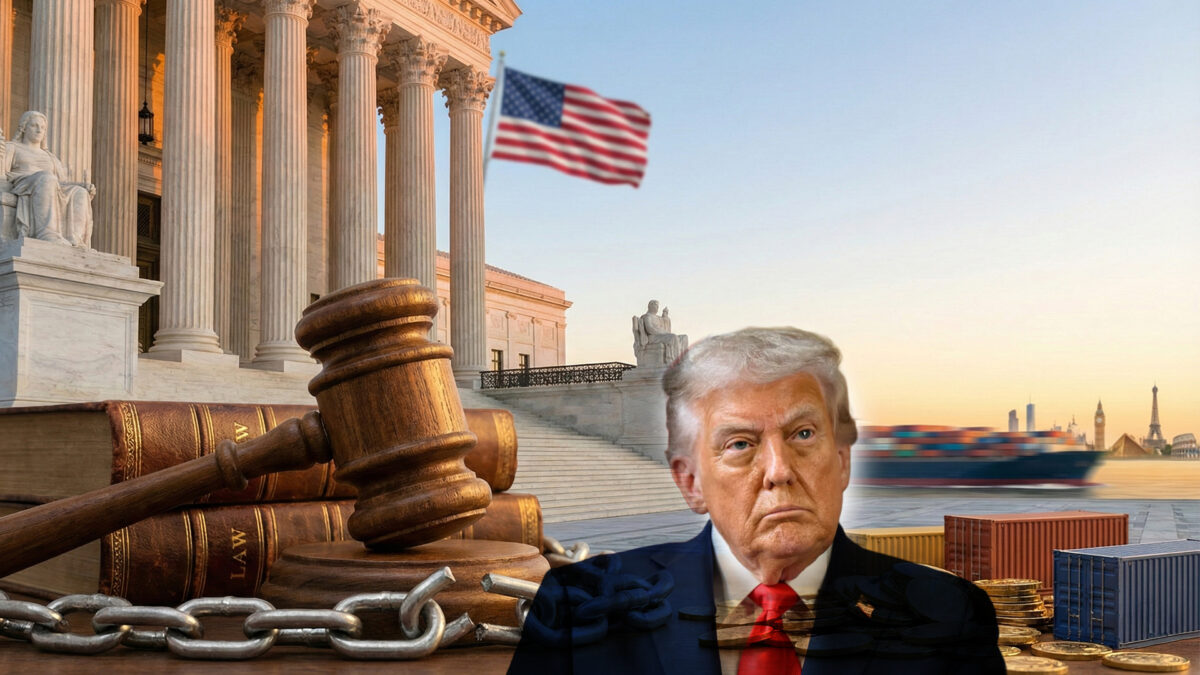
The U.S. Supreme Court has struck down the bulk of former President Donald Trump’s global tariffs, ruling that he overstepped his authority by imposing wide-ranging import taxes without Congress’s consent. The 6–3 decision, announced on February 20, 2026, marks a significant setback for Trump-era trade policies that affected goods from countries across the globe.
The dispute centered on the International Emergency Economic Powers Act (IEEPA), a law meant to give the president authority in national emergencies. The court found that using it to levy broad tariffs on imports from multiple countries went beyond the law’s intent, since the US Constitution grants Congress the power to impose taxes and tariffs.
Trump’s “reciprocal tariffs” had targeted goods from major trading partners, including China, Mexico, Canada, and India, aiming to protect U.S. industries and reduce trade deficits. While the administration viewed them as essential tools for negotiating fair trade, critics challenged them as unconstitutional and disruptive to businesses and global markets.
Chief Justice John Roberts, writing for the majority, emphasized that significant economic decisions require clear congressional authorization. The court’s ruling leaves sector-specific tariffs under other trade laws, such as duties on steel and aluminum for national security, intact. Justices Thomas, Alito, and Kavanaugh dissented, believing the tariffs were within presidential authority.
The decision has major financial implications. Billions of dollars collected under the invalidated tariffs could be eligible for refunds, though the Supreme Court left details to lower courts. Businesses and exporters now face a clearer legal framework for US trade, while the White House may explore other statutory avenues to enforce parts of its trade agenda.
Also Read: OpenAI–Tata partner for 100mw AI data centre in India