
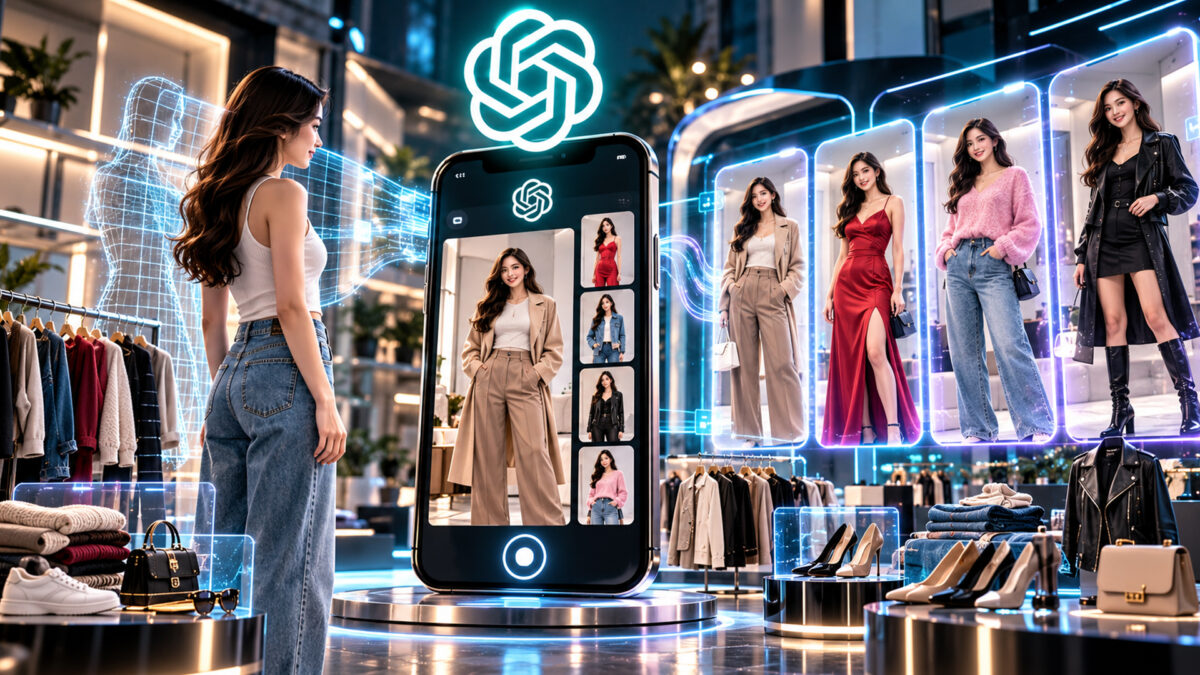
Online shopping is becoming increasingly visual, and OpenAI is giving ChatGPT a new role in the buying journey. The company has introduced a virtual try-on feature that lets users see how clothes and accessories could look on them before making a purchase. Alongside it, OpenAI has launched a Favorites tool that allows shoppers to save products and return to them later.
The new features began rolling out globally on October 1 and are available across ChatGPT’s web and mobile experiences. Supported clothing and accessory listings now come with a Try On button. Users can select the option, upload or take a selfie, and generate an AI-created image showing how the chosen item might look on them.
The feature is not limited to products discovered directly through ChatGPT. Users can also upload an image of clothing or an accessory, including a screenshot taken from another website, and ask ChatGPT to show how the item could look on them. That makes the tool useful beyond traditional product search, allowing shoppers to bring items they have already found online into the conversation.
The technology is powered by OpenAI’s latest image-generation capabilities. The company says the new ChatGPT Images 2.5 model can produce more natural lighting, richer textures and more reliable responses to editing instructions, while also reducing image-generation latency. These improvements are important for virtual shopping because the usefulness of a try-on experience depends heavily on how naturally the clothing, accessories and the user are represented.
The shopping experience is also becoming more conversational. Instead of simply searching for a specific product, users can describe a style they want to create and ask ChatGPT to find pieces that match it. They can also upload an image of an outfit and ask the AI to identify similar items that are available to buy. This moves ChatGPT beyond a conventional search box and towards an AI-assisted fashion discovery tool.
OpenAI’s second major addition, Favorites, addresses another familiar problem with online shopping: keeping track of products found during multiple searches. Users can save products to their ChatGPT Library and organise them into folders, making it easier to revisit clothing, accessories and other shopping finds later. Try-on images can also remain associated with the shopping experience, giving users a reference point when comparing products.
The company is also building the feature around reusable reference photos. Once a user uploads a photo for a virtual try-on, the reference image can be saved for future use, meaning shoppers do not necessarily have to upload a new selfie each time. OpenAI says users can change or remove these reference photos through Settings → Personalization → Reference photos.
There is, however, an important limitation. A virtual try-on image is a visual preview, not a measurement tool. OpenAI warns that generated images may not exactly represent the product or the user’s appearance and do not guarantee that an item will fit or be the correct size. Shoppers are therefore advised to check the seller’s measurements, product details and return policy before completing a purchase.
That distinction matters because clothing fit depends on factors that an AI-generated image cannot reliably establish, including fabric behaviour, garment construction, body measurements and sizing differences between brands. A jacket may appear convincing in a generated image while still fitting differently in reality.
Privacy is another consideration as AI shopping becomes more personalised. Since reference photographs can be saved for future try-ons, users have controls to manage or delete those images through ChatGPT’s settings. The ability to remove stored reference photos gives users more control over the visual information being used for future shopping interactions.
OpenAI’s move comes as major technology companies increasingly use artificial intelligence to connect product discovery with visual search and shopping. Google has already explored virtual try-on, while platforms such as Pinterest have built strong positions around visual inspiration and product discovery. OpenAI is now combining similar visual capabilities with the conversational nature of ChatGPT.
The larger change is that shopping through AI is becoming less about typing a product name and receiving a list of links. Users can now describe an aesthetic, upload a photograph, compare products, visualise an outfit and save items within the same conversation. That could make the path from inspiration to purchase more interactive and personalised.
Still, the new tool is best viewed as a decision aid rather than a replacement for conventional product information. A generated image can answer the simple question of whether a style looks appealing, but shoppers will still need reliable measurements, material information, customer reviews and return policies before placing an order.
With virtual try-on and Favorites, OpenAI is extending ChatGPT further into everyday consumer decisions. The company’s latest update suggests that AI shopping is moving towards a more visual and personalised model, where the assistant does not simply help users find products but also helps them imagine, compare and organise what they may want to buy.