
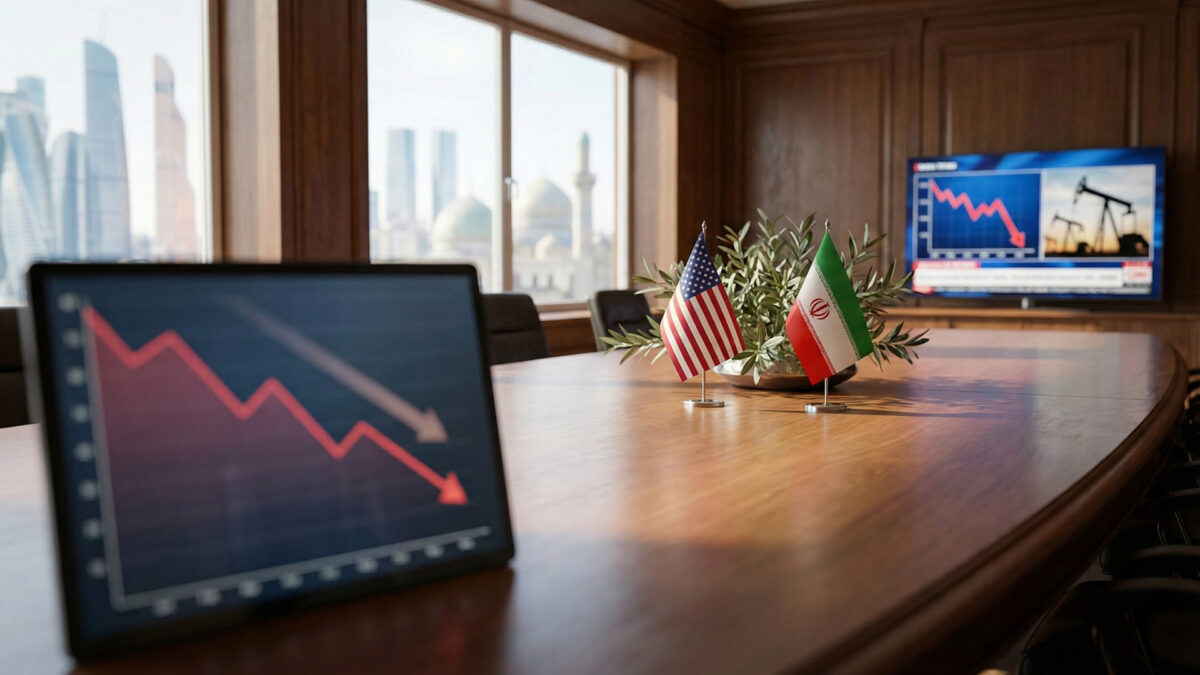
Global oil prices declined sharply after fresh signals suggested a possible easing of tensions between the United States and Iran, calming fears of supply disruptions that had driven prices higher in recent weeks.
Brent crude futures slipped by nearly 5%, falling back to around $66 a barrel, while US West Texas Intermediate (WTI) crude also dropped by a similar margin. The decline marked one of the steepest daily falls this year, as traders rushed to lock in profits after a strong rally in January.
The sell-off followed comments from US President Donald Trump indicating that Washington and Tehran were “seriously negotiating” over Iran’s nuclear programme. These remarks raised hopes that diplomatic engagement could replace confrontation, lowering the risk of conflict in the Middle East, a region critical to global oil supplies.
Until now, oil prices had been supported by fears that escalating tensions could disrupt shipments through key routes such as the Strait of Hormuz. Those concerns eased after there were no new military developments over the weekend and no signs of immediate escalation from either side.
Market analysts said the fall was driven by a sharp unwinding of the geopolitical risk premium that had been built into crude prices. Brent and WTI had climbed more than 10% last month amid worries over potential supply shocks.
A stronger US dollar also weighed on oil prices, making commodities more expensive for buyers using other currencies. In addition, broader commodity markets softened, with gold and silver giving up recent gains as investors moved away from safe-haven assets.
Supply-side factors added to the pressure. OPEC and its allies, including Russia, have signalled no immediate change to production plans, reducing concerns about tighter supply in the near term. Meanwhile, expectations of steady global demand growth have kept traders cautious about pushing prices higher.
Despite the decline, analysts warned that oil markets remain highly sensitive to geopolitical headlines. Any setback in talks or renewed tensions could quickly reverse the current trend.
Also Read: Capgemini to exit US unit linked to migrant tracking