
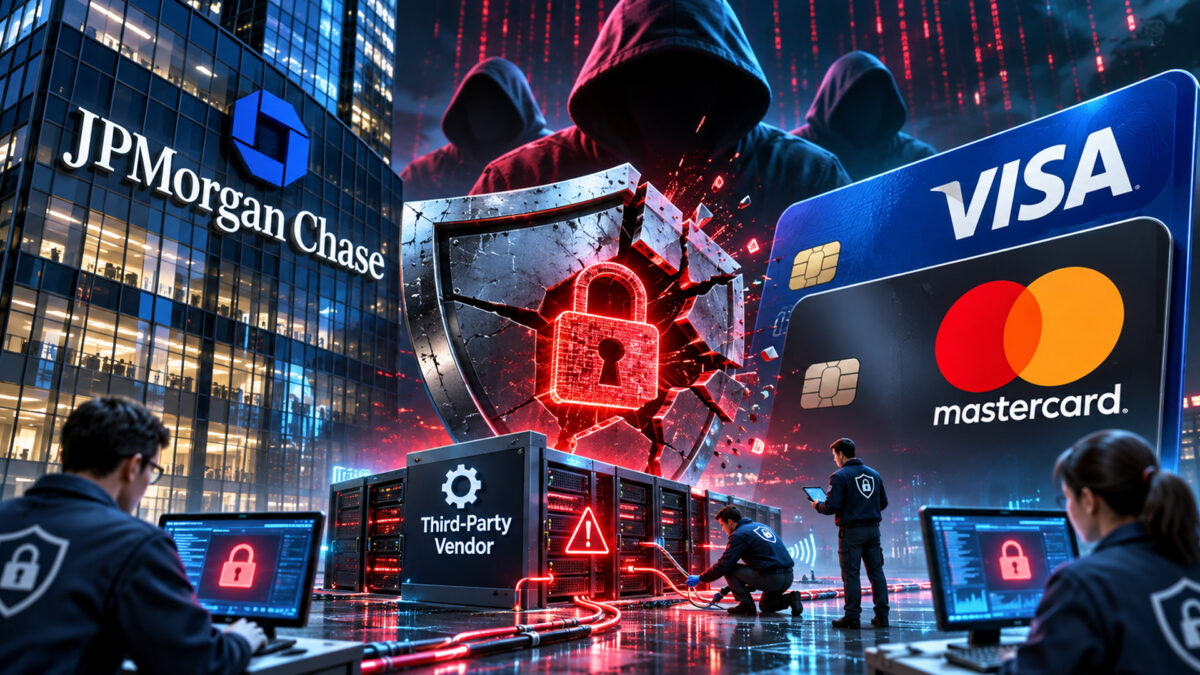
JPMorgan Chase, Visa and Mastercard are investigating cyberattacks involving third-party service providers after hackers allegedly accessed and leaked customer information, raising fresh concerns about data security across the global financial services industry. The companies have acknowledged incidents involving external vendors but maintain that their core systems, payment networks and financial transactions have not been affected.
The disclosure came after a ransomware group identified as n0n claimed responsibility for stealing customer information associated with the three financial institutions and publishing the data on its leak platform. Reports indicate that the exposed information includes email addresses, phone numbers and customer names. However, there is no indication that credit card numbers, banking passwords or other sensitive payment information were compromised.
JPMorgan Chase, the largest bank in the United States, confirmed that third-party companies providing services to the institution had been targeted in a cyberattack. In a statement issued on Thursday, the bank said its preliminary investigation suggested that hackers had accessed certain marketing information stored by these external service providers. The information may have included customer names and email addresses.
The bank clarified that its own systems had not been affected and that there had been no disruption to its banking services as a result of the incident. It also said it would contact customers who may have been affected and provide assistance, including complimentary credit monitoring where appropriate.
According to reports, approximately 16,000 email addresses and phone numbers linked to JPMorgan customers were allegedly published by the hacking group. The leaked information reportedly included details associated with some high-net-worth customers enrolled in the bank’s invitation-only Reserve programme. However, the full extent of the exposure and the authenticity of all the material published by the hackers have not been independently established.
Visa also acknowledged the claims of a customer data exposure, stating that the incident involved a third-party service provider in the Asia-Pacific region. The global payments company stressed that its own systems were neither involved nor affected by the attack.
Visa specifically clarified that payment information, including credit and debit card numbers, had not been compromised. It also maintained that its payment network continued to operate normally, with no impact on customers’ ability to make transactions.
Mastercard reported a separate disclosure involving an external service provider. The company said the incident resulted in the exposure of a limited amount of non-payment information, primarily email addresses belonging to a small group of cardholders enrolled in a specific benefits programme.
The payments company said the exposure had been contained and that it was working with the service provider to assist affected customers. Mastercard also emphasised that its payment network and the ability of cardholders to use their cards remained unaffected.
The ransomware group n0n has claimed responsibility for the incidents involving the financial companies. According to cybersecurity reports, the group published documents that it claimed supported its allegations. Cybersecurity firm SOCRadar, which examined the claims, said it could not independently verify the authenticity of the material.
The precise relationship between the incidents involving the three companies and whether they originated from the same service provider remain unclear. None of the companies has publicly identified the vendors involved or disclosed the complete number of customers potentially affected.
The latest disclosures have also drawn attention to the growing cybersecurity risks associated with third-party service providers. Banks and payment companies routinely work with external technology firms, marketing agencies and data-processing partners to manage customer engagement and other business operations. While such arrangements help institutions improve efficiency, they also create additional points of vulnerability.
A security failure at a vendor can potentially expose customer information even when the financial institution’s own technology infrastructure remains secure. This makes third-party risk management, vendor security assessments and regular monitoring increasingly important for financial organisations handling large volumes of sensitive information.
The disclosures have come just days after JPMorgan Chase customers experienced problems accessing certain banking services and processing transactions. The bank had attributed that disruption to a software bug affecting its on-premise hardware systems.
However, JPMorgan has specifically clarified that the earlier service outage was unrelated to the third-party cyberattack. The distinction is important because the two incidents involved different technical problems and should not be treated as part of the same security breach.
The recent developments have attracted attention from regulators and cybersecurity experts, particularly as financial institutions face increasingly sophisticated data theft and ransomware threats. The incidents underline how cybercriminals can exploit vulnerabilities beyond an organisation’s direct control to access information belonging to its customers.
For customers, the immediate concern is the possible misuse of exposed contact information. Email addresses and phone numbers can be used in phishing campaigns, fraudulent calls and impersonation attempts designed to obtain banking credentials or other personal details.
Customers of the affected institutions should remain alert to unsolicited emails, messages and calls claiming to represent their banks or card providers. They should avoid clicking suspicious links, sharing one-time passwords or disclosing account credentials. Any communication about a potential data exposure should be verified through official banking channels.
Although the companies have maintained that payment systems and financial transactions remain secure, the incident highlights an important challenge for the global financial industry: protecting customer information requires strong cybersecurity safeguards not only within banks and payment networks but throughout their entire network of external service providers.