
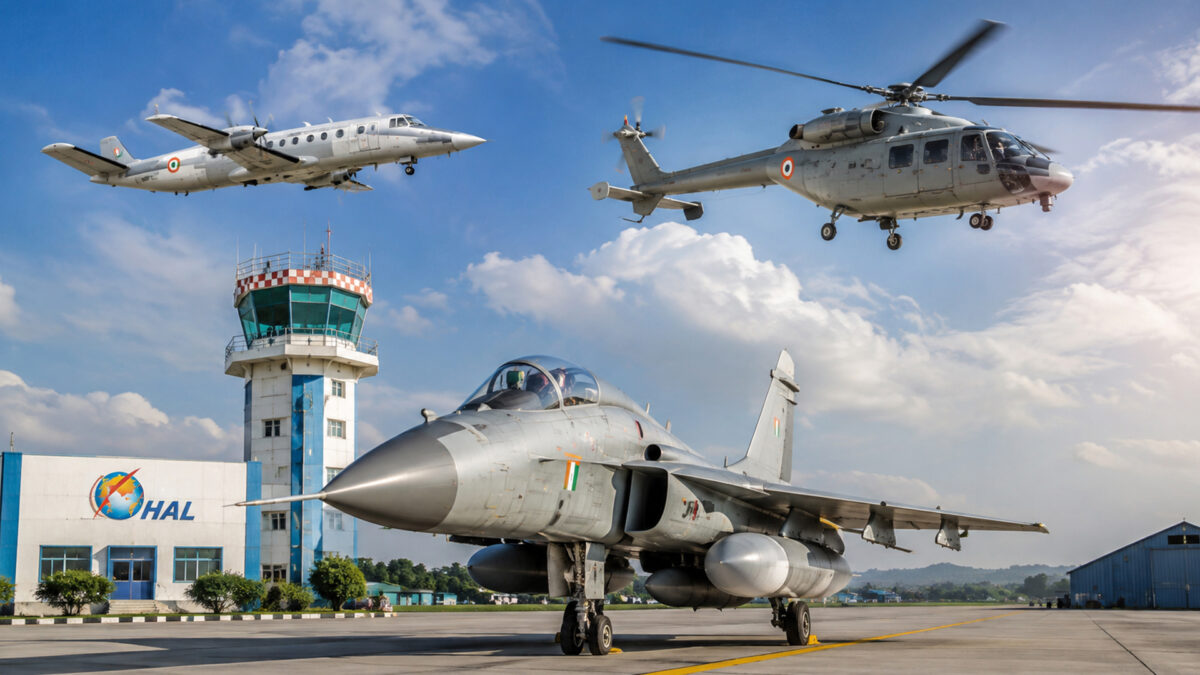
Shares of Hindustan Aeronautics Ltd (HAL) remained in focus on Thursday after the defence manufacturer reported a strong performance for the first quarter of FY27. Better-than-expected earnings and hopes of the long-awaited delivery of LCA Tejas Mk1A fighter jets have led several brokerages to raise their target prices for the stock.
HAL’s standalone net profit rose 15% year-on-year to Rs 1,581 crore in the April-June quarter, compared with Rs 1,377 crore in the same period last year. Consolidated net profit also increased 15% to Rs 1,590 crore, from Rs 1,384 crore a year earlier.
The company’s revenue from operations rose about 14% to Rs 5,515 crore, compared with Rs 4,819 crore in the first quarter of FY26. EBITDA, a measure of operating profit, increased 19% to Rs 1,530 crore.
The strong results have improved investor sentiment around HAL. Shares rose during Thursday’s trading session, after closing at around Rs 4,995 on Wednesday. The stock has also gained about 14% so far this year.
Japanese brokerage Nomura retained its ‘Buy’ rating on HAL and raised its target price to Rs 6,314 from Rs 6,040. It also identified HAL as its preferred stock in the Indian defence sector.
Nomura said the company’s first-quarter performance was better than expected and pointed to its strong order book as a major reason for its positive outlook. HAL ended FY26 with an order backlog of around Rs 2.54 lakh crore, providing significant visibility for future revenue.
Other brokerages have also become more positive on HAL. Motilal Oswal retained its ‘Buy’ rating and increased its target price to Rs 5,800 from Rs 5,500. JPMorgan raised its target to Rs 5,733 from Rs 5,145 while maintaining its ‘Overweight’ rating.
Kotak Securities raised its target price to Rs 5,305 from Rs 4,810 and retained its ‘Add’ rating. Citi maintained its ‘Buy’ call with a target of Rs 5,550, while CLSA retained its ‘Outperform’ rating and Rs 5,481 target.
A key reason behind the improved outlook is the expected start of deliveries of the LCA Tejas Mk1A fighter aircraft. The programme has faced delays, partly because of problems in receiving engines and other components. Analysts now expect the situation to improve.
HAL has received seven GE F404 engines so far. The company is expected to begin Tejas Mk1A deliveries around August-September 2026, according to brokerage estimates.
The Tejas programme is important for HAL because the start of deliveries would show that the company is overcoming earlier supply-chain problems. It would also allow HAL to begin recognising revenue from aircraft deliveries, potentially giving its financial performance another boost.
Nomura expects HAL to deliver six LCA aircraft in FY27, 16 in FY28 and 20 in FY29. It also expects annual production capacity to increase from the current 24 aircraft to 30.
HAL has already built more than 20 Tejas Mk1A airframes, but the delivery of these aircraft to the Indian Air Force remains an important milestone for investors. Timely deliveries could strengthen confidence in the company’s ability to execute its large defence order book.
Apart from Tejas, HAL has several other major programmes that could support its future growth. These include the LCH Prachand attack helicopter, HTT-40 trainer aircraft, AL-31FP and RD-33 engines, and Su-30MKI aircraft upgrades.
The company is also expected to benefit from future programmes involving the Tejas Mk2, Light Utility Helicopter and Indian Multi-Role Helicopter. India’s continuing push to increase domestic defence production is expected to create further opportunities for HAL.
The company’s large order book remains one of its biggest strengths. However, analysts say execution will be crucial. Having a large number of orders provides revenue visibility, but the company must deliver aircraft, helicopters and other defence equipment on schedule to convert those orders into actual revenue and profits.
The government’s focus on reducing defence imports and increasing domestic manufacturing is another positive for HAL. As India expands its indigenous defence capabilities, companies such as HAL are expected to play a central role in supplying aircraft, helicopters, engines and other military platforms.