
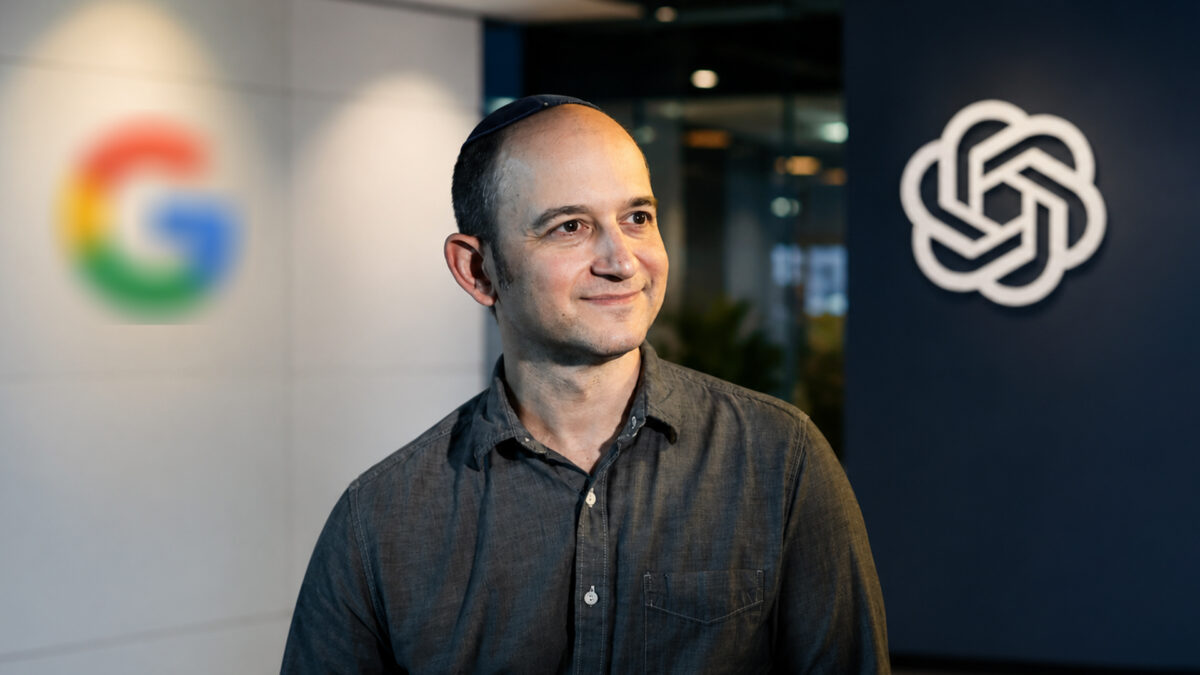
In a significant development in the artificial intelligence industry, Noam Shazeer, one of the key architects behind Google’s Gemini AI models, has announced that he is leaving Google to join OpenAI, the company behind ChatGPT. The move is being viewed as one of the most prominent talent shifts in the ongoing AI race.
Shazeer served as Vice President of Engineering at Google and co-led the Gemini project, which forms the backbone of Google’s generative AI strategy. He confirmed the decision in a social media post, describing it as a “difficult decision” and expressing pride in the work accomplished with Google’s AI teams.
A respected figure in the AI community, Shazeer is best known as one of the co-authors of the groundbreaking 2017 research paper “Attention Is All You Need.” The paper introduced the Transformer architecture, which became the foundation for modern AI models, including ChatGPT, Gemini and many other large language models.
His career has included more than two decades at Google, a stint as co-founder of Character.AI and a return to Google in 2024 after the company struck a multi-billion-dollar licensing deal with the startup. Less than two years later, he is once again moving on, this time to OpenAI.
OpenAI CEO Sam Altman welcomed the move, saying he had wanted to work with Shazeer for nearly a decade. Industry observers believe the appointment could strengthen OpenAI’s research and product development efforts as competition intensifies among leading AI companies.
The departure is also a setback for Google, which has invested heavily in Gemini to compete with OpenAI. Analysts say the move highlights the intense battle for top AI talent, with companies offering massive compensation packages and leadership roles to attract leading researchers.
As the AI industry continues to evolve rapidly, Shazeer’s transition is expected to have implications far beyond the two companies, reinforcing how crucial elite researchers have become in shaping the future of artificial intelligence.
Also Read: India secures key gains in landmark UK trade deal