Categories
Leaders

Bank mein sirf ₹75,000 the…Vedanta’s Anil Agarwal on buying his first flat in Mumbai

Bank mein sirf ₹75,000 the…Vedanta's Anil Agarwal on buying his first flat in Mumbai

Despite financial constraints, he set his sights on buying a flat—not in the suburbs, where most advised him to look, but in Malabar Hill, near Peddar Road, where Mumbai’s elite resided.
Staff Writer

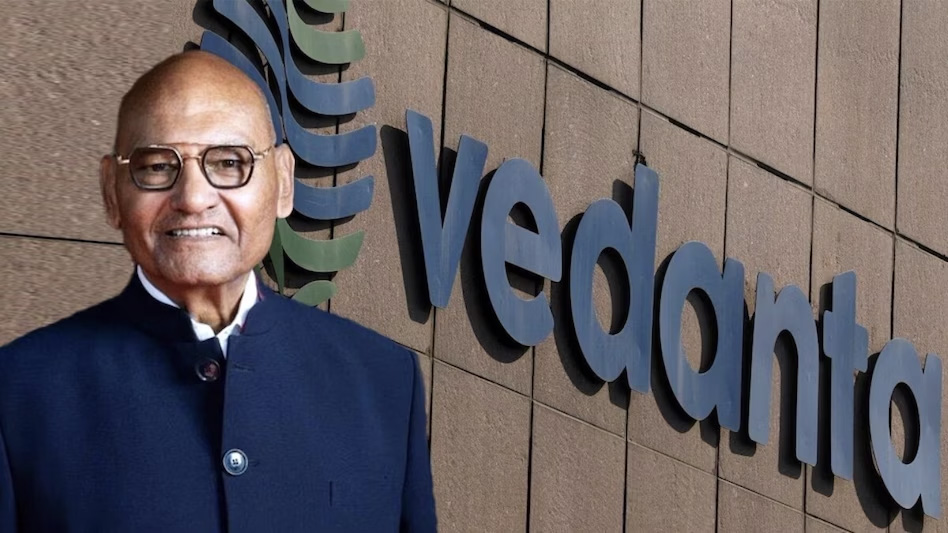
Anil Agarwal’s journey from a small office in Kalbadevi to becoming the chairman of Vedanta Group is a story of relentless ambition. 

Recalling his early days in Mumbai, Agarwal in a post shared how he dared to dream big despite limited resources.

“When I first came to Bombay, I was living near Cotton Exchange near Kalbadevi. My first business partner had a small office there, and that’s where it all began. Life was simple, but my dreams were not,” Agarwal wrote.

Despite financial constraints, he set his sights on buying a flat—not in the suburbs, where most advised him to look, but in Malabar Hill, near Peddar Road, where Mumbai’s elite resided. 

“Sapne bade the, lekin bank mein sirf ₹75,000 the,” he recalled.

Eventually, he bought a 330 sq ft flat in Navranga Apartment. “It was a small 330 sq ft flat, but it felt like my biggest achievement. That house wasn’t just bricks and walls, it was my belief that I was moving in the right direction.”

Reflecting on his journey, Agarwal emphasized the power of perseverance. “Looking back, I’ve learned one thing; life is all about dreaming big and believing in yourself. Start small, work hard, and never let anyone tell you what you can or cannot achieve. Dream it. Believe it. And one day, you will live it.”

As Vedanta prepares to announce its Q3FY25 results on January 31, investor sentiment remains positive. The stock rose 1.62% to an intraday high of ₹437.60 before paring gains to ₹433 by 1:20 PM. In comparison, the BSE Sensex was up 0.31% at 76,772.32.

Vedanta’s earnings are expected to reflect strength in its base metals segment, with analysts predicting a 6-7% quarter-on-quarter increase in EBITDA. Higher aluminum and zinc prices are likely to support this growth, while the oil and gas segment may see a decline due to lower volumes.
 

Categories
Leaders

Zoho founder Sridhar Vembu steps down as CEO. His surprising new role revealed

Zoho founder Sridhar Vembu steps down as CEO. His surprising new role revealed

The leadership baton has now been passed to Zoho’s co-founder, Shailesh Kumar Davey

JSG

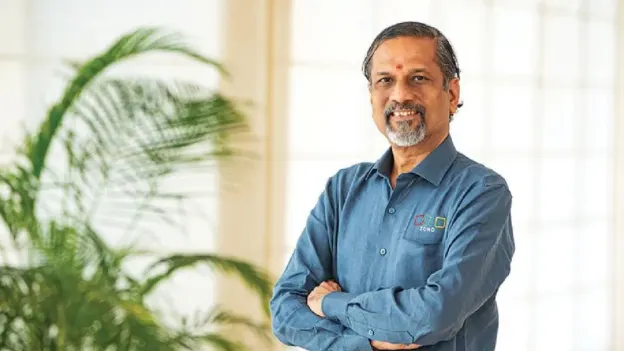
Sridhar Vembu, the founder of Zoho Corp, has stepped down as the CEO of the software company, marking a significant leadership transition for the tech giant. In a post on X, Vembu announced his decision to take on the role of Chief Scientist, redirecting his focus toward research and development.

"A new chapter begins today," Vembu wrote. "In view of the various challenges and opportunities facing us, including recent major developments in AI, it has been decided that it is best that I should focus full time on R&D initiatives, along with pursuing my personal rural development mission."

The leadership baton has now been passed to Zoho’s co-founder, Shailesh Kumar Davey, who steps into the role of CEO. Vembu explained that this restructuring is a strategic move to ensure the company can tackle pressing technological challenges while maintaining its competitive edge.

Under this new structure, Zoho’s leadership will be divided across its core business divisions. Co-founder Tony Thomas will oversee Zoho’s US operations, Rajesh Ganesan will lead the ManageEngine division, and Mani Vembu will head the Zoho.com division.

Vembu, who is widely recognized for his commitment to sustainable development and uplifting rural economies, emphasized that his shift to a research-intensive role aligns with the company’s broader priorities. "The future of our company entirely depends on how well we navigate the R&D challenge," he said. "I am looking forward to my new assignment with energy and vigor. I am also very happy to get back to hands-on technical work."

The announcement highlights Zoho’s focus on navigating the evolving tech landscape, especially with the rapid advancements in artificial intelligence. 

Categories
Leaders

Worst times of my life… Zerodha’s Nithin Kamath flags India’s debt default surge

Worst times of my life… Zerodha’s Nithin Kamath flags India’s debt default surge

Among borrowers with loans ranging from ₹10,000 to ₹50,000, nearly 29.3% experienced a drop in credit scores within six months of borrowing. Alarmingly, instead of slowing down, these individuals borrowed 62.7% more, increasing their total debt by 37.6%

Staff Writer

India’s borrowing habits are reaching dangerous territory, warns Nithin Kamath, founder and CEO of Zerodha.

Small-ticket personal loans and credit card borrowings are on the rise, often driven by aggressive marketing from fintech apps. Kamath pointed to a disturbing trend: “The defaults among this segment that can't afford to take loans are starting to increase. These delinquencies started to show up in the numbers of banks and NBFCs a couple of quarters ago. We’ll get to know the true extent of the problem in the next few quarters.”

Kamath shared CRIF data that shows how personal loans in India now total ₹13.7 lakh crore. Public sector banks hold 38% of this burden, followed by private banks with 33% and NBFCs with 24%.

However, it’s the meteoric rise in small-ticket loans—many under ₹10,000—that raises serious concerns. NBFCs dominate this segment, issuing 94% of such loans, and their share of new lending grew to 38.7% in the first half of FY25, up from 33.2% last year.

“The lowest hanging fruit and the most bang-for-your-buck thing you can do with your personal finances is to pay off all your high-interest loans, including credit cards,” Kamath advised. 

Small-ticket loans are particularly problematic. Among borrowers with loans ranging from ₹10,000 to ₹50,000, nearly 29.3% experienced a drop in credit scores within six months of borrowing. Alarmingly, instead of slowing down, these individuals borrowed 62.7% more, increasing their total debt by 37.6%.

He also highlighted the psychological toll of debt: “If you are in debt, the psychological effects will show everywhere…from your personal life to your workplace.”

Small-ticket loans are particularly problematic. Among borrowers with loans ranging from ₹10,000 to ₹50,000, nearly 29.3% experienced a drop in credit scores within six months of borrowing. Alarmingly, instead of slowing down, these individuals borrowed 62.7% more, increasing their total debt by 37.6%.

Defaults are rising faster in smaller cities, where the percentage of overdue loans in the 31-to-180-day range jumped from 6.8% to 8% in a year. Loans under ₹10,000 have seen defaults over 360 days surge to 39.7%, compared to 24.5% last year.

Kamath reflected on his personal experience: “The worst times in my life have been when I owed money for spending it on things I didn’t really need. The first lesson of personal finance is to borrow only when you are sure that it can earn a return more than the cost of money.”

These trends are happening against the backdrop of a broader credit market expansion. The unsecured business loan segment, for instance, has grown by 43.5% in the past year, hitting ₹7.8 lakh crore. But delinquencies are also rising in this category, especially in smaller towns where economic growth hasn’t kept pace with credit expansion.

Kamath’s advice rings clear: “Ensuring you get out of debt has to be the first thing you do, even before you save and invest.” 


Categories
Leaders

6.30 am to 8.30 pm for 40 years: Narayana Murthy clears air on 70-hour workweek debate

6.30 am to 8.30 pm for 40 years: Narayana Murthy clears air on 70-hour workweek debate

Seaking after delivering the Kilachand Memorial Lecture at IMC, he said, “These are not matters for debate. They are deeply personal decisions. No one can say, ‘You should or shouldn’t do it"

Staff Writer

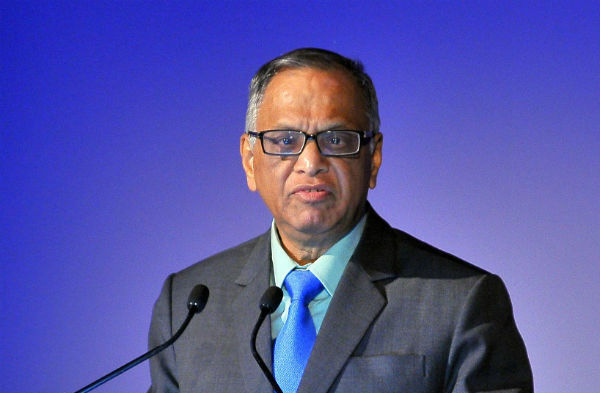
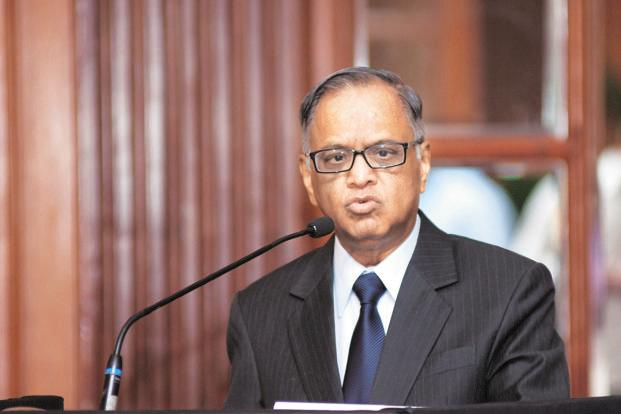
Narayana Murthy, the co-founder of Infosys, sparked a debate with his advice for youngsters to work 70-hour weeks. On Monday, he reportedly clarified that no one can dictate such a commitment — it’s a personal choice that demands introspection, not public discourse.

Reflecting on his own career, Murthy shared, “I used to get to the office at 6:30 am and leave at 8:30 pm. I’ve done it for 40-odd years. That’s a fact.” Speaking after delivering the Kilachand Memorial Lecture at IMC, he added, “These are not matters for debate. They are deeply personal decisions. No one can say, ‘You should or shouldn’t do it.’”

Murthy’s remarks come amid growing discussion on work-life balance, heightened by L&T Chairman S.N. Subrahmanyan’s recent call for 90-hour workweeks. Murthy framed the conversation in stark terms: the moral responsibility to uplift the nation’s poor. 

“A child in poverty can only have a better future if I work hard, work smart, generate revenue, and pay taxes,” he said.

He drew from Max Weber’s sociological work to emphasize that hard work, discipline, and ethical values drive national success. 

For India, where 60% of the population relies on free foodgrain programs, he argued, such efforts are not just personal — they’re essential for economic strength.

Murthy also addressed concerns about capitalism’s credibility, citing corporate greed as a root cause of public distrust. “We need compassionate capitalism—fairness, transparency, integrity, and putting society’s interests ahead of personal gain,” he said. 

He urged business leaders to embrace this ethos for their own survival, warning that corporations cannot thrive in societies that fail.

On questions about the lavish lifestyles of corporate leaders, Murthy declined judgment, saying, “If no law is broken, it’s their right to spend their money as they see fit.” However, he reiterated that civil societies prioritize improving life for future generations, calling on corporate India to adopt a long-term, socially responsible approach.


Categories
Leaders

Cold, angry 21 hours in goods compartment…: Narayana Murthy’s take on stark inequity in India

Cold, angry 21 hours in goods compartment…: Narayana Murthy's take on stark inequity in India

"I have had some success in demonstrating the power of entrepreneurship in solving the problem of poverty through my experiment of creating Infosys,” he said

Staff Writer

Narayana Murthy, co-founder of Infosys, took the stage at the Kalichand Memorial Lecture in Mumbai to share a personal journey and his vision for "Compassionate Capitalism." 

Reflecting on his life, Murthy recounted a pivotal moment in 1974—a lonely, hungry, and cold 21-hour journey in a freight train from Nis (now Serbia) to Istanbul during his hitchhiking trip back to India after working in Paris.

“The question of stark poverty and inequity in our country has been troubling me right from that day when I spent lonely, hungry, cold, angry, and introspective 21 hours in the goods compartment on a freight train from Nis in now Serbia to Istanbul, way back in 1974 on my hitchhiking trip, returning back to India after my job in Paris,” said Narayan Murthy in his speech. 

Murthy pointed to his own life and work as proof of how entrepreneurship can address poverty. "I have had some success in demonstrating the power of entrepreneurship in solving the problem of poverty through my experiment of creating Infosys,” he said. 

However, his optimism is tempered by the challenges that remain. “There is not a single day when I do not feel confused, helpless, agitated, and motivated that our leaders will find a solution to this problem."

Murthy has long been vocal about the role of discipline and hard work in driving societal change. “My parents told me the only way I could escape the orbit of poverty was through honesty, discipline, and good work ethic,” he shared. 

He stressed that putting the community’s interests above personal gains ultimately leads to personal betterment.

Murthy recently stirred controversy by suggesting that Indian youth commit to longer working hours, drawing inspiration from post-war Japan and Germany. “With a per-capita income of $2,300, India is a poor country. To become a middle-income country, it will take 16 to 18 years even with an 8% growth rate,” he said, advocating for a return to a six-day workweek to enhance productivity.

Born in 1946 in Sidlaghatta, Karnataka, Murthy’s rise began with degrees in Electrical Engineering from NIE Mysore and IIT Kanpur. Rejecting lucrative jobs, he became Chief Systems Programmer at IIM Ahmedabad, working on India’s first time-sharing computing system under Professor J. Krishnayya. In 1981, he co-founded Infosys, a company that would revolutionize India’s tech industry and contribute significantly to its economic growth.

Categories
Leaders

Satya Nadella, Sundar Pichai, Neal Mohan top most influential global Indians list of 2024

Satya Nadella, Sundar Pichai, Neal Mohan top most influential global Indians list of 2024

In addition to the tech giants, Neha Narkhede of Confluent, Anjali Sud of Tubi, Yamini Rangan of HubSpot, and Leena Nair of Chanel are among the women leaders who made it to the debut list

Staff Writer

Satya Nadella, Chairman and CEO of Microsoft, has emerged as the top leader on the inaugural HSBC Hurun Global Indians List 2024, showcasing his exceptional leadership in propelling the company's global success and technological advancements. Nadella secured the top position with Microsoft's valuation reaching US$3.146 billion. Following closely are Sundar Pichai, CEO of Alphabet (Google), and Neal Mohan, CEO of YouTube, with their companies valued at US$2.107 billion and US$455 billion respectively. The top 10 executives collectively hold an impressive 73% of the total value on the list, underscoring their significant impact.

The debut of the HSBC Hurun Global Indians List 2024 illuminates the remarkable achievements of Indian-origin leaders steering the world's most valuable corporations. It highlights the crucial role of the Indian diaspora in influencing the global economic landscape. Featuring 226 individuals from 200 companies with a combined valuation of $10 trillion, this list underscores their exceptional influence across various industries.

Top 10 influential global Indians

  • Satya Nadella (Microsoft) – US$3,146 billion
  • Sundar Pichai (Alphabet) – US$2,107 billion
  • Neal Mohan (YouTube) – US$455 billion
  • Thomas Kurian (Google Cloud) – US$353 billion
  • Shantanu Narayen (Adobe) – US$231 billion
  • Sanjiv Lamba (Linde) – US$222 billion
  • Vasant Narasimhan (Novartis) – US$216 billion
  • Arvind Krishna (IBM) – US$208 billion
  • Vimal Kapur (Honeywell International) – US$152 billion
  • Kevin Lobo (Stryker) – US$149 billion

Some of the prominent individuals featured on the list are Thomas Kurian, CEO of Google Cloud; Shantanu Narayen, Chairman and CEO of Adobe; and Vasant Narasimhan, CEO of Novartis. These leaders have been at the forefront of driving innovation in technology and healthcare within their respective companies. In an increasingly digital world, it is noteworthy that 93 companies specializing in artificial intelligence are spearheaded by leaders of Indian descent.


Categories
Leaders

Room to build…: Nikhil Kamath’s new obsession could spark a multi-billion-dollar industry

Room to build…: Nikhil Kamath’s new obsession could spark a multi-billion-dollar industry

The industry has expanded significantly, with production tripling in the last decade. However, challenges persist, including labor-intensive harvesting methods and stringent export standards, with only 2% of seeds meeting global quality benchmarks

Staff Writer

Makhana, also known as fox nut, is emerging as a high-potential global superfood. Rooted in Indian traditions and grown predominantly in Bihar, which produces 90% of the world’s supply, Makhana is moving beyond its cultural origins to become a lucrative industry. 

“Maybe room here to build a really large brand, an Indian brand that sells to the world. Personally, I’m hooked on Makhana,” wrote Zerodha co-founder Nikhil Kamath in X.

Bihar’s flood-prone areas have turned into a strength for Makhana cultivation, generating three times the income compared to rice. The crop thrives naturally in water bodies, and recent innovations like the ‘Sabour Makhana-1’ variety have doubled yields and improved the edible seed ratio from 40% to 60%. 

This transformation has positioned Makhana as a critical income source for thousands of farmers.

Packed with carbohydrates, protein, and essential minerals like phosphorus and calcium, Makhana is low in fat and calories, appealing to health-conscious consumers. Its ability to support heart health, diabetes management, and weight control has driven a surge in global demand, pushing prices as high as ₹13,000/kg in international markets.

The industry has expanded significantly, with production tripling in the last decade. However, challenges persist, including labor-intensive harvesting methods and stringent export standards, with only 2% of seeds meeting global quality benchmarks. Despite this, government subsidies and technological advancements have mitigated many risks, encouraging further growth.

Kamath shared data along with his post on startups capitalizing on the momentum. Mr. Makhana generates ₹50-60 lakh monthly, Farmley secured $6.7 million in funding, and Shakti Sudha Makhana is on track to grow from ₹50 crore to ₹1000 crore by 2024. 

These companies are redefining Makhana as more than a snack, showcasing its potential as a global product.

Categories
Leaders

L&T’s HR head breaks silence on 90-hour workweek row

L&T’s HR head breaks silence on 90-hour workweek row

"Remarks were casual in nature…He treats every employee as part of an extended family, fostering a sense of unity and belonging that’s rare in today’s corporate world," she writes

Staff Writer

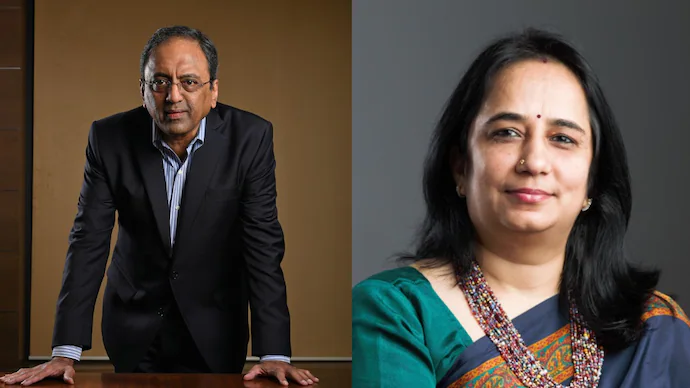
Larsen & Toubro’s Head of HR, Sonica Muraleedharan, has come forward to defend the company’s Chairman, SN Subrahmanyan, after his remarks about employees working a 90-hour week sparked widespread criticism. 

The controversy, which quickly escalated with responses from celebrities and business leaders, has been described by Muraleedharan as a misunderstanding rooted in misinterpretation.

n a LinkedIn post addressing the uproar, Muraleedharan expressed disappointment at the backlash. “It’s truly disheartening to see how the words of our MD & Chairman, SN Subrahmanyan (SNS), have been taken out of context, leading to misunderstandings and unnecessary criticism,” she wrote. Muraleedharan, who was present during the internal address, clarified that Subrahmanyan’s remarks were “casual in nature” and never intended as a directive or policy.

The backlash stems from a purported video in which Subrahmanyan suggested employees should work 90 hours a week to stay competitive. His comments included remarks like, “How long can you stare at your wife?” and, “I regret I am not able to make you work on Sundays. If I can make you work on Sundays, I will be more happy, because I work on Sundays also.”

Muraleedharan sought to provide context, emphasizing the Chairman’s commitment to fostering a supportive work environment. “He treats every employee as part of an extended family, fostering a sense of unity and belonging that’s rare in today’s corporate world,” she wrote. She described working under Subrahmanyan as “a transformative experience” and credited his leadership with imparting valuable lessons through every interaction.

The remarks triggered sharp reactions across social media. Actor Deepika Padukone labeled them “shocking,” while industry figures like Anand Mahindra and Harsh Goenka ridiculed the idea of such a demanding workweek. Comparisons were also drawn to Infosys founder Narayana Murthy, who last year called for a 70-hour workweek.

Despite the criticism, Muraleedharan urged people to focus on the bigger picture. “Leaders like SNS inspire positive change and growth, and it’s vital to recognize their efforts rather than misinterpret them,” she said. She called for a nuanced understanding of the Chairman’s intent, emphasizing his track record of empowering and motivating his team.


Categories
Leaders

Sanjeev Bikhchandani recalls ‘unexpected’ meeting with L&T boss amid 90-hour workweek row

Sanjeev Bikhchandani recalls 'unexpected' meeting with L&T boss amid 90-hour workweek row

Industry leaders such as Harsh Goenka and Harsh Mariwala have criticised the 90-hour workweek idea, emphasizsng the importance of quality work over sheer hours

Staff Writer

The debate over work-life balance is back after Larsen & Toubro (L&T) Chairman SN Subrahmanyan kicked up a row with his remarks advocating for a 90-hour workweek. 

His comment, “how long can you stare at your wife,” faced widespread criticism, drawing sharp reactions from corporate leaders and the public alike. 

Amid this storm, Info Edge founder Sanjeev Bikhchandani shared a surprising and personal encounter with Subrahmanyan, shedding light on a different side of the L&T Chairman.

“A couple of months ago, I received an email out of the blue. I had never met Mr. Subrahmanyan, but it’s not every day that the chairman of a giant like L&T asks to meet. So I went,” Bikhchandani wrote in a post on X.

For an hour, Subrahmanyan discussed entrepreneurship, startups, and digital transformation. “There was no agenda except that he wanted to learn,” said Bikhchandani. “He struck me as humble and amiable, sharing stories about his career and family.”

Toward the end of their meeting, Bikhchandani asked Subrahmanyan about L&T’s cash reserves. “He gave me a wild number—₹50,000 crore, I think. I advised him to invest some of it judiciously in startups. India needs domestic venture capital, and a company with L&T’s balance sheet could lead the way.”

Bikhchandani explained how investments in companies like Zomato and PolicyBazaar had generated significant returns for Info Edge. “We agreed to meet again to discuss ideas. I walked away impressed. He even walked me to my car.”

While Bikhchandani’s account paints Subrahmanyan as approachable and eager to learn, his workweek comments have sparked outrage. Industry leaders like Harsh Goenka and Harsh Mariwala criticized the idea, emphasizing the importance of quality work over sheer hours. “Work-life balance isn’t optional; it’s essential,” said Goenka.

Billionaire Gautam Adani recently offered a more balanced take, suggesting that individuals define their own work-life priorities. “If you and your family are happy, that’s what matters,” Adani noted.

Categories
Leaders

Why is Navil Noronha leaving DMart? Who will fill his shoes?

Why is Navil Noronha leaving DMart? Who will fill his shoes?

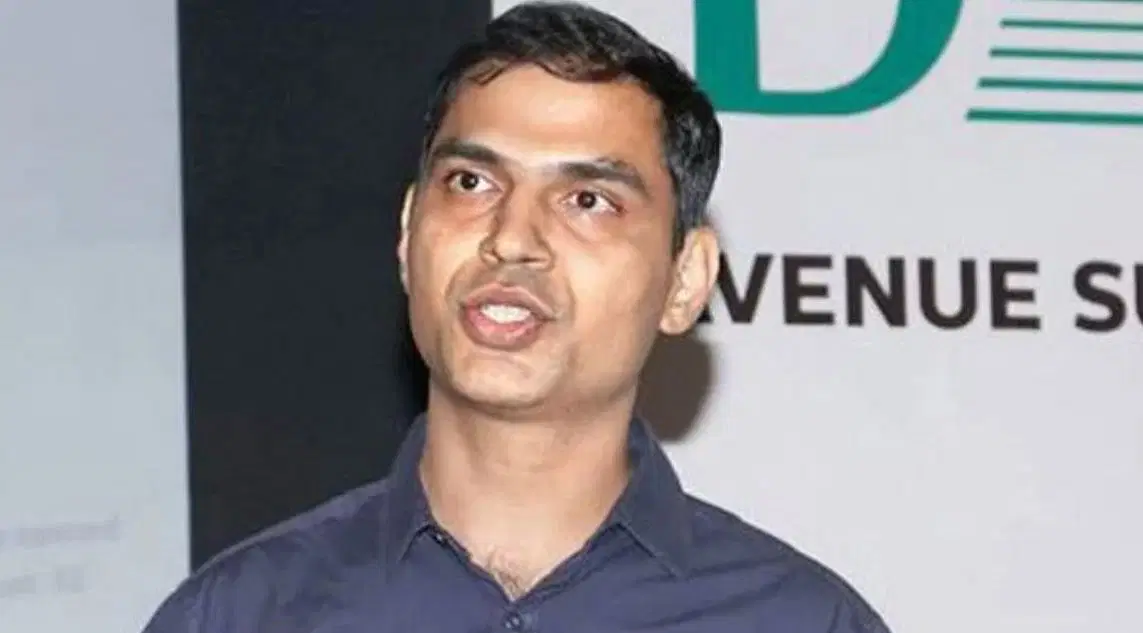
Noronha, one of India’s richest CEOs, is set to step down from Avenue Supermarts, the parent company of DMart, after over two decades at the helm

Staff Writer

Navil Noronha, one of India’s richest CEOs, is set to step down from Avenue Supermarts, the parent company of DMart, after over two decades at the helm. Noronha has decided not to renew his contract, which ends in January 2026, marking the close of a transformative era for the company he joined in 2004. During his tenure, DMart expanded from just five stores to over 380, achieving milestones like surpassing ₹50,000 crore in annual turnover.

Avenue Supermarts announced, “After more than two decades of exceptional leadership and a glorious tenure at the helm of the business, Neville has chosen not to extend his contract. The Board of Directors honors his decision and expresses profound gratitude for his extraordinary contribution to the company.”

The leadership transition has already been charted. Starting March 15, 2025, Anshul Asawa, a seasoned leader from Unilever, will serve as CEO Designate. An IIT Roorkee and IIM Lucknow alumnus, Asawa is currently Unilever’s Country Head in Thailand and General Manager for the Home Care business unit in Greater Asia. He will officially take over as MD and CEO on February 1, 2026.

Noronha, who owns a 1.95% stake in DMart worth approximately ₹4,700 crore, shepherded the company’s growth with a philosophy of simplicity, efficiency, and customer value. Under his leadership, DMart became one of India’s largest supermarket chains, earning him accolades for combining big-picture vision with meticulous execution. “Growth and profits were never ends in themselves but byproducts of efficiency, fairness, and customer value,” said Avenue Supermarts Chairman CB Bhave.

Reflecting on his tenure, Noronha shared, “If we stay the course of simplicity, efficient costs, happy employees, deep value to customers, and not doing anything else, we will remain relevant for decades to come.” He also assured a smooth leadership transition and offered continued counsel beyond his tenure.