
Categories
Corporate

Air India Launches First Non-Stop Flight to Philippines

Air India has inaugurated its inaugural non-stop flight between India and the Philippines, enhancing connectivity between the two nations. The inaugural flight departed from Delhi’s Indira Gandhi International Airport on October 1, 2025, marking a significant milestone in bilateral air travel.

The launch ceremony was attended by H.E. Josel F. Ignacio, Ambassador of the Philippines to India, and Maria Cynthia P. Pelayo, Minister and Consul General, Embassy of the Philippines in India, alongside senior officials from Air India.

The new service offers direct connectivity between Delhi and Manila, operating five days a week—Monday, Wednesday, Friday, Saturday, and Sunday. Flight AI2362 departs Delhi at 13:20 local time and arrives in Manila at 22:40, while the return flight, AI2361, departs Manila at 23:40 and arrives in Delhi at 03:50 the following day.

Air India’s Delhi-Manila flights are operated using Airbus A321LR aircraft, featuring a three-class cabin configuration that includes Business Class, Premium Economy, and Economy Class. The airline is among the few in Southeast Asia to offer fully flat beds in Business Class on a single-aisle aircraft.

This new route strengthens Air India’s presence in Southeast Asia, expanding its network to eight destinations across seven countries in the region. It also provides Filipino travelers with convenient connections to Air India’s extensive network across Europe and North America via Delhi.

The launch of the non-stop Delhi-Manila flight is expected to boost tourism, trade, and cultural exchanges between India and the Philippines, offering travelers greater convenience and enhanced connectivity between the two countries.

Also Read: Adani Green Energy Reaches 16,598.6 MW Operational Capacity
Categories
Corporate

Oil Bounces Back as Russia Sanction Threats Stir Market

When oil prices go slightly uphill, there is always a reason for a short respite. As the prices rose a little higher on Thursday, it was a sign of recovering a fraction of their steep recent losses for traders. For quite some time, they had been bearing the losses due to the risk of fresh disruptions to Russian crude supplies against signs of weakening demand.

Among the top names, Brent crude futures edged up 0.2% to $65.49 a barrel, while U.S. West Texas Intermediate (WTI) climbed 0.2% to $61.92. The lift was modest, with analysts attributing it to the effect of geopolitics.

Sources at Nissan Securities noted that WTI’s dip toward $60 a barrel, a key support zone, sparked some bargain buying. That uptick, they say, was further fuelled by speculation that the U.S. and its G7 allies may tighten sanctions. An oil analyst at UBS said that markets are jittery and that Russian oil could face new disruptions, but without actual sanctions bites or export blockages, the price increase is limited.

The G7 finance ministers this week pledged to crack down harder on nations still importing Russian crude or enabling backdoor flows, while Washington is reported to be aiding Ukraine with intelligence to help strike Russian oil infrastructure. Both shifts, if realized, could hit Russian supply lines directly.

But the bullish sentiment ran into headwinds. OPEC+ is said to be mulling a sharp production hike in November that could go up to 500,000 barrels a day, three times its October increase, as Saudi Arabia seeks to claw back lost market share. Adding to that, U.S. government stock data showed oil product inventories rising by 1.8 million barrels last week to 416.5 million, a clear sign of soft demand and weak refinery runs.

The result is a market trapped in two stories at once. While the fears over Russian supply squeezes are pushing prices up, the weight of oversupply and sluggish demand is holding them back. For now, the tug of war has left oil in a fragile balance, with traders watching closely which side tips first.

Also Read: TCS Adds Outplacement, Mental Health Support to Layoffs


Categories
Corporate

P&G Pulls Plug on Pakistan Ops as Multinational Exit Deepens

Procter & Gamble (P&G), the American giant behind household brands such as Ariel, Pampers, and Head & Shoulders, is shutting down its direct operations in Pakistan and will shift to a third‑party distribution model. The company cited mounting challenges, from soaring costs to weakening consumer demand, as reasons for its decision.

The exit adds to a growing list of global corporates pulling back from Pakistan. Earlier this year, Shell bowed out of the fuel retail sector, while pharmaceutical major Pfizer scaled back its local presence, highlighting the difficult conditions multinationals face in the country.

Alongside this blow that will impact the economy, P&G has also sought to delist Gillette Pakistan, its shaving products subsidiary, from the Pakistan Stock Exchange. Although the Gillette brand will continue to be sold, it will no longer trade as a listed company if the delisting is approved.

“The change aligns with our strategy to simplify operations and prioritise resilient, sustainable markets. Through partnerships, we aim to continue reaching Pakistani consumers effectively,” a P&G spokesperson said.

For Pakistan, the decision carries weight far beyond P&G’s exit. Analysts warn that the exit of trusted global brands shakes consumer markets and supply chains while deeply eroding investor confidence, delivering a blow the economy cannot afford right now. With inflation surging, the rupee under pressure, and foreign reserves stretched thin, the steady withdrawal of blue-chip multinationals adds to the strain on an already fragile investment climate.

Also Read: Oil Bounces Back as Russia Sanction Threats Stir Market

Categories
Corporate

Elon Musk Becomes The First Person Ever Worth $500 Billion

Tesla CEO Elon Musk, on Wednesday, became the first person ever to achieve a net worth of nearly $500 billion, according to Forbes Real Time Billionaires.

The record was propelled by Tesla stock gains and surging valuations of his startups, including SpaceX and xAI.

Musk is now half-way to becoming the first ever trillionaire.

In December, he became the first person ever worth $400 billion and is $150 billion ahead of Oracle founder Larry Ellison.

Tesla shares climbed by nearly 4% on Wednesday, adding an estimated $9.3 billion to Musk’s fortune. The EV maker’s stock price has nearly doubled since Musk announced in April that he would be stepping back from his role as head of President Trump’s Department of Government Efficiency.

With Tesla’s market cap back within 10% of the all-time high it hit in December, Musk’s 12% stake in the company is now worth $191 billion, Forbes said.

The Tesla board last month proposed a $1 trillion compensation plan for Musk that could give him additional stock worth up to $1 trillion if Tesla achieves record-breaking performance milestones like growing its market cap more than eightfold over the 10-year life of the award.

In July SpaceX was in talks to raise money and sell insider shares in a deal valuing the firm at around $400 billion, Bloomberg News reported.

In August 2020, Musk became the fifth person ever worth $100 billion. He became the world’s richest person for the first time in January 2021, with a nearly $190 billion net worth. Then, in September 2021, he was the third person ever worth $200 billion, after Amazon’s Jeff Bezos and Frenchman Bernard Arnault of luxury goods conglomerate LVMH. Musk hit $300 billion in November 2021 and $400 billion in December 2024.

Categories
Corporate

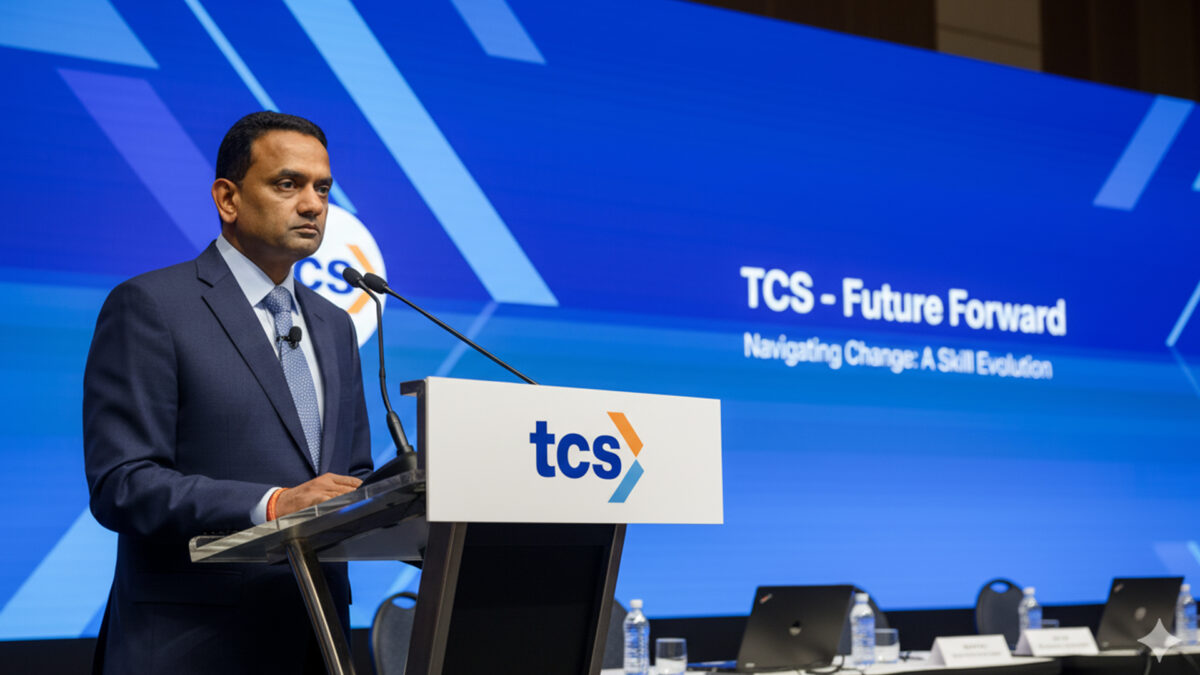
TCS Adds Outplacement, Mental Health Support to Layoffs

Tata Consultancy Services (TCS), India’s largest IT services company, has rolled out severance packages of up to two years’ salary as part of a sweeping workforce restructuring, according to media reports.

The exercise is aimed at streamlining operations and realigning talent with evolving business priorities. Severance pay will vary by tenure: six months’ salary for shorter stints, around 1.5 years’ pay for employees with 10–15 years of service, and up to two years’ salary for those with over 15 years at the company. All affected employees are assured a minimum of three months’ notice pay.

However, staff who have remained “on the bench,” or unassigned, for more than eight months may receive only standard notice pay without additional benefits.

Beyond financial compensation, TCS has also rolled out outplacement services, mental health support under its “TCS Cares” initiative, and voluntary early retirement options with full benefits.

CEO K Krithivasan described the decision as “one of the toughest” in the company’s history, noting that mid- and senior-level employees have been most impacted. The bulk of role adjustments were carried out in August and September, with a few cases still under review.

For many employees, the packages bring both certainty and closure in a period of change. For TCS, the move represents a difficult balancing act involving letting go of long-serving staff while trying to safeguard the company’s future.

Also Read: Google Cloud Shrinks Headcount as AI Takes Center Stage

Categories
Corporate

Google Cloud Shrinks Headcount as AI Takes Center Stage

Google is making another round of job cuts, this time letting go of more than 100 employees in its Cloud division as part of an AI-focused restructuring. The layoffs have been targeted specifically for design and user experience research teams, with some U.S.-based groups viewing the headcount slashed by nearly half. Quantitative research and platform service experience units were among the hardest hit segments.

The affected staff were notified via internal emails and given until early December to find alternate roles within the company. For employees on temporary work visas, the situation is even more pressing, as they have just 60 days to secure a new job or face leaving the country.

What makes the cuts striking is that they come despite Google Cloud’s strong growth. The unit posted $13.6 billion in revenue in Q2 2025, a 32% rise year-on-year, with operating income hitting $2.8 billion. Still, Google is pressing ahead with a tighter, AI-first roadmap that includes voluntary exits, management shake-ups, and retooling workflows around machine learning tools. CEO Sundar Pichai has signaled that streamlining is key to scaling efficiently.

Earlier this year, Microsoft had trimmed 9,000 roles while Meta continues its multiyear downsizing in pockets. Across Big Tech, profitability no longer guarantees job security. This restructuring echoes a broader industry trend prevalent among renowned companies. Companies are recalibrating for what they see as the next big shift, embedding AI deeply into their businesses, even if it comes at the cost of letting go of manpower.

Also Read: Elon Musk Becomes the First Person Ever Worth $500 Billion

Categories
Corporate

Reliance Introduces Budget-Friendly Packaged Water “Campa Sure”

Reliance Consumer Products is getting ready to enter India’s bottled water market with a fresh, value-forward brand called Campa Sure. The idea is to support the local dealers. Instead of buying out bottling companies, Reliance plans to team up with regional partners to ramp up production and bring the brand closer to consumers across Northern India.

Campa Sure is just a few weeks away from the launch. It will be offered at pocket-friendly prices that make safe, clean drinking water more accessible. The company will sell 250 ml bottles at ₹5, 1-litre bottles at ₹15, and 2-litre bottles at ₹25, which is about 20 to 30% cheaper than popular brands like Bisleri and Aquafina.

This is a thoughtful strategy of Reliance’s bigger plan in order to shake up everyday consumer categories with smart partnerships and affordable products. The bottled water market in India has a huge market, valued at around ₹30,000 crore, but it’s also fragmented, with many small players serving local markets.

By working with regional bottlers rather than acquiring them, Reliance hopes to keep up quality standards and also curb the common issue of fake bottled water thriving in the market.

With Campa Sure, Reliance wants to offer consumers a trustworthy and budget-friendly option, bringing more choice and competition to a vital segment that touches millions of lives every day.

Also Read: Google’s Smart Homes Get Smarter with Gemini AI

Categories
Corporate

India Eyes $8B IPO Boom, LG Leads the Charge

India is swiftly heading for a blockbuster IPO season in late 2025, with companies expected to raise nearly $8 billion in the final quarter alone. At the forefront is LG Electronics, which has revived plans to list its Indian arm by selling a 15% stake. The offering could fetch up to ₹116 billion, which is around $1.3 billion, valuing the unit at approximately ₹774 billion, which is close to $8.7 billion.

LG’s public listing aligns with a wider strategy to cement India’s place as a global manufacturing hub. Alongside the IPO, the company is investing $600 million in a new factory at Sri City, Andhra Pradesh, its third in the country, to boost production for both local demand and exports, particularly targeting European markets.

The upcoming IPO wave extends beyond LG. Heavyweights like Tata Capital are also preparing to tap the markets, with individual issues expected to range between $600 million and $1.8 billion. Strong participation from retail and institutional investors, coupled with buoyant valuations and government-backed policies, is fueling this fundraising rush.

So far in 2025, more than 240 companies have collectively raised $10.5 billion, making India one of the top three destinations globally for IPO proceeds. With the latest surge, the country’s capital markets are reflecting firm investor confidence and a growing role in global finance and manufacturing.

Also Read: India-EFTA Trade Pact Takes Effect, Promises $100 Billion Investment

Categories
Corporate

OpenAI launches Sora app to rival TikTok, Instagram

OpenAI described Sora’s launch as a potential “ChatGPT moment for video generation.”

OpenAI has unveiled a new video app, Sora, alongside its upgraded video model, Sora 2, marking a direct push into the short-form video space dominated by TikTok and Instagram Reels.

The app is currently invite-only and available on iOS in the U.S. and Canada. It enables users to generate, share, and remix AI-driven short videos featuring themselves and others.

Sora 2 brings major improvements over the first version, including better alignment with real-world physics. OpenAI noted that earlier video models sometimes produced unrealistic results—such as a ball teleporting after a missed shot—whereas Sora 2 ensures more natural outcomes like realistic bounces.

The new model also supports synchronized audio, while the “Cameo” feature allows users to insert themselves into videos by uploading a one-time recording for identity verification.

The app is designed for AI-generated content only, with a “Remix” feature allowing users to interact with trends, adopt popular formats, and co-create content. OpenAI described Sora’s launch as a potential “ChatGPT moment for video generation.”

Copyright concerns remain central. By default, Sora may include content from copyrighted materials unless rights holders opt out, and at least one major studio, Disney, has already chosen to exclude its content. The app also prohibits generating likenesses of public figures unless they have opted in.

OpenAI has introduced safeguards to prevent misuse. Users whose likeness is used can revoke access or remove content, and the app bans the creation of explicit, violent, or extreme videos.

Industry analysts see Sora as a significant step for OpenAI into social media, aiming to transform how video content is created and shared. However, some experts caution that a surge of AI-generated content could overwhelm authentic posts and create trust issues among users.

Looking ahead, OpenAI plans to expand Sora globally and release an API to allow third-party developers to integrate Sora 2 into other video tools. An Android version is also in development.

With Sora, OpenAI aims to redefine short-form video by centering AI-generated content rather than relying solely on user recordings—a move that could reshape the digital content landscape if widely adopted.

Also Read: Apple, Google, and Meta Face Legal Challenges Over Gambling Apps

Categories
Corporate

Apple, Google, and Meta Face Legal Challenges Over Gambling Apps

The lawsuits, filed in 2021, allege that the companies facilitated access to gambling apps that were addictive and harmful to users.

Apple, Google, and Meta Platforms are facing lawsuits in the United States over their roles in hosting and promoting gambling applications on their platforms. The lawsuits allege that these tech companies have facilitated access to illegal gambling services, leading to financial harm for users.

The cases are currently under legal review, with discussions focusing on the extent of the companies’ responsibilities and potential liabilities in relation to the content available through their app stores and platforms.

A federal judge in San Jose, California, has ruled that the lawsuits against Apple, Google, and Meta can proceed. The plaintiffs claim that the companies promoted illegal gambling by hosting and accepting commissions from casino-style apps that allegedly led to user addiction. The tech giants had argued for immunity under Section 230 of the Communications Decency Act, which protects online platforms from liability over third-party content. However, the judge rejected this defense, stating that the companies’ role in processing payments and collecting commissions made them potentially liable.

The lawsuits, filed in 2021, allege that the companies facilitated access to gambling apps that were addictive and harmful to users. The plaintiffs claim that the companies participated in a racketeering scheme by brokering transactions and taking up to 30% in commissions, totaling an estimated $2 billion. While some claims were dismissed, most consumer protection claims (outside of California) were allowed to proceed. The judge permitted an immediate appeal due to the significance of the Section 230 interpretation.

The cases are being litigated in the U.S. District Court for the Northern District of California. The outcome of these lawsuits could have significant implications for the tech industry, particularly regarding the extent of platform responsibility for third-party content and activities conducted through their services.

As of now, Apple, Google, and Meta have not publicly commented on the ruling. The legal proceedings are ongoing, and further developments are anticipated as the cases progress through the courts.

Also Read: LG Electronics India to Launch ₹11,607 Crore IPO on October 7