Categories
Corporate

Sensex up 50 points, Nifty holds above 25,950

The equity benchmarks traded in a narrow range on 11 February 2026, with the BSE Sensex posting modest gains and the Nifty holding firm above the 25,950 mark. The session began on a positive note, supported by firm global cues and steady trends across Asian markets, but momentum remained stock-specific as the day progressed.

Investor sentiment was aided by softer US bond yields and stable commodity prices, though caution persisted ahead of key global economic data. Gold and silver prices edged higher, reflecting a defensive undertone in global markets.

Sectorally, automobile, metal and energy counters led the advance, attracting buying interest on the back of earnings expectations and improved demand outlook. Select consumer stocks also saw steady traction. However, IT and financial stocks faced mild selling pressure, limiting the broader market’s upside.

Among the prominent gainers, Eternal Ltd rallied sharply, while Tata Steel and ONGC recorded healthy gains. Auto majors such as Bajaj Auto and Mahindra & Mahindra also traded in the green, contributing to the positive bias in the indices.

On the downside, HCL Technologies declined amid weakness in the IT pack, while Bajaj Finance witnessed profit booking. Stocks such as Dr Reddy’s Laboratories and Shriram Finance also closed lower, reflecting selective selling in pharma and NBFC counters.

Meanwhile, institutional activity remained strong, with major financial institutions including HUDCO, NaBFID and SIDBI announcing plans to raise funds through bond issuances. Changes in global index constituents also remained on investors’ radar.

Also Read: Tata Motors launches ₹9,000 cr JLR plant in Tamil Nadu

Categories
Corporate

SEBI halts NCDEX, MSE from equity derivatives launch

The Securities and Exchange Board of India (SEBI) has paused plans by the National Commodity and Derivatives Exchange (NCDEX) and the Metropolitan Stock Exchange (MSE) to offer equity derivatives. The move is part of the regulator’s effort to ensure that new exchanges first develop strong and liquid cash equity markets before venturing into derivatives trading.

Both NCDEX and MSE had applied to enter the equity market last year, seeking approval to list shares and launch options and futures contracts. SEBI, however, has told them to focus on building a robust cash market first. Officials indicated that the regulator wants these exchanges to demonstrate sufficient liquidity, price discovery, and trading activity in cash equities before allowing more complex derivatives products.

Both exchanges have been preparing for this expansion. NCDEX raised around ₹770 crore from domestic and foreign investors, aiming to diversify beyond agricultural commodity contracts. MSE secured roughly ₹1,200 crore from private equity and brokerage backers to strengthen its technology platform and infrastructure. Despite these efforts, SEBI wants them to prove their readiness in cash equities first.

The regulator has also emphasized technology upgrades as a prerequisite for derivatives trading, underscoring the importance of market stability and investor protection. This move comes amid increasing caution around derivatives, following recent government steps such as raising Securities Transaction Tax (STT) on futures and options to curb excessive speculation.

Sources say SEBI prefers a gap of at least six months between starting cash trading and offering derivatives. The decision reflects broader concerns in the Indian market, where derivatives trading is already nearly double the size of the underlying cash equity market, a figure much higher than international standards.

SEBI’s directive signals that while new players are welcome, they must first ensure a solid foundation in the cash segment before entering the fast-moving derivatives market. For now, established exchanges like the National Stock Exchange (NSE) and the Bombay Stock Exchange (BSE) remain the primary platforms for equity and derivatives trading.

Also Read: Eternal shares soar 7% on heavy trading

Categories
Corporate

Tata Motors launches ₹9,000 cr JLR plant in Tamil Nadu

Tata Motors and its luxury arm, Jaguar Land Rover (JLR), have officially opened a new manufacturing plant in Panapakkam, Ranipet district, Tamil Nadu. The ₹9,000 crore facility is the company’s largest investment in India and will produce premium cars for both domestic and international markets.

The first vehicle to roll off the assembly line is the Range Rover Evoque, marking the start of local production of luxury SUVs. The launch was flagged off by Tamil Nadu Chief Minister M. K. Stalin alongside Tata Group Chairman N. Chandrasekaran.

Spread over a large area, the plant is designed to be sustainable, with renewable energy use and water-positive processes, reflecting Tata’s commitment to environmentally friendly operations.

Initially, the facility will focus on assembling the Range Rover Evoque, but it is expected to gradually expand to produce other Tata and JLR models, including future electric vehicles. The company aims to reach a production capacity of 2.5–3 lakh vehicles per year over the next few years.

The plant will also create more than 5,000 direct and indirect jobs, offering opportunities for local suppliers and boosting the region’s economy.

Tata Motors said the Panapakkam plant strengthens India’s position in JLR’s global manufacturing network, complementing existing facilities in the UK, China, and Brazil.

Also Read: Belagavi tech company in Karnataka sues Anthropic over name

Categories
Corporate

Sensex gains 208 points, Nifty crosses 25,900

The market extended its rally for the third straight session on Tuesday,  with benchmarks closing higher amid broad-based buying. The BSE Sensex rose 208 points to settle near 84,274, while the Nifty 50 ended at 25,935, maintaining its position above the 25,900 mark.

Sectoral buying was strong in autos, metals, and mid-cap stocks, supporting the overall market sentiment. Among the gainers, Eternal Ltd surged over 5%, Tata Steel climbed around 3%, and Mahindra & Mahindra and Tech Mahindra added more than 1.5% each. On the losing side, HCL Technologies, Bajaj Finance, Bharti Airtel, and Adani Ports saw modest declines during the session.

Foreign institutional investors continued net buying, which helped sustain the market’s uptrend. The broader indices, including mid-cap and small-cap segments, outperformed, showing participation beyond just the frontline stocks. Positive cues from global markets and selective corporate earnings also bolstered investor confidence.

A decisive move above these levels could continue the recovery. Strategists suggested selective accumulation in fundamentally strong stocks while monitoring earnings trends for sustained gains.

Also Read: Sensex gains 300+, Nifty climbs past 25,950

Categories
Corporate

BSE shares jump 6% to yearly high after strong Q3

Shares of the Bombay Stock Exchange (BSE) climbed sharply on Tuesday, rising over 6% to hit a 52-week high, after the company posted strong results for the third quarter of 2025‑26. Investors reacted positively to BSE’s higher-than-expected earnings and optimistic outlook from brokers.

BSE reported a net profit of ₹602 crore, up around 174% from ₹220 crore in the same period last year. Revenue also grew about 62%, reaching ₹1,244 crore, helped by increased trading activity and more participation in different markets.

The growth came mainly from derivatives trading, mutual fund transactions, and new listings, which boosted transaction charges and overall revenue. Analysts said the results show BSE’s strong position in India’s capital markets and its ability to generate consistent income across business segments.

On the stock market, BSE shares traded at nearly ₹3,175 each, marking their highest level in a year. This rally reflected strong investor confidence in the exchange’s performance and growth prospects.

Brokerages also reacted positively. Nuvama raised its target price and recommended buying the stock, while Jefferies increased its target price and suggested holding it, citing BSE’s growing market share and earnings momentum.

Also Read: US soybean prices drop as Brazil boosts supply

Categories
Corporate

WPP unites Ogilvy, VML, AKQA under one banner

British advertising giant WPP is consolidating its three major agencies, Ogilvy, VML, and AKQA, under a single umbrella called WPP Creative. The agencies will retain their distinct brands and client services but operate within a unified framework to simplify offerings and enhance collaboration.

This move, led by CEO Cindy Rose, aims to make WPP’s creative services more integrated and accessible to global clients. It follows earlier restructurings, including unifying WPP’s media and production arms, as the company adapts to rapid changes in advertising, including the growing role of AI technologies.

WPP Creative is expected to be officially announced later in February 2026. Executives believe this alignment will strengthen the company’s competitiveness, streamline operations, and make it easier for clients to leverage the full range of WPP’s creative capabilities.

The consolidation reflects WPP’s ongoing strategy to simplify its network, improve efficiency, and respond to evolving client demands, positioning the group for stronger performance in a fast-changing global market.

Also Read: Trump’s chip tariffs may spare big tech, pressure TSMC

Categories
Corporate

Trump’s chip tariffs may spare big tech, pressure TSMC

The US government under President Donald Trump is planning a new approach to semiconductor tariffs that could shield major American technology companies from higher costs, while putting greater pressure on global chipmakers, especially Taiwan Semiconductor Manufacturing Company (TSMC).

According to media reports, the proposed plan would exempt Big Tech firms such as Amazon, Google and Microsoft from fresh tariffs on imported chips used in artificial intelligence (AI) data centres. These companies are investing billions of dollars in AI infrastructure, and higher chip prices could slow the expansion of cloud computing and AI services in the US.

The idea behind the carve-out is to protect America’s AI ambitions while still using tariffs as a tool to strengthen domestic manufacturing. Advanced chips are essential for AI systems, and most of these are currently produced outside the US, mainly by TSMC in Taiwan.

At the same time, the tariff strategy is expected to increase pressure on TSMC to speed up its shift of manufacturing to the US. TSMC has already committed around $165 billion to build and expand chip factories in Arizona. Under the proposed framework, tariff relief for US tech firms would be linked to how much chip production TSMC moves to American soil.

In simple terms, the more chips TSMC makes in the US, the more flexibility it may have to help its US customers avoid tariffs. This approach allows Washington to push for local manufacturing without directly harming its own technology giants.

However, the plan is still under discussion and has not yet been formally approved by President Trump. Details on how exemptions would work, how long they would last, and whether smaller tech companies would benefit remain unclear.

Industry experts say the policy reflects a balancing act. The US wants to reduce its dependence on overseas chip supply chains and boost national security, but it also wants to ensure that American tech leaders remain globally competitive in AI.

Also Read: AI safety expert quits Anthropic, warns world at risk

Categories
Corporate

Belagavi tech company in Karnataka sues Anthropic over name

An Indian software company based in Belagavi, Karnataka, has filed a lawsuit against US-based artificial intelligence company Anthropic, accusing it of using a name that the Indian firm says it has owned and operated under for years.

The company, Anthropic Software Private Limited, was founded in 2017 and provides technology solutions in areas such as education platforms, digital connectivity, and safety systems. It claims that it has been legally using the name “Anthropic” in India well before the US AI startup entered the Indian market.

According to the lawsuit, the Indian firm says the arrival of Anthropic PBC, the American company known globally for developing the AI model Claude, has led to serious confusion among customers, partners, and even government departments. The firm argues that people often assume both companies are linked, which it says has affected its reputation and business operations.

Anthropic Software has approached the Commercial Court in Belagavi seeking legal protection for its brand identity. It has asked the court to recognise its prior use of the name in India and to stop the US company from using “Anthropic” in a way that could mislead customers. The Indian firm is also seeking damages of ₹1 crore for the alleged loss and harm caused by brand dilution.

The company’s founder stated that attempts were made earlier to resolve the issue through the trademark process, but the matter remained unresolved, forcing the firm to take legal action.

The case comes at a time when Anthropic PBC is expanding its footprint in India, including plans to set up offices and hire talent as part of its global growth strategy. The US company is backed by major investors and is considered one of the leading players in the fast-growing AI sector.

The court has issued notices to the US firm and is expected to hear the matter later this month. No interim relief has been granted so far.

Also Read: China’s BYD challenges Trump’s tariffs at US court

Categories
Corporate

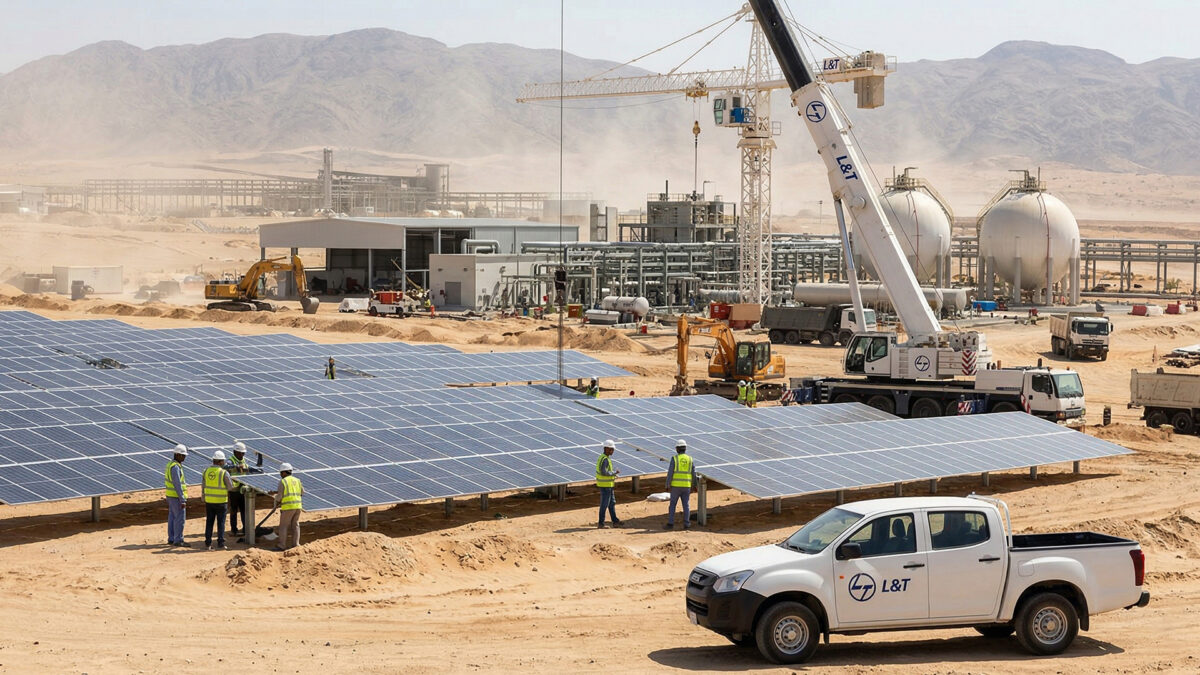
Radiance Renewables raises $100m from Danish, Dutch Funds

Radiance Renewables, an India-based clean energy company, has raised $100 million in fresh equity funding to accelerate its growth in the country’s renewable energy sector. The investment has come from two European development finance institutions, Impact Fund Denmark and FMO, the Dutch entrepreneurial development bank , with both investors contributing around $50 million each.

The funding will be used to expand Radiance Renewables’ portfolio of clean energy projects across India, especially for commercial and industrial (C&I) customers who are increasingly shifting to renewable power to cut costs and reduce carbon emissions. The company focuses on supplying green energy directly to businesses through long-term power purchase agreements.

Radiance Renewables currently operates more than 2 gigawatt-peak (GWp) of renewable energy assets and has a development pipeline of over 1 GWp. With the new capital, the company plans to invest in new solar power plants, hybrid wind-solar projects, and behind-the-meter solutions that allow factories and commercial units to generate power closer to where it is consumed.

A key part of the expansion strategy also includes battery energy storage systems, which help manage power supply during non-solar hours, and investments in inter-state transmission infrastructure to supply clean energy across multiple regions. These steps are aimed at offering reliable, round-the-clock renewable power to large energy consumers.

Company executives said the funding will strengthen Radiance’s financial position and support long-term growth as India moves towards its clean energy and decarbonisation targets. The investment is expected to help the firm scale operations over the next few years and support businesses looking to meet sustainability goals.

Investors highlighted India as a priority market for clean energy due to its strong policy support, rising power demand, and growing focus on sustainability. They also pointed to Radiance Renewables’ execution capabilities, governance standards and partnership with Eversource Capital as key reasons for backing the company.

Also Read: Gujarat signs letter of intent with Starlink for satellite internet

Categories
Corporate

Sensex gains 300+, Nifty climbs past 25,950

Indian equity markets extended their winning streak on Tuesday, February 10, 2026, with BSE Sensex climbing over 300 points to close near 64,700 and the Nifty 50 holding above 25,950. Positive global cues, renewed foreign investor interest, and broad-based buying across sectors supported the rally.

Top gainers included Reliance Industries (RIL), Axis Bank, Tata Motors, Pfizer, and Tata Steel, which saw strong investor demand. Pfizer surged nearly 9% after posting an 11% rise in its Q3FY26 profit, while Tata Motors advanced on robust sales momentum. Consumer stocks like Marico posted modest gains following strategic expansion moves, including its acquisition of a Vietnamese skincare company for ₹262 crore.

On the downside, Ramco Cements, Marico, and some defensive banking stocks experienced minor declines as traders booked profits in selective names. Ramco Cements, despite reporting a 19% jump in net profit, saw its shares dip marginally.

Sectorally, the auto, financials, and consumer segments led the advance, while broader indices like the Nifty Smallcap rose 0.55%, following a strong 2.65% rally in the previous session. Market breadth remained healthy with more advancing stocks than decliners across the NSE and BSE.

Also Read: Sensex rises 485 Points, Nifty crosses 25,850