Categories
Corporate

Microsoft, OpenAI Sign Agreement to Reshape Long-Term AI Partnership

Microsoft and OpenAI have announced a new definitive partnership agreement that restructures their relationship and sets out how the companies will collaborate as artificial intelligence advances toward Artificial General Intelligence (AGI).

The deal marks the latest evolution of a partnership that began in 2019, initially as Microsoft’s investment in a research-focused startup and later becoming one of the most influential alliances in global technology.

Under the new arrangement, Microsoft is supporting OpenAI’s plan to transition to a public benefit corporation, or PBC.

Following a recapitalization tied to this structural shift, Microsoft’s investment in the newly formed OpenAI Group PBC is valued at approximately $135 billion.

This represents about 27 percent ownership on an as-converted diluted basis across all stakeholders, including employees, outside investors, and the OpenAI Foundation.

Prior to recent funding rounds, Microsoft held roughly 32.5 percent in the company’s for-profit entity.

The agreement preserves core components that defined the collaboration to date.

OpenAI remains Microsoft’s exclusive partner for frontier AI models, and Microsoft continues to hold exclusive rights to OpenAI’s model-related intellectual property and Azure cloud API access until OpenAI formally declares AGI.

However, that declaration will no longer be solely determined by OpenAI. Under the new terms, the claim that AGI has been achieved must be independently verified by a panel of external experts.

The deal also introduces new flexibility for both organizations. Microsoft’s intellectual property rights related to OpenAI models and products now extend through 2032 and include rights to post-AGI models under certain safety and governance restrictions.

Microsoft’s rights to research-related IP—defined as confidential methods used to build models and systems—remain in place until either AGI is independently verified or until 2030, whichever occurs first.

Research IP does not include model architecture, weights, inference or finetuning code, or any hardware and data-center-related IP, which Microsoft retains rights to.

The revised terms expand OpenAI’s freedom to collaborate beyond Microsoft. OpenAI may now jointly develop products with third parties.

API-based products must continue to run on Microsoft’s Azure cloud, but non-API products may be hosted on any cloud provider. Microsoft also gains the right to pursue AGI development independently or with other partners.

If Microsoft uses OpenAI’s intellectual property to pursue AGI before OpenAI declares it, the development is subject to substantial compute limits designed to protect against uncontrolled escalation.

Financially, the agreement allows OpenAI to provide API access to U.S. national-security customers regardless of cloud provider, and permits the company to release open-weight models that meet agreed capability criteria.

OpenAI has also contracted to purchase an additional $250 billion worth of Azure cloud services, though Microsoft will no longer hold the right of first refusal to serve as the company’s primary compute provider.

The revenue-sharing agreement between the companies remains in place until AGI is verified, with payments now spread over a longer period.

The companies framed the announcement as a progression into a new phase of collaboration—one that balances shared innovation with greater autonomy.

In the joint statement, Microsoft emphasized that, as the partnership moves forward, both organizations are positioned to continue creating “real-world value” while expanding opportunities for users, developers, and businesses.

The agreement underscores the rapidly shifting landscape of AI development, where strategic partnerships, cloud computing scale, governance, and intellectual property rights are increasingly intertwined with the race toward advanced, general-purpose AI systems.

Also Read: TVS Motor Posts 37% Jump in YoY Net Profit

Categories
Corporate

Tata Sierra to Relaunch on November 25

Tata Motors has confirmed the much-anticipated relaunch of its iconic SUV nameplate, Tata Sierra, set for November 25, 2025.

The revival aims to blend the nostalgic styling of the original Sierra, which debuted in India in the early 1990s, with contemporary design and technology that align with the automaker’s current ambitions.

The new Sierra will be introduced initially in internal-combustion engine (ICE) versions, while an electric vehicle (EV) variant is expected to follow shortly thereafter.

Tata Motors has positioned the model as a key addition to its SUV portfolio, slotting it above the current Curvv model and targeting a premium segment below the Harrier.

Design previews and spy photos suggest the 2025 Sierra retains hallmark cues of its predecessor — such as the upright bonnet, tall profile and expansive rear glass (often dubbed the “Alpine” window) — while integrating modern elements like flush door handles, full-width LED light bars, shark-fin antenna and a robust off-road stance.

Interior reports show a steep step-up for the cabin: Tata is expected to offer a triple-screen digital layout (driver display, center touchscreen and front-passenger screen), ambient lighting, ventilated seats, panoramic sunroof and a full Level 2 ADAS suite.

On the powertrain front, the new Sierra is tipped to carry petrol and diesel options in its ICE range, with a 1.5-liter turbo petrol and a 2.0-liter Kryotec diesel being likely candidates.

Later, the EV version is expected to ride on Tata’s Acti.EV architecture featuring dual-motor all-wheel-drive capability and a claimed range in excess of 500 km.

Pricing speculation places the starting ex-showroom price somewhere in the ₹13.5 lakh to ₹24 lakh range, though industry watchers expect the final numbers to be announced at the launch event.

Analysts note that the Sierra’s return aligns with a broader strategy by automakers to tap into nostalgia while offering modern relevance.

As one report observed, the 90s-era Sierra holds cult status, and Tata Motors is leveraging that emotional recall by blending its 1990s charm with modern design, advanced technology and both EV and ICE options.

For Tata Motors, the timing is critical: the SUV segment in India remains fiercely competitive, and the manufacturer’s ability to deliver both volume and margin from a legacy nameplate will be closely watched.

The company’s decision to launch ICE versions first, followed by an EV, reflects market realities: while EV adoption is rising, ICE models still dominate many buyer segments in India.

The ICE-first approach enables the Sierra to begin volumes earlier, with the EV variant likely helping future portfolio transition.

Market observers will be closely watching how the Sierra fares against established rivals such as the Hyundai Creta, Maruti Grand Vitara and Kia Seltos, especially given its legacy appeal and positioning.

As Tata Motors gears up for the November 25 unveiling, consumer interest appears high. The revival of the “Sierra” badge — once one of India’s earliest lifestyle SUVs — could mark one of the most talked-about launches in the Indian automotive calendar this year.

Whether the new model will live up to its heritage and deliver the promised blend of legacy, technology and performance remains to be seen.

Also Read: TVS Motor Posts 37% Jump in YoY Net Profit

Categories
Corporate

HDFC Bank Puts Bankers on Leave Amid Credit Suisse Bond Probe

India’s largest private-sector lender, HDFC Bank Ltd., has placed two senior executives on leave in connection with an internal investigation into the sale of high-risk bonds issued by Credit Suisse Group AG.

According to reports, the move follows complaints that some clients were not adequately informed of the risk profile of the so-called Additional Tier 1 (AT1) instruments.

The two executives were reportedly involved in trades of the AT1 securities which were among the broader global fallout after Credit Suisse’s emergency takeover by UBS Group AG in 2023.

The takeover triggered the complete write-off of the bonds, saddling investors worldwide with substantial losses.

HDFC Bank, in its response to Bloomberg, said it has “not come across any instances of mis-selling till now” and emphasised that it “takes any matter pertaining to its reputation with utmost seriousness and is committed to addressing any concerns raised by stakeholders.”

The probe reportedly spans several months and is focused on identifying who within the bank authorised the sale of the AT1 securities, whether internal approvals were properly obtained and whether client suitability was adequately assessed.

The investigation gained impetus after a regulator in Dubai flagged deficiencies in HDFC Bank’s processes.

The bank disclosed in a regulatory filing that the Dubai Financial Services Authority (DFSA) had restricted its Dubai branch from onboarding new customers due to lapses in the provision of financial services to clients not formally onboarded at the Dubai International Financial Centre (DIFC).

Though the filing did not directly link the restriction to the AT1 bond trades, people familiar with the matter said it was a factor in the bank’s decision to impose the leave on the executives.

AT1 bonds are a class of hybrid debt instruments introduced after the global financial crisis to absorb losses in stressed banks before taxpayer funds are used.

They offer higher yields but rank lowest in the repayment hierarchy, meaning an investor can lose their principal in a recapitalisation event.

Notably, in India, regulators prohibit the sale of AT1 bonds to retail investors; only “professional investors” with more than US $1 million in investable assets are eligible.

Some HDFC Bank customers have alleged that they were not clearly informed about the high-risk nature of these bonds, although the bank maintains it adhered to all applicable laws.

HDFC Bank’s decision to place the executives on leave appears to be a precautionary move while the investigation continues.

The bank has not yet reached any definitive conclusion of wrongdoing, and no public statement has been made regarding specific outcomes or potential remediation for affected clients.

Also Read: TVS Motor Posts 37% Jump in YoY Net Profit
Categories
Corporate

TVS Motor Posts 37% Jump in YoY Net Profit

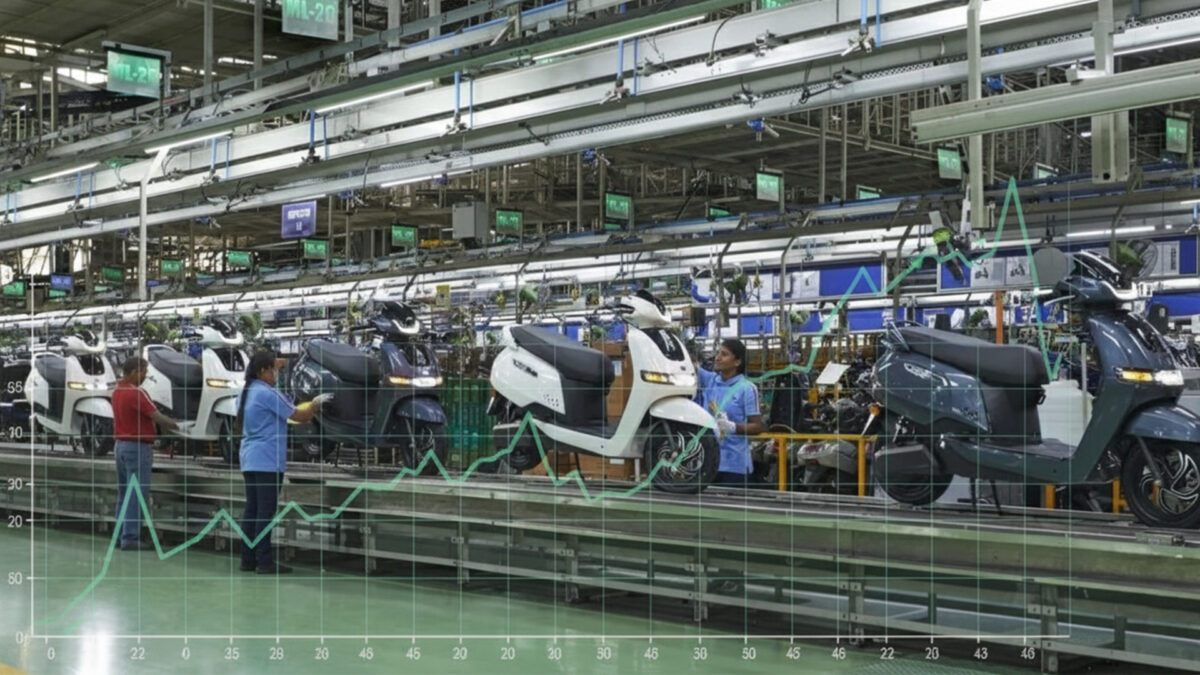
TVS Motor Company reported a robust set of results for the second quarter ended September 30, 2025, with standalone net profit rising 37 percent year-on-year to ₹906 crore and operating revenue climbing 29 percent to a record ₹11,905 crore, the company said on Tuesday.

The earnings beat was driven by healthy volume growth across the company’s product portfolio and an improvement in operating leverage. 

Total vehicle sales grew about 23 percent year-on-year in the quarter, led by a 20 percent rise in motorcycle volumes, a 30 percent jump in scooters and a 41 percent increase in three-wheelers, the company said. 

These volume gains translated into stronger operating EBITDA of ₹1,509 crore, up roughly 40 percent year-on-year, and pushed the EBITDA margin to 12.7 percent from 11.7 percent a year earlier.

TVS’s profit before tax rose in tandem to ₹1,226 crore, reflecting both top-line expansion and better cost absorption across factories and distribution channels.

Management highlighted that a favorable product mix, improved realizations and disciplined cost control helped underpin the margin recovery in the quarter. 

Analysts noted that the company’s emphasis on higher-margin models and exports contributed to the outsized profit growth relative to revenue. 

The company reported strong traction in overseas markets, with international two-wheeler volumes up 31 percent, reinforcing TVS’s strategy of balancing domestic demand with export opportunities. 

The board also pointed to expanding orderbooks in key markets and incremental gains from new model launches during the year.

Electric vehicle performance remained an area of focus. EV volumes grew by a single-digit percentage in the quarter despite constraints around magnet availability that limited production ramp-up, the company said. 

Management reiterated ongoing investments in EV technology and said it remained committed to scaling its electric portfolio as supply-chain bottlenecks ease. 

Analysts expect EVs to become a progressively larger part of TVS’s revenue mix over the next several years, although margins in the segment will depend on component cost normalization. 

Looking ahead, the company cautioned that macroeconomic risks such as commodity price swings and currency volatility could affect near-term profitability, even as it pursues market share gains and product upgrades. 

Management said it would continue to focus on converting order momentum into sustainable earnings through product differentiation, cost discipline and geographic diversification.

Investors and industry watchers will now be watching the company’s three-to-five quarter trajectory for evidence that the mix shift toward higher-value models and the EV transition are translating into durable margin improvement and return-on-capital gains.

Also Read: Adani Green Energy Reports 39% YoY Surge in Energy Sales


Categories
Corporate

Newgen Software Profit Surges 16 % in Q2 FY26

Newgen Software Technologies Ltd reported robust financial performance for the quarter ended September 30, 2025, with consolidated revenue increasing 11 % year-on-year to ₹400.8 crore and profit after tax rising 16.2 % to ₹81.7 crore. 

EBITDA for the quarter reached ₹102.4 crore, marking a 23.4 % increase compared with the same period a year ago, while the EBITDA margin improved to 25.5 % from 23.0 % in Q2 FY25. Profit before tax (PBT) rose to ₹105.3 crore, up 13.8 % year-on-year.

Subscription revenues emerged as a key growth driver during the quarter, climbing 20 % to ₹126 crore. 

Revenue from product and license sales stood at ₹74 crore, and implementation and related services accounted for ₹93 crore.

Together, annuity streams including support, cloud/SaaS, maintenance and subscription contributed ₹234 crore to total revenue.

Management highlighted an increased focus on expanding its footprint in target verticals and geographies. 

The company added fifteen new client logos during the quarter and reported strong traction in its EMEA markets.

Chairman & Managing Director Diwakar Nigam said the growth momentum stemmed from solid subscription numbers and large-deal breakthroughs in mature markets.

CEO Virender Jeet added that Newgen is deepening its presence in the banking vertical and expanding into insurance policy administration systems (PAS). 

He stressed the company’s commitment to an “AI-first” strategy and continuous investment in product innovation and cloud-native SaaS solutions.

The company’s performance comes amid a challenging macro-environment where many software firms are under pressure from softening demand and increased competition. 

Yet Newgen’s growth in annuity-based revenue and improving margins appear to have given it a competitive edge. 

The margin improvement in particular is notable, reflecting better operating leverage and disciplined cost controls.

For the half-year ended September 30, the company reported an 11.5 % year-on-year increase in net profit to ₹1,314.63 crore, with revenue rising 6.74 % to ₹7,214.49 crore.

Looking ahead, the management expressed optimism about continuing to scale the subscription business, capturing large deals in key markets and leveraging its product platform for growth. 

However, it also acknowledged the need to navigate broader global macro-risks, including currency fluctuations and softening enterprise spending.

In summary, Newgen Software’s Q2 performance stands out for its double-digit revenue growth, strong profit uptick and margin improvement — underpinned by recurring revenue strength and strategic vertical expansion. 

As the company pivots further toward cloud-native solutions and AI-driven platforms, its results may set the tone for how mid-cap software firms can maintain growth momentum in an otherwise cautious environment.

Also Read: Oil India’s $300 Million Dividend Stuck in Russian Banks

Categories
Corporate

Oil India’s $300 Million Dividend Stuck in Russian Banks

Oil India Ltd. has been unable to transfer a $300 million dividend arising from its stakes in two Russian oilfields after recent United States sanctions, with the funds currently held in Russian banks, Chairman Ranjit Rath said on Tuesday.

The dividend is linked to the company’s holdings in projects operated by Rosneft, and the payout cannot be repatriated because of restrictions imposed on the sanctioned entities and related payment channels.

Rath told reporters that Oil India, which holds its interests through Singapore-based special purpose vehicles alongside partners Indian Oil Corp. (IOC) and Bharat PetroResources (BPRL), is seeking legal advice on how to proceed with the frozen funds.

The company’s combined shareholdings amount to a minority stake in the two fields — JSC Vankorneft (Vankor) and Taas-Yuryakh — where dividends have been declared but cannot be moved across international banking corridors affected by the sanctions. 

The development underscores a wider problem afflicting several Indian public sector oil firms whose dividend income from Russian upstream projects has been increasingly difficult to access since the onset of Western sanctions related to the Russia-Ukraine conflict.

Independent estimates and prior reporting indicate that stranded dividends for Indian oil PSUs could total in the hundreds of millions of dollars, complicating cash management and repatriation plans for state-backed energy companies.

U.S. sanctions announced in recent weeks specifically targeted major Russian oil companies, restricting dealings with those firms and raising the risk of secondary sanctions for banks and intermediaries that facilitate transactions.

Market participants and analysts say those measures have tightened access to global payment systems for entities linked to Rosneft and others, leaving foreign minority investors with limited options to retrieve cash held in Russian financial institutions. 

Oil India’s predicament follows a pattern in which dividends declared by Russian joint ventures are parked in local accounts earning low returns while companies explore legal, diplomatic and commercial avenues to unlock value.

Options under consideration include seeking exemptions, arranging direct offset arrangements for supplies and services, or using local ruble-based channels — all of which carry legal and operational complications given the sanctions’ scope and the involvement of multiple jurisdictions. 

For New Delhi, the issue poses a policy conundrum: Indian energy security strategy has leaned on Russian supplies and upstream ties to secure crude and downstream feedstock, yet geopolitical shifts and sanctions regimes can swiftly impair the liquidity and utility of such investments.

Officials and company executives have previously signaled coordinated outreach to partner governments and international banks to find practical solutions while remaining compliant with applicable laws. 

As Oil India and its partners weigh legal counsel and diplomatic options, the trapped $300 million highlights the broader vulnerability of cross-border energy investments amid geopolitical tensions and demonstrates how sanctions can reverberate through corporate cash flows beyond the immediate targets of the measures. 

Also Read: Adani Green Energy Reports 39% YoY Surge in Energy Sales

Categories
Corporate

Adani Total Gas Reports 16% Volume Growth in Q2 FY26

Adani Total Gas Ltd (ATGL), the energy transition arm of the Adani Group, posted a 16% year-on-year rise in overall volumes for the quarter ended September 30, 2025, driven by strong growth in both compressed natural gas (CNG) and piped natural gas (PNG) segments.

The company’s revenue from operations grew 19% year-on-year to ₹1,569 crore, while EBITDA stood at ₹302 crore and profit after tax (PAT) at ₹162 crore. On a consolidated basis, PAT came in at ₹163 crore for the quarter.

For the first half of FY26, ATGL’s revenue rose 20% to ₹3,060 crore, EBITDA stood at ₹603 crore, and standalone PAT reached ₹324 crore. Consolidated PAT for the period was ₹329 crore.

Strong Operational Momentum

ATGL continued expanding its nationwide gas distribution footprint during the quarter, taking its CNG station network to 662 after adding nine new outlets.

The company also surpassed a significant milestone of connecting over one million households to its PNG network, with the total now standing at 1.02 million.

Industrial and commercial connections rose to 9,603 after adding 147 new consumers, while the combined CNG and PNG volume reached 280 million standard cubic meters (MMSCM).

“The company has delivered a steady operational and financial performance during the quarter, reflecting the strength of our integrated business model and the growing preference for cleaner energy solutions,” said Suresh P. Manglani, CEO and Executive Director, ATGL.

“Even with the tightening of APM gas availability, ATGL recorded a healthy double-digit year-on-year growth of 16% in volume and 20% in revenue. We are pleased to have surpassed the key milestone of connecting over one million households through our PNG home connections.”

Manglani added that the company’s diversified gas sourcing portfolio enabled it to maintain a calibrated pricing strategy despite cost pressures from reduced allocation of APM gas to the CNG segment.

Network Expansion and Credit Rating Upgrade

Including its joint venture with Indian Oil—Indian Oil-Adani Gas Pvt Ltd (IOAGPL)—the company’s pan-India footprint reached 1,091 CNG stations, with PNG home connections totaling 1.18 million. The company’s steel pipeline network expanded to 26,411 inch kilometers.

During the quarter, ATGL’s long-term credit rating was upgraded to ‘AA+ (Stable)’ by ICRA, with similar ratings assigned by CRISIL and CARE. According to the company, these upgrades reflect its growing scale, favorable demand outlook, and a robust financial profile backed by strong parentage and secure gas sourcing arrangements.

Regulatory Tailwinds and Energy Transition Push

Two key regulatory developments are expected to benefit the company in the coming quarters.

From October 1, 2025, APM and New Well Gas supplied outside Gujarat are being billed at a concessional CST rate of 2%, replacing the earlier 15% VAT.

Additionally, a new Zone 1 tariff for the priority segment will come into effect in November 2025, expected to ease cost pressures, particularly during the winter season.

ATGL also reported progress in its clean energy subsidiaries.

Adani TotalEnergies E-Mobility Ltd expanded its EV charging network to 4,209 installed points across 26 states and union territories.

Adani TotalEnergies Biomass Ltd sold 357 tonnes of compressed biogas (CBG) in the first half of FY26 under its “Harit Amrit” brand, which has now expanded into Uttar Pradesh, Madhya Pradesh, and Gujarat.

Recognition for Sustainability

Further underscoring its operational excellence, ATGL received three PNGRB awards, including two for health, safety, and sustainability, and one for customer service. “Our journey remains aligned with India’s energy transition vision,” Manglani said, emphasizing the company’s commitment to expanding cleaner and sustainable energy access across the country.

Also Read: Reliance, Meta Form $100 Million AI Joint Venture

Categories
Corporate

Adani Green Energy Reports 39% YoY Surge in Energy Sales

Adani Green Energy Ltd (AGEL), India’s largest renewable energy company, reported robust financial and operational growth for the first half of fiscal year 2026, driven by aggressive capacity expansion and strong plant performance.

The company’s energy sales rose 39 percent year-on-year to 19,569 million units, underpinned by significant additions in renewable capacity and higher generation efficiency.

Revenue from operations grew 26 percent to ₹6,088 crore in H1 FY26, compared with ₹4,836 crore in the corresponding period last year.

EBITDA increased 25 percent year-on-year to ₹5,651 crore, surpassing the company’s entire annual EBITDA for FY23, while maintaining an industry-leading EBITDA margin of 91.8 percent.

Cash profit surged 17 percent to ₹3,094 crore from ₹2,646 crore in the previous year, highlighting AGEL’s strong cash flow generation and disciplined cost management.

In the second quarter alone, revenue from power supply increased 20 percent year-on-year to ₹2,776 crore, while quarterly EBITDA rose 19 percent to ₹2,543 crore.

Cash profit for the quarter grew 8 percent to ₹1,349 crore, underscoring the company’s steady financial momentum.

AGEL attributed this performance to its greenfield capacity additions, deployment of advanced renewable technologies, and strong operational execution.

During the first half of FY26, the company added 2,437 MW of new capacity, accounting for nearly three-fourths of its total capacity addition in FY25.

Over the last twelve months, AGEL’s greenfield additions totaled 5,496 MW, comprising 4,200 MW of solar capacity—of which 2,900 MW was in Khavda, Gujarat—491 MW of wind capacity, and 805 MW of hybrid capacity.

This expansion drove a 49 percent increase in AGEL’s operational capacity, which now stands at 16.7 GW, solidifying its position as India’s largest renewable energy player. The company’s generation during the period reached 19.6 billion units of clean energy, equivalent to the annual power consumption of an entire country like Croatia.

“Having already added 2.4 GW renewable capacity in the first half of FY26, we are on a firm path to achieve 5 GW capacity addition for the full year and remain on track to reach our 50 GW target by 2030,” said Ashish Khanna, CEO of Adani Green Energy Ltd. “Our progress in developing the 30 GW renewable energy plant at Khavda in Gujarat is a testament to our execution strength and commitment to India’s energy transition. We continue to adopt cutting-edge technologies and digital tools to enhance operational efficiency and safety across our assets.”

The company’s operations and maintenance framework, managed in partnership with Adani Infra Management Services Pvt Ltd, leverages advanced data analytics, artificial intelligence, and machine learning.

This digital integration has helped improve plant availability and reduce O&M costs, supporting AGEL’s industry-leading EBITDA margin.

The company’s electricity generation exceeded its power purchase agreement (PPA) commitments, achieving 57 percent of the annual target within the first half of the fiscal year.

A major driver of AGEL’s growth is the ongoing development of the world’s largest renewable energy plant at Khavda in Gujarat, spread over 538 square kilometers—five times the size of Paris.

The project, which will reach 30 GW capacity by 2029, currently has an operational portfolio of 7.1 GW of solar, wind, and hybrid installations. The site utilizes cutting-edge renewable technologies, including bifacial solar modules, smart trackers, and 5.2 MW onshore wind turbines—among the largest in India.

The company has also deployed waterless robotic cleaning systems, which eliminate water usage for module maintenance while enhancing generation efficiency.

AGEL’s sustainability leadership has been widely recognized. The company ranks first in India and seventh globally in the renewable energy sector in the latest ESG assessment by Sustainalytics.

It was also named “Energy Transition Company” and “Energy Company of the Year – Renewables” at the ET Energy Leadership Awards 2025.

Adani Green Energy Ltd currently operates a renewable portfolio of 16.7 GW across 12 Indian states and aims to achieve 50 GW by 2030 in alignment with India’s decarbonization goals.

Its portfolio is certified water positive, single-use plastic free, and zero waste-to-landfill—reinforcing its commitment to sustainable growth and leadership in the global clean energy transition.

Also Read: Indian Oil Swings to Strong Q2 Profit on Refining Margin Boost

Categories
Corporate

Dream11 Launches in 11 Countries

Dream11, the Indian fantasy-sports major, has begun a rapid international expansion, launching its platform in 11 countries — including the United States, United Kingdom, Australia, and the United Arab Emirates — even as regulatory changes at home force a major reworking of its business model.

The company’s move, first reported by Moneycontrol, also extends to New Zealand, Canada, Malaysia, Nepal, Bangladesh, South Africa, and Sri Lanka.

The overseas roll-out will not include real-money contests, according to the report.

The expansion comes after a significant shift in India’s regulatory landscape.

In August 2025, Parliament approved legislation that effectively prohibited real-money online gaming and restricted advertising and sponsorship tied to such services. The new law prompted Dream11 and other platforms to suspend paid contests in India almost immediately.

Company communications and industry coverage indicate that Dream11 is now relying on a freemium model monetized through advertisers and brand partnerships rather than user entry fees.

The company has been onboarding advertisers and sponsors to the platform, with an emphasis on ad formats, sponsored contests, and features that boost user engagement without involving monetary wagers.

Industry analysts say the dual strategy — international expansion coupled with a free-to-play pivot — is designed to blunt the revenue shock from India’s regulatory overhaul while preserving the massive user base and engagement metrics that have made Dream11 one of the most valuable fantasy-sports brands globally.

The platform’s fantasy formats and new features, such as customizable leagues, remain highly engaging and the app continues to attract millions of daily active users, say experts.

The overseas rollout, however, presents its own challenges. Market conditions, competitive landscapes, and local gaming and gambling laws vary significantly across the 11 jurisdictions.

Dream11’s decision not to offer real-money contests abroad at launch reflects a cautious regulatory approach, even as the company aims to broaden its advertising inventory and partner with regional sports and media organizations.

Analysts have pointed out that long-term success will depend on user acquisition costs, local partnerships, and the company’s ability to adapt to different sports ecosystems and fan cultures.

Also Read: Renault Confirms Comeback of Duster in India

Categories
Corporate

HARMAN to Invest ₹345 Crore in Pune Plant Expansion

Harman International Industries, a subsidiary of Samsung Electronics, announced an investment of ₹345 crore (approximately US $42 million) over the next three years to expand its automotive electronics manufacturing facility in Chakan, Pune.

With this additional capital, the cumulative investment at the site will reach ₹554 crore (aboutUS$67 million) since operations began in 2014.

The expansion is part of a broader push by Harman to strengthen India’s position in its global manufacturing network for connected vehicle technologies.

The Pune plant, already a hub for the production of infotainment systems, car audio components and telematics control units (TCUs), will see its capacity increase by more than 50 percent.

By 2027, the site is expected to produce around four million audio parts, 1.4 million infotainment units and 0.8 million telematics units annually.

The investment is divided into two phases: approximately ₹45 crore is earmarked for immediate expansion, which includes the addition of 71,500 square feet of built-up area, with a new 45,000 square foot production floor and four new surface-mount technology (SMT) lines, as well as module and speaker manufacturing.

The remaining ₹300 crore will be allocated over the next three years toward development of advanced telematics and connectivity modules, including 4G and 5G TCUs.

Harman’s Pune facility supplies major Indian automakers such as Tata Motors, Maruti Suzuki and Mahindra & Mahindra, and also exports to Europe and North America.

The company aims to manufacture locally its “Harman Ready Connect” platform, co-developed with Samsung, which includes features such as over-the-air updates, vehicle diagnostics and vehicle-to-network connectivity.

Beyond capacity expansion, the initiative also emphasises sustainability and job creation.

The plant is set to create roughly 300 new jobs in Pune over the next two years.

It already generates over 317,000 kWh of electricity annually via its solar installations and aims to achieve 100 percent renewable electricity usage by 2030, having phased out diesel generators and optimised production lines for lower energy use.

Industry analysts see the move as a strategic indicator of India’s growing importance in the global automotive supply chain—particularly in connected vehicle electronics.

By locating development, manufacturing and export capability in India, Harman is reinforcing the country’s “Make in India, for the World” narrative and ensuring stronger localisation of advanced vehicle electronics.

The key challenge will be delivering on the projected capacity and component volumes amid intensifying global competition and supply-chain pressures.

Nonetheless, the expansion positions the Chakan facility as a critical node for manufacturing next-generation automotive electronics, particularly as automakers increasingly prioritise connectivity, telematics and smart vehicle architectures.

Also Read: Milky Mist Launches Largest IPO in India’s Dairy Sector