Categories
Corporate

Hindustan Unilever Faces Tax Demand of ₹1,986 Crore

India’s largest fast-moving consumer goods company, Hindustan Unilever Ltd. (HUL), has received a tax demand of ₹1,986.25 crore (about $226 million) from the Income Tax Department for the financial year 2020–21, the company disclosed in a regulatory filing on October 31, 2025.

The assessment order, issued by the Assistant Commissioner of Income Tax, Central Circle 5(2) in Mumbai, was made under Section 143(3) read with Section 144C(13) of the Income Tax Act, 1961, and was accompanied by a notice of demand under Section 156.

According to HUL’s filing, the tax demand arises primarily from transfer-pricing adjustments involving related-party payments, as well as challenges to certain depreciation claims and valuations related to inter-group transactions.

In its disclosure, HUL stated that the order will have “no material impact on the financials, operations or other activities of the company.”

The firm said it intends to appeal before the appropriate appellate authority within the permissible time frame, indicating its intent to contest the demand.

Tax authorities in India have in recent years tightened scrutiny on transfer-pricing compliance, especially for multinational companies whose Indian subsidiaries engage in financial transactions with overseas affiliates.

HUL’s case highlights this growing regulatory focus, as the core of the dispute centers around how related-party transactions were valued and how depreciation was computed on certain assets.

Analysts note that while the amount of nearly ₹2,000 crore is significant in absolute terms, HUL maintains a robust balance sheet and consistent cash flow generation, lending credibility to its assertion that the demand will not materially affect its business.

However, such litigation processes can be lengthy, potentially leading to additional legal costs, interest accruals, or penalties, depending on the appeal’s outcome.

Market observers also suggest that large tax claims of this nature may weigh temporarily on investor sentiment and increase regulatory vigilance across the wider FMCG industry.

Also Read: Maruti Suzuki Q2 Net Profit Rises 7% to ₹3,293 Crore

Categories
Corporate

Apple Posts All-Time Revenue High in India as iPhone Demand Surges

Apple Inc. recorded an all-time revenue high in India during the September quarter, driven chiefly by robust iPhone demand and an expanding retail and manufacturing footprint in the country.

CEO Tim Cook told analysts the company set revenue records in “dozens of markets,” and singled out India for achieving an all-time revenue milestone as the company closed fiscal 2025 with one of its strongest quarters.

Industry shipment figures and market estimates show the scale behind the headline.

Apple shipped an estimated 4.9 million iPhones to India in the July–September period, the highest quarterly volume the company has delivered to the market to date, accounting for roughly 9 percent of global iPhone volumes in the quarter.

This surge in shipments coincided with strong pre-bookings for the iPhone 17 series, which industry trackers reported were significantly higher than the prior cycle and helped push both unit and revenue growth.

Apple’s annual sales momentum in India has been building for several quarters.

Earlier in the year, Bloomberg reported that Apple’s annual sales in India had already climbed to nearly $9 billion in the previous fiscal year, underscoring the company’s rapid ascension in what has become one of its most important growth markets.

Analysts say the combination of premium device demand, finance and trade-in offers, and a wider spread of newer models has made iPhones more accessible to a growing segment of Indian consumers.

The company’s strategy in India extends beyond product launches.

Apple has been steadily deepening its retail presence with new stores and authorized reseller expansions, while ramping up local assembly and sourcing — a move aligned with New Delhi’s push to encourage domestic electronics manufacturing.

Recent policy steps, including rationalization of import duties on certain smartphone components, have also been cited by industry participants as helping to lower the cost structure for manufacturers and speed the localisation of production.

These structural shifts have helped insulate supply and supported the company’s ability to meet increased festive-season demand.

Market watchers caution that while the headline of “all-time revenue” signals a meaningful milestone, sustaining the momentum will require continued attention to price segmentation, after-sales service, and supply chain resilience.

Competitors in the Indian smartphone market are responding with their own mid- to premium-tier offerings, and macroeconomic variables such as consumer credit conditions and currency swings remain potential headwinds.

For now, Apple appears to be enjoying a purple patch in India: record shipments, rising market share, and the company’s strongest quarter in several major markets.

With the festive season still underway and additional product cycles ahead, executives and resellers alike are forecasting further gains as Apple leverages retail expansion, financing options, and deeper local sourcing to convert demand into revenue.

Also Read: Adani Group’s ACC Cement Q2 Profit Surges 460% YoY to Rs 1,119 Crore

Categories
Corporate

Adani Group’s ACC Cement Q2 Profit Surges 460% YoY to Rs 1,119 Crore

ACC Cement Ltd, part of the Adani Group, posted a sharp rise in profitability for the second quarter of fiscal year 2025-26, supported by strong volume growth and a significant one-time gain from land sales.

The company reported consolidated profit after tax of approximately ₹1,119 crore for the quarter, compared with about ₹200 crore in the same period last year, marking a profit jump of roughly 460 per cent.

Revenue from operations increased nearly 30 per cent year-on-year to about ₹5,896 crore.

A portion of the profit surge came from a one-time gain of around ₹369 crore realised through the sale of land and assets at the company’s Thane facility earlier this year, which was recognised in the second-quarter results.

Operational metrics also reflected strong momentum.

ACC recorded its highest-ever quarterly output, with cement and related product volumes reaching 10 million tonnes, up from 8.6 million tonnes a year earlier.

Revenue from cement and allied services rose 26 per cent to ₹5,519 crore, while its ready-mix concrete business grew 56 per cent year-on-year to ₹453 crore.

Earnings before interest, taxes, depreciation and amortisation (EBITDA) nearly doubled, rising to approximately ₹846 crore from ₹436 crore in the same quarter last year, and margins improved from 9.4 per cent to 14.3 per cent.

Industry reports noted that the company benefited from favourable sector dynamics, including sustained demand from infrastructure and housing projects.

ACC’s integration into the wider Adani Group ecosystem continues to offer supply-chain advantages, with efficiencies in logistics and energy sourcing contributing to lower operating costs and improved margins.

In addition to internal efficiencies, analysts pointed to improving pricing conditions in key markets and a higher share of premium cement products as contributing factors to revenue growth.

The company remains debt-free, and regulatory filings indicate that its net worth improved during the quarter.

While the exceptional profit increase was partly driven by the non-recurring land-sale gain, analysts emphasised that underlying business performance also strengthened meaningfully, supported by cost control measures, sales volume expansion and increased contribution from value-added products.

ACC stated that it will continue to focus on logistical optimisation, operational efficiencies and widening its premium product portfolio to sustain growth.

The results place ACC among the stronger performers in the domestic cement sector during the quarter, at a time when many peer companies have reported volume-driven growth supported by infrastructure spending and stable cement pricing.

Also Read: Maruti Suzuki Q2 Net Profit Rises 7% to ₹3,293 Crore

Categories
Corporate

Maruti Suzuki Q2 Net Profit Rises 7% to ₹3,293 Crore

Maruti Suzuki India Ltd (MSIL), the country’s largest carmaker, reported a 7.3 percent year-on-year rise in net profit for the July–September quarter, with earnings reaching ₹3,293 crore compared to ₹3,069 crore in the same period last year.

The performance reflects steady volume growth and strong demand for premium models, even as margins came under pressure from higher input costs and competitive pricing in the domestic market.

Revenue from operations climbed 13.1 percent to ₹42,101 crore, up from ₹37,203 crore a year earlier, supported by robust demand in both domestic and export markets.

However, operating profit remained largely flat, with earnings before interest, taxes, depreciation, and amortisation (EBITDA) at ₹4,434 crore versus ₹4,417 crore in the year-ago quarter.

The EBITDA margin slipped to 10.5 percent from 11.9 percent, as rising raw material prices and increased marketing expenses weighed on profitability.

Maruti Suzuki said the company’s top line benefitted from a favourable product mix, including higher sales of its SUV models such as the Brezza, Grand Vitara, and Fronx.

Exports also continued to perform well, helping offset soft demand in the entry-level hatchback segment.

The company sold around 552,000 vehicles during the quarter, compared to 517,000 units in the corresponding period last year.

Analysts noted that while the revenue growth was strong, the muted profit increase and shrinking margins underscore the challenges facing India’s auto industry.

The combination of elevated input costs, rising interest rates, and slowing demand in rural markets has affected profitability across the sector.

Maruti, however, has managed to maintain its leadership position by expanding its premium offerings and increasing its share in the SUV category.

Despite the dip in margins, company executives expressed confidence in sustaining growth through the rest of the fiscal year.

They cited ongoing efficiency improvements, cost optimisation, and a strong product pipeline, including upcoming hybrid and electric models, as key enablers of long-term performance.

The company also noted that export markets continue to be a bright spot, with shipments to Latin America, Africa, and Southeast Asia contributing meaningfully to overall growth.

In addition, domestic demand for higher-end variants and compact SUVs has helped improve the company’s average selling price, partially offsetting cost pressures.

Also Read: Swiggy Plans ₹10,000 Crore Fundraise Via QIP

Categories
Corporate

Swiggy Plans ₹10,000 Crore Fundraise Via QIP

Swiggy, the Bengaluru-based food delivery and quick-commerce major, is preparing to raise up to ₹10,000 crore through a qualified institutional placement (QIP) as it seeks to strengthen its balance sheet and maintain a competitive edge in India’s rapidly expanding on-demand economy.

The company announced that its board of directors will meet on November 7 to discuss and approve the proposed fundraising plan.

The capital raise, one of the largest by an Indian internet company in recent months, is expected to give Swiggy fresh financial muscle to scale its food delivery and grocery delivery platform, Instamart.

According to reports, the funds will likely be deployed toward technology development, delivery network expansion, marketing, and improving profitability metrics across business segments.

Swiggy stated that the board will consider raising funds “through one or more qualified institutions placement or any other permitted modes under applicable laws, for equity shares or securities up to ₹10,000 crore, in one or more tranches.”

While the company did not specify the size or structure of the offering, industry observers believe that Swiggy is seeking to build a cash buffer ahead of its planned public listing next year.

The move comes as Swiggy faces mounting competition from Zomato in food delivery and from emerging quick-commerce players such as Zepto and Blinkit.

The quick-commerce space has become a major growth driver for Swiggy through Instamart, which has seen strong adoption across metro and tier-1 cities but continues to operate at thin margins.

Analysts say that in this environment of aggressive expansion, liquidity will be critical for maintaining delivery efficiency and customer retention.

Financially, Swiggy has shown strong revenue momentum but remains loss-making.

For the quarter ended September 2025, the company reported a consolidated revenue increase of 54 percent year-on-year to ₹5,561 crore, though its net loss widened to ₹1,092 crore from ₹626 crore in the same period last year.

Despite this, Swiggy’s leadership maintains that the company is on track toward sustainable profitability as it continues to optimize costs and leverage economies of scale.

The fundraising plan follows a period of portfolio reshaping, including the recent ₹2,400 crore divestment of Swiggy’s stake in bike-taxi startup Rapido.

That move was aimed at sharpening focus on the company’s core businesses while generating liquidity for expansion and operational needs.

If approved, the QIP will provide Swiggy additional financial flexibility to pursue growth and potentially reduce dependence on external venture capital funding.

The company’s decision also aligns with a broader trend of late-stage startups tapping equity markets for capital amid volatile private funding conditions.

Market analysts expect investor interest in Swiggy’s QIP to be robust, given the company’s strong brand presence, diversified offerings, and growing customer base.

However, they also caution that investor appetite will depend on Swiggy’s ability to demonstrate a credible pathway to profitability and operational discipline.

Also Read: Shriram Properties Eyes ₹700 Crore Revenue from New Pune Project

Categories
Corporate

Adani Power Lowest Bidder for 3.2 GW Coal Tender in Assam

Adani Power Ltd has emerged as the lowest bidder for a 3.2 gigawatt (GW) coal-based power supply tender floated by the northeastern state of Assam, marking another major milestone in the company’s rapid expansion in India’s thermal power sector.

The award has received provisional approval from the state electricity commission, and the final contract is expected to be signed soon, according to company officials.

The Assam government had invited bids to boost its baseload generation capacity in response to rising power demand and the growing intermittency of renewable energy.

The state’s tender is part of a larger national trend, with multiple states — including Rajasthan, Uttar Pradesh, and Gujarat — floating over 22 GW of coal-based tenders in recent months.

This underscores a renewed focus on conventional energy even as India continues to advance its green transition agenda.

Adani Power stated that following the regulatory nod, the next steps would involve formalising the power purchase agreement (PPA) and finalising the project execution plan.

While the company has not disclosed the winning tariff, industry experts said Adani’s pricing was highly competitive, making it the frontrunner for the Assam project.

The contract aligns with Adani Power’s broader ambition to expand its generation capacity from 18 GW currently to 42 GW by fiscal year 2032.

The company plans to add around 12 GW by 2030, backed by an investment commitment of about ₹2 trillion.

It has already placed pre-orders for key power plant equipment, including boilers, turbines, and generators, to accelerate implementation across its upcoming projects.

The Assam tender is viewed as a strategically significant win for Adani Power, given the region’s increasing industrialisation and infrastructure growth.

The project is expected to improve supply stability in the Northeast while complementing the region’s renewable energy initiatives.

Analysts note that coal-based projects like this remain crucial to balancing grid reliability as India transitions toward cleaner energy sources.

However, several challenges remain. Adani Power will need to secure coal linkages, complete environmental clearances, and manage construction logistics in a region with relatively complex terrain.

Additionally, the company faces broader macroeconomic headwinds such as rising input costs and evolving global policies on coal financing and emissions.

For the Assam government, the partnership represents a key step toward ensuring consistent and affordable power supply to both urban and industrial consumers.

It also signals the state’s openness to large-scale private investment in the power sector despite India’s longer-term push toward renewables.

Also Read: Shriram Properties Eyes ₹700 Crore Revenue from New Pune Project

Categories
Corporate

Air India Seeks ₹10,000 Crore Lifeline from Tata Sons, SIA

Air India has approached its parent company Tata Sons and its joint venture partner Singapore Airlines (SIA) for a financial infusion of around ₹10,000 crore as the carrier looks to stabilize operations and strengthen its engineering and safety infrastructure in the aftermath of a fatal crash earlier this year.

According to reports citing people familiar with the matter, the airline has sought the fresh capital support to accelerate ongoing modernization and safety upgrades, overhaul internal systems, and enhance maintenance capabilities.

The request follows the tragic June 2025 crash that killed over 240 people, the deadliest air disaster in India in more than a decade.

The incident has intensified scrutiny from regulators and prompted the carrier to re-evaluate its operating procedures and fleet management standards.

The proposed funding could come in the form of a mix of equity infusion and interest-free loans.

Tata Sons, which holds a 74.9 percent stake in Air India, and Singapore Airlines, which owns the remainder, are currently evaluating the request.

The funds are expected to be channeled toward critical areas such as safety infrastructure, crew training, fleet maintenance, and passenger service improvements.

The move comes amid Air India’s larger restructuring efforts under Tata Sons, which took control of the carrier from the Indian government in January 2022.

The company has since embarked on an ambitious five-year transformation plan called “Vihaan.AI,” aimed at restoring profitability, modernizing its fleet, and reclaiming market leadership on international and domestic routes.

As part of this strategy, Air India has placed record aircraft orders with Airbus and Boeing and initiated the merger of its full-service arm Vistara into its mainline operations.

The merger, expected to be completed in 2025, is designed to create a unified premium airline capable of competing with global peers.

However, the June 2025 crash and subsequent investigations have set back some of these plans. Regulators have directed the airline to implement several corrective measures, including enhanced maintenance checks, stricter pilot training, and independent audits of engineering systems.

The additional funding from Tata Sons and SIA is intended to accelerate compliance and rebuild confidence among passengers and regulators alike.

Industry observers say that despite the heavy investments already made by Tata Sons and SIA — estimated at more than ₹9,500 crore in the previous fiscal year — the latest request underscores the scale of challenges confronting the airline.

Analysts note that the crash has disrupted Air India’s financial trajectory, forcing a renewed focus on operational safety and reliability before the carrier can push ahead with its expansion agenda.

Neither Air India nor its parent companies have publicly commented on the fresh capital request.

Singapore Airlines, however, has confirmed that it continues to work closely with Tata Sons on Air India’s turnaround plan and remains committed to its long-term partnership in India.

The proposed lifeline could prove critical for Air India at a time when competition in the Indian aviation market is intensifying. Rivals such as IndiGo, Akasa Air, and the soon-to-launch Tata-owned low-cost subsidiary are rapidly expanding their fleets and route networks.

For Air India, the infusion would provide much-needed liquidity to strengthen its technical operations and reaffirm its commitment to safety, service quality, and modernization.

Also Read: Ford Defies Trump, Will Invest Rs 3,250 Crore in India

Categories
Corporate

Shriram Properties Eyes ₹700 Crore Revenue from New Pune Project

Real estate developer Shriram Properties Ltd (SPL) has announced plans for a major housing project in Pune’s Hinjewadi area, with a target Gross Development Value (GDV) of about ₹700 crore.

The project marks the company’s strategic expansion into western India and its second development in the city.

In a recent regulatory filing, the company said it has signed a Joint Development Agreement (JDA) with a landowner to develop a premium residential complex covering around 0.7 million square feet.

The project will comprise about 6.5 lakh square feet of saleable area and is designed to cater to the growing demand for mid-premium housing in one of Pune’s most dynamic micro-markets.

Akshay Murali, Vice-President of Business Development at Shriram Properties, said that the signing of the second project in Pune underscores the company’s confidence in the city’s long-term growth potential.

He added that Hinjewadi, with its thriving IT and industrial ecosystem, offers strong demand fundamentals and remains a preferred destination for both homebuyers and investors.

The developer plans to execute the project using an asset-light model, consistent with its broader strategy of capital efficiency and geographical diversification.

By leveraging partnerships, the company aims to scale its presence in new regions while maintaining steady margins and optimizing returns on investment.

Hinjewadi, one of Pune’s most sought-after residential and commercial hubs, benefits from excellent connectivity via the Mumbai-Pune Expressway and its proximity to the Hinjewadi IT Park.

The area also boasts strong social infrastructure, including reputed schools, hospitals, and retail centers, which has made it a magnet for working professionals and families.

This new project follows Shriram Properties’ first Pune development in Undri, launched earlier in 2025, which saw strong early sales traction.

The success of that project has encouraged the company to expand its footprint in the region, reinforcing its strategy of targeting high-growth micro-markets with rising demand for quality residential properties.

Industry analysts view this development as a reflection of Shriram Properties’ increasing confidence in the western Indian market.

The broader Indian residential real estate sector has been witnessing robust growth, driven by rising disposable incomes, stable interest rates, and improving buyer sentiment post-pandemic.

Developers focusing on mid- and premium-segment housing are particularly benefiting from steady demand among urban professionals.

For Shriram Properties, which has a strong presence in Bengaluru, Chennai, and Kolkata, Pune represents a crucial addition to its portfolio diversification strategy.

The ₹700 crore Hinjewadi project will not only enhance its visibility in a competitive market but also provide a platform for sustained revenue growth in the coming years.

The company has indicated that the project will be launched in phases, with construction expected to begin soon after receiving regulatory approvals.

The development is expected to feature modern amenities, efficient layouts, and sustainable design elements aimed at meeting the evolving expectations of urban homebuyers.

Also Read: Tata Motors, THINK Gas Partner to Build LNG Refueling Ecosystem

Categories
Corporate

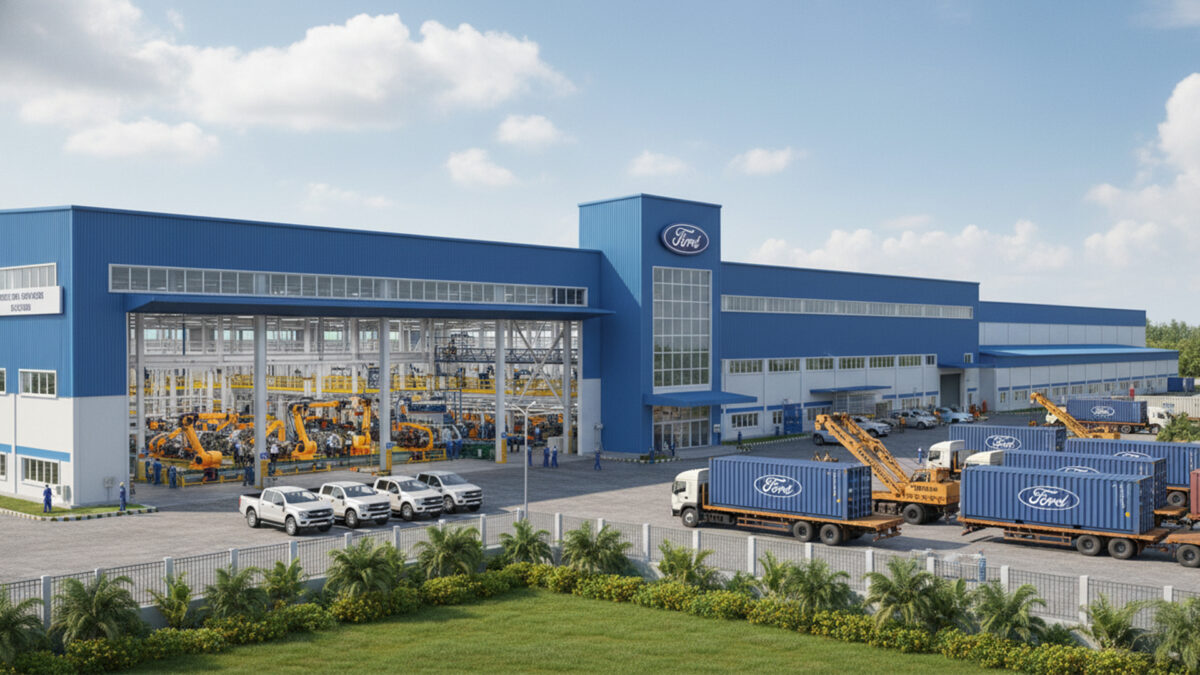
Ford Defies Trump, Will Invest Rs 3,250 Crore in India

Ford Motor Co. is preparing to invest approximately Rs 3,250 crore in India to revive production operations at its Maraimalai Nagar facility in Tamil Nadu, according to multiple credible news reports citing people familiar with the development.

The investment, estimated at around USD 370 million, will be directed toward producing advanced internal combustion engines intended for export to global markets.

The Maraimalai Nagar plant, which has been inactive since Ford halted vehicle manufacturing in India in 2021, will be refurbished and retooled to support the scale of engine production Ford is planning.

The annual capacity of the revived plant is expected to exceed 200,000 engines.

Sources said the engines produced in India will be exported to markets outside the United States, though Ford has not disclosed final destination markets for the exports.

The company’s decision indicates that India will serve as a key export hub rather than a base for domestic vehicle manufacturing in the near term.

This move comes at a time when the U.S. political establishment is advocating strongly for American companies to prioritize domestic output.

Recent policy direction from Washington, including renewed pressure from former President Donald Trump and a political focus on reshoring manufacturing, has centered around discouraging U.S. corporations from shifting investment overseas.

Ford’s decision to allocate new capital toward India rather than the United States is being seen by industry observers as a strategic statement that global manufacturing efficiency continues to outweigh political pressure.

Reports indicate that the Tamil Nadu state government has been keen to revive operations at the plant, which was among Ford’s earliest investments in India dating back to the 1990s.

The revival of the factory is expected to generate employment opportunities locally and re-energize the surrounding vendor ecosystem.

The region is already home to a strong automotive supply chain and is a preferred destination for export-oriented automobile manufacturing, with several multinational automakers maintaining operations there.

Ford’s retreat from the Indian passenger vehicle market in 2021 followed decades of financial strain, during which the automaker accumulated losses exceeding USD 2 billion in the country.

At that time, Ford concluded that the scale and profitability required for long-term sustainability in India’s competitive mass-market passenger segment were difficult to achieve.

Shifting to a component- and export-focused model allows the company to leverage India’s cost competitiveness without directly competing in the domestic automotive marketplace.

Industry analysts say the decision signals Ford’s renewed confidence in India as a manufacturing and export base at a time when multinational automakers are diversifying their production networks beyond China.

The move also reflects a broader trend in which India is emerging as a strategic alternative for global manufacturing, supported by an improving business environment and government incentives encouraging industrial investment and exports.

The company has not yet issued a formal public announcement detailing timelines or employment projections, but regulatory filings and government sources indicate the approval process for the investment is in the advanced stage.

The initiative is expected to be rolled out in phases, with production activity likely to begin once retooling of the plant is completed.

Also Read: Tata Motors, THINK Gas Partner to Build LNG Refueling Ecosystem

Categories
Corporate

Dabur India Launches ₹500 Crore Investment Platform ‘Dabur Ventures’

Indian consumer products major Dabur India Limited has unveiled a new investment initiative dubbed “Dabur Ventures”, allocating up to ₹500 crore to back digital-first consumer businesses aligned with its core categories.

The company said the fund will draw exclusively from its internal resources and is intended to acquire stakes in emerging companies that resonate with its journey and digital-first consumer segments.

CEO Mohit Malhotra emphasised the company will remain within its existing product categories—such as personal care, health care, wellness foods, beverages, and ayurveda—while exploring adjacent premium categories targeted at Gen Z and Gen Alpha consumers.

The move comes alongside Dabur’s September quarter results, which showed a net profit of ₹452.6 crore, up 6.4 percent year-on-year, and revenue of ₹3,191.3 crore, representing growth of 5.4 percent despite transitional headwinds associated with the GST reform.

For Dabur, the establishment of the venture arm signals a shift from purely organic growth to a more active external growth strategy, enabling the company to participate in the fast-growing startup and digital ecosystem without straying far from its core competencies.

Market observers note that Indian FMCG majors are increasingly looking at investment or acquisition of direct-to-consumer (D2C) and digitally native brands in order to modernize portfolios and capture younger, tech-savvy consumers.

In its filing, the company clarified that it will “restrict our existing categories and not go beyond them,” focusing on businesses that can scale and have a strong digital footprint.

The new platform, Dabur Ventures, will enable the company to invest in startups and growth-stage brands that bring innovation, niche capabilities, or digital distribution strength, which Dabur can enhance through its brand-building, distribution, and manufacturing infrastructure.

While the size of individual investments or specific targets were not disclosed, the total pool of ₹500 crore over time gives the company flexibility to pursue multiple deals.

Analysts say the move is well-timed. The consumer goods sector in India is undergoing transformation, and digital-first brands are gaining ground in premium and niche categories.

For a legacy firm like Dabur, the venture platform offers a way to tap into that growth without diluting its traditional footprint.

The allocation also indicates that the company sees value in early-stage participation, rather than waiting for established valuations.

For investors and stakeholders, the announcement offers two key takeaways: first, Dabur is positioning itself for future-oriented growth by combining its strengths with external innovation; second, it continues to safeguard its category focus and distribution engine, thus maintaining strategic coherence.

Also Read: Tata Motors, THINK Gas Partner to Build LNG Refueling Ecosystem