Categories
Corporate

NSE, valued at Rs 4.7 lakh crore, breaks into 10 most valuable companies in India list: Hurun

NSE, valued at Rs 4.7 lakh crore, breaks into 10 most valuable companies in India list: Hurun

As per the Hurun list, NSE is also the most-valuable unlisted company in India. It moved up by one position, while Cyrus Poonawalla-led Serum Institute of India, slipped one position

Staff Writer

The National Stock Exchange (NSE) has broken into the ranks of the top 10 most-valuable companies in India.

The exchange, valued at Rs 4,70,250 crore, is the highest value creator in percentage terms, according to the 2024 Burgundy Private Hurun India 500 compilation. NSE, led by Ashishkumar Chauhan, surged 201 per cent in value.

It is ranked at 10th and saw a change of value of 179 per cent in the last four years. According to the Hurun list, NSE is also the most-valuable unlisted company in India. It moved up by one position, while Cyrus Poonawalla-led Serum Institute of India, slipped one position.

To be included in the ‘2024 Burgundy Private Hurun India 500’ list, companies must have a minimum value of Rs 9,580 crore, it said, which equalled $1.1 billion as of December 13, 2024.

The most-valued company, as per the list, is Mukesh Ambani-led Reliance Industries, valued at Rs 17.52 lakh crore, followed by Tata Consultancy Services, valued at Rs 16.10 lakh crore, HDFC Bank valued at Rs 14.22 lakh crore, Bharti Airtel at Rs 9.74 lakh crore, ICICI Bank at Rs 9.30 lakh crore, Infosys at Rs 7.99 lakh crore, ITC at Rs 5.80 lakh crore, Larsen & Toubro at Rs 5.42 lakh crore, HCL Technologies at Rs 5.18 lakh crore, and NSE at Rs 4.70 lakh crore.

When it comes to the most-valued unlisted companies, the list is topped by NSE, followed by Serum Institute of India, valued at Rs 2.11 lakh crore, Zoho Corporation valued at Rs 1.03 lakh crore, Zerodha at Rs 87,750 crore, Megha Engineering & Infrastructures at Rs 77,860 crore, Parle Products at Rs 68,640 crore, Intas Pharmaceuticals at Rs 68,150 crore, Dream11 at Rs 67,860 crore, Razorpay at Rs 63,620 crore, and Amalgamations at Rs 56,660 crore.

Categories
Corporate

TCS likely to roll out salary increases in March, hikes to average 4-8%

TCS likely to roll out salary increases in March, hikes to average 4-8%

The software major's compensation revision comes after Infosys informed its employees that the annual compensation revision letters will be issued before the end of March

Staff Writer

Tata Consultancy Services is expected to roll out the annual increases in March with payouts starting in April.

The hikes are reportedly likely to average 4-8 per cent. According to a report in The Economic Times, annual hikes at most top-tier companies have seen a gradual slowdown, which is in line with the industry’s growth trends. The COVID-19 period saw high, double digit growths in annual hikes. TCS’ compensation revision comes after Infosys informed its employees that the annual compensation revision letters will be issued before the end of March.

Reports stated that the hikes are expected to be in the range of 5-8 per cent. It must be mentioned that TCS had linked its hikes and variable payouts to employees’ compliance with its recent return-to-office mandate that it had announced in 2024. The latest hike will follow the quarterly variable pay (QVP) released in February for the October-December period. An employee working with TCS for eight years, told the financial daily that the hikes have been meagre for the past three-five years.

Meanwhile, TCS reported a 11.95 per cent year-on-year (YoY) rise in consolidated net profit at Rs 12,380 crore for the December quarter compared with Rs 11,058 crore in the same quarter last year. Net sales climbed 5.59 per cent to Rs 63,973 crore from Rs 60,583 crore in the corresponding period last year. Sales were up 4.5 per cent YoY in constant currency (CC) terms.

Categories
Corporate

RBI bars New India Co-operative Bank from fresh business, customers can’t withdraw deposits

RBI bars New India Co-operative Bank from fresh business, customers can’t withdraw deposits

The central bank's move prevents depositors from withdrawing funds as the bank faces liquidity issues

Staff Writer

The Reserve Bank of India (RBI) has barred Mumbai-based New India Co-operative Bank from issuing new loans and suspended deposit withdrawals for six months.

The central bank cited supervisory concerns and the lender's liquidity position issues over the unprecedented move. The RBI move prevents depositors from withdrawing funds as the bank faces liquidity issues.

Soon after the announcement, anxious customers were seen queuing outside various branches of New India Co-operative Bank. The RBI announced that effective from the close of business on February 13, 2025, New India Co-operative Bank is barred from granting or renewing any loans or advances.

It also cannot make any new investments or accept fresh deposits. It is also not allowed to disburse any payments. The bank is not allowed to dispose of any of its properties or make any investments or borrow funds.

The directions were necessary due to concerns arising from "recent material developments" at the bank, and to protect the interest of depositors, the RBI said. However, it did not elaborate on the specifics of these concerns.

The central bank added that eligible depositors are entitled to deposit insurance claims up to Rs 5 lakh, as per the deposit insurance scheme. Depositors have been asked to submit their claims with the bank.

At the end of March 2024, New India Co-op Bank had deposits worth Rs 2,436 crore and advances worth Rs 1,175 crore. It reported a loss of Rs 22.78 crore for FY24 and Rs 42.11 crore in FY23. In April 2024, in a similar move, the RBI had restricted Kotak Mahindra Bank from on-boarding new customers through its online and mobile banking channels and from issuing fresh credit cards.

However, on Wednesday, the RBI had lifted the curbs on Kotak Mahindra Bank following satisfactory compliance with regulatory requirements.

Categories
Corporate

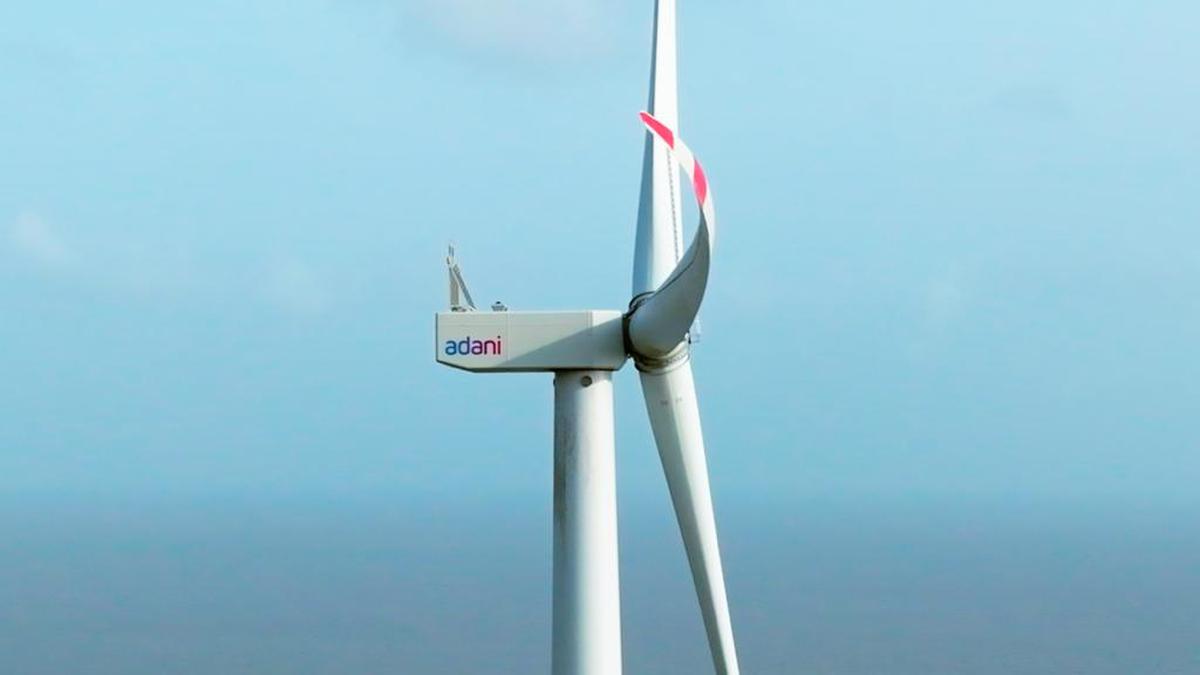
Adani Green Energy to withdraw from Sri Lanka wind power projects, open to future collaboration

Adani Green Energy to withdraw from Sri Lanka wind power projects, open to future collaboration

Under the deal with Sri Lanka, Adani Green was to build two wind power projects in Mannar town and Pooneryn village, both in the northern province of the country. Adani’s renewable energy division had earmarked a $442 million investment for wind power generation and transmission in Sri Lanka

Staff Writer

Adani Green Energy announced that it will withdraw from two planned wind power projects in Sri Lanka, according to a letter the company sent to a Sri Lankan government agency. 

“Adani Green Energy has conveyed its Board’s decision to respectfully withdraw from further engagement in the RE wind energy project and two transmission projects in Sri Lanka. However, we remain committed to Sri Lanka and are open to future collaboration if the Government of Sri Lanka so desires,” a Adani Group spokesperson said. 

Last month, the Sri Lankan government said it had started talks with the Adani Group to reduce the cost of electricity from the projects, which were estimated to cost a total of $1 billion. 

Under the deal with Sri Lanka, Adani Green was to build two wind power projects in Mannar town and Pooneryn village, both in the northern province of the country. Adani’s renewable energy division had earmarked a $442 million investment for wind power generation and transmission in Sri Lanka. 

The Adani Group is also involved in constructing a $700 million terminal project at Sri Lanka’s largest port in Colombo. 

Sri Lanka, which faced severe power blackouts and fuel shortages during its economic crisis in 2022, has been working to speed up renewable energy projects to reduce its reliance on expensive imported fuel. 

In May 2024, the former government in Sri Lanka had reached a deal to purchase electricity at a rate of $0.0826 per kilowatt from an Adani wind power facility planned for construction in the northwest region of the island. 

Opposition to the agreement came from activists who believed that smaller renewable energy projects were able to provide electricity at a significantly lower cost compared to Adani's proposal.

Categories
Corporate

RBI removes curbs on Kotak Mahindra Bank that it had placed in April 2024

RBI removes curbs on Kotak Mahindra Bank that it had placed in April 2024

In April 2024, the Kotak Mahindra Bank was instructed to halt onboarding new customers through its online and mobile banking platforms, as well as issuing fresh credit cards

Staff Writer

The Reserve Bank of India lifted the restrictions placed on Kotak Mahindra Bank on February 12, allowing the bank to onboard new customers through its online channels and issue new credit cards. The restrictions were originally imposed by the RBI on April 24, 2024, under Section 35A of the Banking Regulation Act, 1949.

The RBI said: "Subsequently, the bank initiated remedial measures to address the supervisory concerns and submitted compliances to the Reserve Bank. The bank also commissioned an external audit, with prior approval of RBI, to validate the compliances. Now, having satisfied itself based on the submissions, and remedial measures undertaken by the bank, the Reserve Bank, has decided to lift the restrictions placed on Kotak Mahindra Bank Limited."

The central bank imposed restrictions on the bank following an IT Examination by the Reserve Bank in 2022 and 2023, as well as the bank's ongoing failure to effectively and promptly address these concerns.

In its April 24 order, the central bank had directed the lender “to cease and desist, with immediate effect, from

(i) onboarding of new customers through its online and mobile banking channels and

(ii) issuing fresh credit cards. It had added that the bank shall, however, continue to provide services to its existing customers, including its credit card customers.

Following the restrictions, the bank implemented measures in response to concerns raised about specific aspects of its operations, particularly the IT infrastructure.

Kotak Mahindra Bank promptly addressed the RBI's concerns by implementing remedial actions and submitting required compliances. Additionally, the bank conducted an external audit, approved by the central bank, to verify compliance with regulations.

“We welcome the Reserve Bank of India’s (RBI) decision to lift the business restrictions on Kotak Mahindra Bank. This decision follows the Bank's successful implementation of remedial measures and compliance validation through an external audit. We will continue to work closely with the RBI to shortly resume digital onboarding of new customers and issuing fresh credit cards,” Kotak Mahindra Bank spokesperson said.

Shares of Kotak Mahindra Bank closed at Rs 1,943.30, up by 1.35% on 12 February.


Categories
Corporate

Infosys likely to issue salary hike by Feb-end, average raise to range from 5-8%

Infosys likely to issue salary hike by Feb-end, average raise to range from 5-8%

This decision comes as the demand environment picks up, with Infosys positioning itself to capitalise on the expected rise in IT spending

Staff Writer

Infosys, a leading IT services provider, is set to issue salary increment letters by the end of February, with hikes ranging from 5% to 8%. These increments will take effect in April 2025.

The company has also commenced issuing promotion letters in batches since December, indicating a strategic response to an anticipated increase in technology budgets for the coming fiscal year. 

This decision comes as the demand environment picks up, with Infosys positioning itself to capitalise on the expected rise in IT spending, Moneycontrol reported.

"Broadly, the comp (annual salary increment) that we are expecting is 6-8% in India, and the overseas comps will be in line with the earlier comp reviews," Infosys’ Chief Financial Officer Jayesh Sanghrajka said while addressing the press after the Q3FY25 results.

In a contrasting development, Infosys has faced backlash after laying off nearly 700 freshers from its Mysuru campus.

These employees, who had only been with the company for a few months since their onboarding in September 2024, were reportedly dismissed in what has been described as "a shocking and unethical move" by Harpreet Singh Saluja, the president of the IT employees' union NITES. 

The union alleged that "bouncers and security personnel" were deployed during the termination process, which has drawn significant criticism. The layoffs have sparked widespread outrage on social media, with users expressing sympathy and anger over the sudden job losses. 

One user described the situation as "truly heartbreaking," highlighting that many freshers had waited over two years after graduation to join Infosys, only to be laid off after six months. Another post referred to the scene as "the most devastating photo in recent times," underscoring the emotional impact on the affected individuals who had trusted one of India's largest IT firms for their career beginnings. 

Delays in onboarding processes have become a notable issue across the Indian IT sector, with several companies struggling to align hiring with fluctuating market demands. This has resulted in protracted waits for new hires, exacerbating the uncertainty faced by fresh graduates.


Categories
Corporate

Made-in-India Maaza becomes a billion dollar brand

Made-in-India Maaza becomes a billion dollar brand

Indigenous beverages brand Maaza, that was first developed in India in 1976, has turned into a billion-dollar brand for Coca-Cola, says Global CEO

Staff Writer

Maaza – a mango-based drink popular among millions of Indians for decades – has joined the elite club of brands that boasts of billion dollar revenues. Conceptualised and developed in India, now owned by the US behemoth Coca-Cola, Maaza has turned into a “billion dollar brand”, a top executive said today.

According to James Quincey, Chief Executive Officer of The Coca-Cola Company (Coke), Maaza emerged as a new billion dollar brand for it in 2024. “Maaza is now our 30th billion dollar brand. In 2024, our system added approximately 440,000 outlets by digital customer platforms in India, which provides more opportunities to better tailor our product, price and packaging offerings,” Quincey told the stakeholders in a post-earnings call on Tuesday.

Maaza’s emergence as a priced possession for Coke is no mean a feat. Born in 1976 in India, Maaza finds its association close with India’s then de-facto Cola King Ramesh Chauhan of Parle (now Bisleri International). Over the years since its launch Maaza, along with its sister brands like Gold Spot, Limca, Citra and Thums Up, had already established itself as a widely popular choice among Indian consumers. However, by 1995 Maaza found itself a new owner, arriving among the first sets of US multinationals post-liberalisation, Coca-Cola.

Over the last three decades Maaza’s growth held steady against the influx of competing fruit-based beverage brands both from Coke’s rivals in the market and its own stable. “Despite a flurry of fruit-based drinks in the market now, Maaza has curved out a space for itself that is not easy to steal. Its presence in consumer mindset transcends generations,” says a senior FMCG executive who had led the expansion of Maaza in the past.

According to him, Maaza proves the strength of Indian brands that, if done right, then can withstand global competition and the test of time. The only other Indian beverages brand that boost of a billion dollar or more in sales is Thums Up, which despite challenges from global fizzy drinks giants like Coca-Cola and Pepsi Cola, among others.

“In India, our business rebounded nicely during the quarter and we grew volume. We recruited consumers with innovative marketing campaigns that linked Coca Cola with music, Sprite with travel and Thumbs Up with movies,” Quincey further adds.


Categories
Corporate

Sebi bars LS Industries from securities market for ‘stock manipulation’

Sebi bars LS Industries from securities market for 'stock manipulation'

Sebi has issued a temporary order prohibiting LS Industries Ltd (LSIL), along with its promoters and key individuals, from engaging in the trading of its shares and participating in the securities market until further notice, due to allegations of manipulating stock prices

Staff Writer

The Securities and Exchange Board of India (Sebi) on Tuesday barred textile firm LS Industries from the securities market for alleged stock price manipulation and fraudulent practices. The markets regulator noted that LS Industries had a market capitalisation of Rs 22,700 crore at the peak.

LS Industries, despite having a market capitalisation of Rs 5,768 crore, reported minimal revenue in the past three fiscal years. An investigation by Sebi revealed that in October 2022, former director Suet Meng Chay transferred his entire 12.12% stake in the company to Dubai-based NRI Jehangir Panikkaveettil Perumbarambathu in an off-market deal, news reports stated.

Although the shares transferred were valued at approximately Rs 154 crore based on a share price of Rs 15 each, the transaction took place at a significantly lower price of Rs 75 or $1 per share. Sebi's inquiry uncovered suspicious buy orders placed by multiple entities at the upper circuit limits at 9 am, leading to a significant increase in the share price. These actions resulted in an 11-fold increase in the share price within a short span of two months.

The regulatory body has issued a temporary order prohibiting LS Industries (LSIL), , along with its promoters and key individuals, from engaging in the trading of its shares and participating in the securities market until further notice, due to allegations of manipulating stock prices.

This action follows an investigation by SEBI into LSIL, a textile company that has reported minimal revenue. Despite recording no sales in two quarters of FY25, LSIL's stock price experienced a significant surge from Rs 22.50 in July 2024 to Rs 267.50 in September—an increase of 11 times—before plummeting to Rs 42.39 in November.

SEBI's investigations uncovered a suspected pump-and-dump scheme involving a group of traders, including Multiplier Share & Stock Advisors Pvt. Ltd. and Setu Securities Pvt. Ltd. These entities were found to have placed buy orders at upper circuit limits early on, leading to an artificial inflation of the stock's price. Subsequently, they proceeded to dump shares, resulting in a significant drop in the stock's value.

The Sebi is set to conduct a thorough investigation by May 15. Meanwhile, Sebi has instructed the NRI to furnish a comprehensive list of his assets, investments, and bank accounts, as well as to freeze any withdrawals from his accounts.


Categories
Corporate

ITC doubles down on frozen foods business, plans to acquire Prasuma for ₹300 crore

ITC doubles down on frozen foods business, plans to acquire Prasuma for ₹300 crore

According to Hemant Malik, Wholetime Director, ITC, the addition of Prasuma into ITC’s portfolio will help it build a full stack of frozen and ready-to-cook foods portfolio. The move aligns with its ITC Next strategy coined by its Chairman Sanjiv Puri

Staff Writer

Diversified conglomerate ITC is increasing its bet on the rapidly growing frozen foods market. The Kolkata-based entity, which has been in the ready-to-cook (RTC) segment since 2019, has taken the inorganic route to scale the business as it gears up to acquire popular frozen foods maker Prasuma against some Rs 300 crore. 

The deal, planned to be completed over three years will see  ITC picking up a 43.8% stake by March 2025 in the company in the first tranche.  

ITC plans to raise its stake in Prasuma to 62.5% by April 2027 and the rest of the stake will be acquitted by the conglomerate by June 2028 based on pre-defined valuation criteria and subject to other conditions as stated in the definitive agreements. 

The company has not revealed the total cost of the acquisition but according to estimates ITC may have to spend close to Rs 300 crore to expand its presence in the frozen foods market that is increasingly gaining traction among urban consumers. 

As per the ITC management, the company will initially acquire 62.5% stake in Prasuma for Rs 187 crore and the deal will help ITC build a frozen, chilled and RTC portfolio in the Rs 10,000 crore market segment that has high growth potential.  

The move aligns with its ITC Next strategy coined by its Chairman Sanjiv Puri. The strategy primarily focuses on building a future-ready portfolio of products that serves evolving consumer needs. 

“ITC’s valuation of Prasuma is close to Rs 300 crore and it is expected to close the deal by 2028 against the amount,” a source familiar with the developments said. 

According to Hemant Malik, Wholetime Director, ITC, the addition of Prasuma into ITC’s portfolio will help it build a full stack of frozen and ready-to-cook foods portfolio. “With Good-for-You, first-to-market products, across cuisines, we believe that the combined portfolio will delight our discerning consumers. This investment reaffirms our commitment to building future-facing, best-in-class, innovative portfolios,” he said. 

Malik’s enthusiasm is not without a rationale. ITC already has a wide range of frozen foods portfolio under its ITC Master Chef brand, comprising over 50 RTC items, frozen snacks and Indian breads with a reach of over 200 towns. 

At a time when both segment-focused brands like Carnivor or Meatzza and traditional fast-moving consumer goods makers such as Godrej, are out to lure urban consumers, ITC’s move may prove to be crucial in its market presence. 

"With the industry at an inflexion point, this acquisition will help strengthen and expand ITC’s presence in the aforesaid categories by gaining entry into high growth segments, viz. Pan Asian foods, Deli meats, etc. With the proposed acquisition, ITC will become the first full-stack player in the segment with an unparalleled portfolio, offering meals and snacking options across multiple occasions throughout the day for the discerning consumer. ITC Master Chef and Prasuma shall also benefit from significant synergies through well-designed institutional mechanisms and enablers,” the company said.

Categories
Corporate

Tax relief, RBI rate cut to boost ₹10-25 lakh car segment: M&M

Tax relief, RBI rate cut to boost ₹10-25 lakh car segment: M&M

Mahindra & Mahindra reported a 19% increase in year-on-year profit to Rs 2,964 crore in the October to December quarter of FY25 on the back of strong SUV demand. The company continued to dominate the SUV market, with the SUV market share at 23%

Staff Writer

The tax relief in the union budget FY26 and the repo rate cut by the Reserve Bank of India (RBI) are likely to boost demand for the Rs 10 lakh to Rs 25 lakh car segment, a top company official at Mahindra & Mahindra told reporters.

The RBI on February 7 cut the repo rate by 25 basis points at 6.25%. “Demand is going to be very robust for products Rs 10 to Rs 25 lakh in the country. And our strategy is to play in the Rs 7-25 lakh category,” says Rajesh Jejurikar, Executive Director- auto & farm division at Mahindra & Mahindra.

According to Dr Anish, Group CEO of Mahindra & Mahindra, tax relief will create demand stimulus for the middle class. “We believe the fundamentals for the Indian economy are very strong, and we've seen some blips in the short run, the relief, in terms of taxation for the middle class, puts more money in their hands, and that will create a demand stimulus, which is going to help and in turn, translate to greater capex from a private sector as well, which has also been an area that has been lacking in some way…. And similarly, the rate cut also will help in terms of creating a little bit more of a demand stimulus. So, both are positive moves from an economic standpoint,” says Shah.

Mahindra & Mahindra reported a 19% increase in year-on-year profit to Rs 2,964 crore, whereas the revenue from operations surged by 20% YoY to Rs 30,538 crore in the October to December quarter of FY25 on the back of strong SUV (sports utility vehicle) demand. The company continued to dominate the SUV market, with the SUV market share at 23%.

The company, which launched its flagship born-electric models — BE.6 and XEV.9e in December last year— will begin bookings of the EVs beginning February 14 this year. The company will initially roll out 5,000 units of BE.6 and XEV.9e