
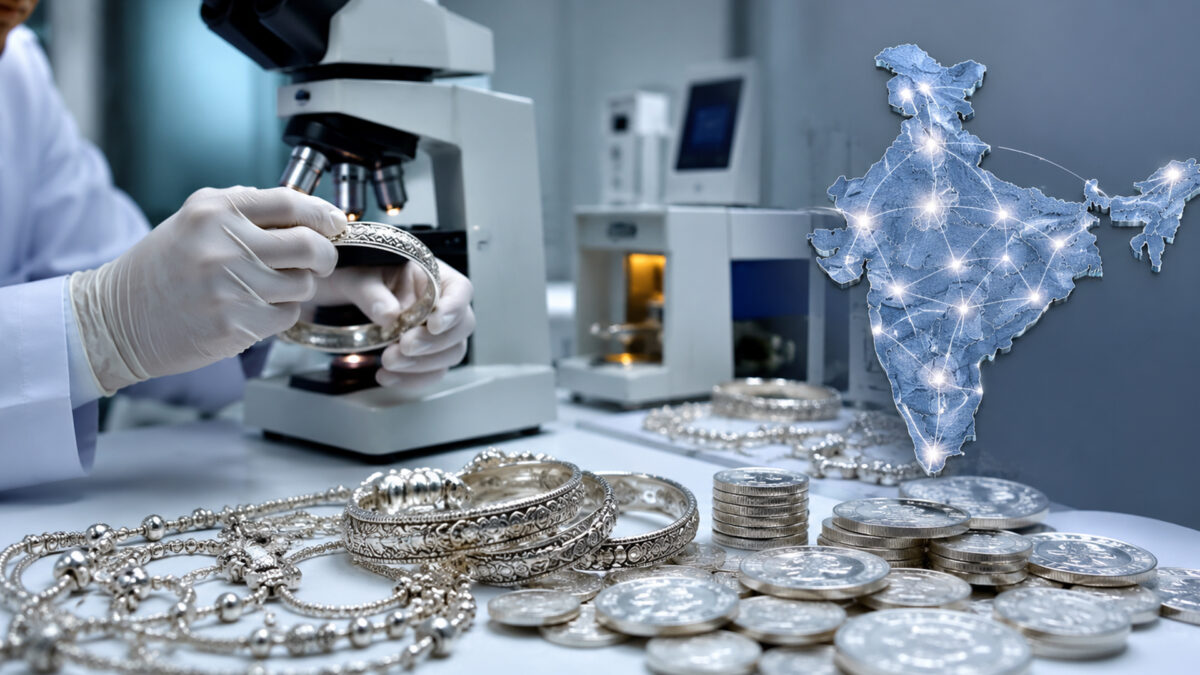
he sharp rise in gold prices is changing buying patterns in India, with more consumers turning to silver jewellery and other silver articles as a relatively affordable alternative. In response, the Bureau of Indian Standards (BIS) is preparing to significantly expand its silver hallmarking and testing infrastructure across the country.
The move comes as jewellers and industry players report stronger interest in silver following the sustained rise in gold prices. BIS plans to increase the number of laboratories capable of testing silver, upgrade existing facilities and introduce technology-led systems to handle the growing demand for silver hallmarking.
BIS Director General Pramod Kumar Tiwari said the standards body is working to strengthen the country’s silver testing network. The expansion is aimed at making hallmarking more accessible to jewellers while ensuring consumers can identify the purity of silver products they purchase.
Unlike gold, where hallmarking has become widely established among consumers, silver hallmarking has had a more limited reach. The growing popularity of silver is now pushing the industry and regulators to give greater attention to quality certification.
The BIS plans to expand its network of silver testing laboratories and improve their capacity. The objective is to ensure that jewellery manufacturers and retailers do not face long waiting periods when sending products for purity testing.
The standards body is also looking at using artificial intelligence and other advanced technologies in the testing process. AI-based systems could help improve the speed and accuracy of testing while reducing the possibility of human error.
The increased focus on silver comes at a time when gold has become increasingly expensive for ordinary buyers. Gold prices have remained elevated amid strong investment demand, global economic uncertainty and expectations surrounding interest rates. For many households, particularly those purchasing jewellery for personal use or traditional occasions, the higher price of gold has encouraged them to consider silver.
Industry representatives have pointed to a noticeable shift in consumer preferences. Buyers who may previously have chosen gold jewellery are increasingly considering silver ornaments, coins, utensils and other articles. This has created a need for stronger quality standards in the silver market.
Hallmarking is particularly important in this environment because consumers often find it difficult to determine the actual purity of precious metals simply by looking at a product. A hallmark provides an independent indication that the article has undergone an approved purity assessment.
For silver buyers, the expansion of hallmarking could therefore offer greater confidence. It could also help bring more uniformity to the market by making purity information easier to verify.
The BIS has already established standards for silver articles and jewellery. The organisation’s efforts are now focused on expanding the infrastructure needed to support wider adoption of silver hallmarking.
One of the key challenges is the availability of testing facilities. As silver demand rises, existing laboratories may face higher workloads. Expanding the laboratory network would allow more jewellers and manufacturers to access testing services closer to their locations.
The proposed expansion is also expected to benefit smaller businesses. Jewellers in smaller cities and towns can face logistical difficulties when testing facilities are located far away. A broader network could reduce the time and cost involved in getting silver products hallmarked.
The industry is also witnessing a change in the role of silver itself. Traditionally associated with lower-cost jewellery and household articles, silver is increasingly being viewed as both a consumption product and an investment asset.
Silver has an advantage over gold in terms of affordability, allowing consumers to buy larger quantities for the same amount of money. At the same time, silver has significant industrial applications, including in electronics, solar energy equipment and other manufacturing sectors.
This combination of investment and industrial demand has helped keep silver in focus in recent years. Rising gold prices have added another factor by making silver more attractive to price-sensitive buyers.
The BIS’s proposed use of artificial intelligence in silver testing reflects the broader push to modernise India’s quality-control infrastructure. Technology could help laboratories process more samples and maintain consistent testing standards as volumes increase.
The expansion of silver hallmarking is also expected to strengthen transparency in the jewellery market. For consumers, clearer purity certification can reduce uncertainty when purchasing silver products. For legitimate jewellers, stronger standards can help create a more level playing field by distinguishing certified products from those whose purity may be unclear.
The development comes as India’s precious metals market undergoes a broader transformation. Gold continues to dominate jewellery demand and remains an important store of value for Indian households. However, record and near-record prices have made affordability a growing concern for consumers.
Silver is increasingly filling part of that gap. The shift does not necessarily mean that consumers are abandoning gold, but it indicates that buyers are becoming more flexible about the type of precious metal they purchase.
For the BIS, the challenge will now be to ensure that the hallmarking system keeps pace with this changing market. Expanding testing laboratories, improving technology and introducing AI-assisted processes could help the regulator respond to the expected rise in silver products entering the organised market.
For consumers, the message is straightforward: as silver becomes more popular, purity certification will become increasingly important. A stronger silver hallmarking network could provide buyers with greater assurance while supporting the growth of a more transparent and organised silver jewellery market in India.