Categories
Beyond

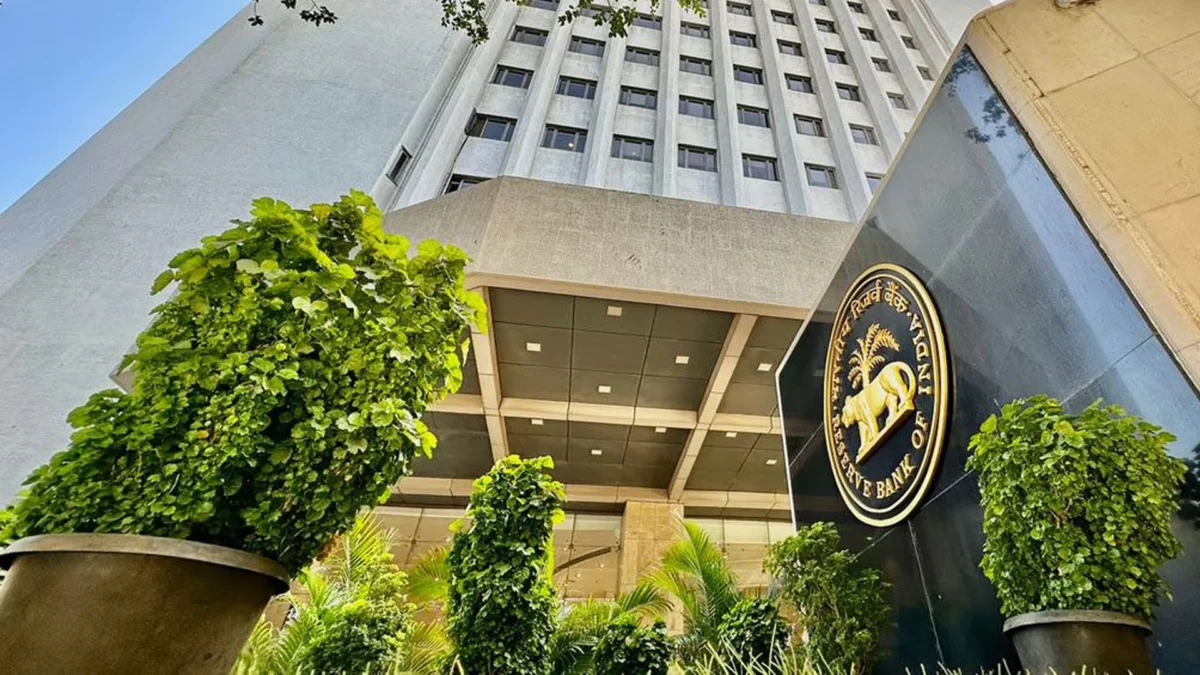
RBI Maintains Repo Rate at 5.5%, Revises Growth Forecast

In a major development, the Reserve Bank of India (RBI) decided to keep its key policy interest rate, the repo rate, unchanged at 5.5%. This decision was unanimously supported by the six-member Monetary Policy Committee (MPC) and aligns with market expectations. The RBI also maintained its neutral monetary policy stance, indicating a balanced approach to managing inflation and supporting economic growth.

Governor Sanjay Malhotra emphasized that the committee opted for a “wait and watch” approach to allow recent policy decisions, including earlier rate cuts and Goods and Services Tax (GST) reforms, to take effect. He noted that the effects of earlier front-loaded cuts are still playing out, and the committee chose to pause further action for now.

In its updated projections, the RBI revised India’s GDP growth forecast for the fiscal year 2025–26 to 6.8%, up from the previous estimate of 6.5%. This adjustment reflects stronger-than-expected economic performance, with a 7.8% expansion in the April–June quarter. The RBI now projects quarterly growth rates of 7.0% for Q2, 6.4% for Q3, and 6.2% for Q4. For the first quarter of FY27, growth is projected at 6.4%.

Concurrently, the RBI lowered its average headline inflation projection for FY26 to 2.6%, down from the earlier forecast of 3.1%. This revision is attributed to the dampening impact of GST rationalization and a sharper-than-expected decline in food prices. Governor Malhotra stated that the overall inflation trajectory has turned more benign, though external uncertainties continue to cloud the economic outlook.

Despite these positive domestic indicators, the RBI expressed caution regarding external risks, particularly the potential impact of U.S. tariffs on Indian exports. Governor Malhotra acknowledged that higher U.S. tariffs of up to 50% on Indian goods could slow external demand. He noted that while domestic economic momentum remains resilient, global headwinds and tariff-related uncertainty warrant caution.

The RBI also highlighted that the decline in headline inflation is largely due to easing food inflation. Retail inflation has remained below the 4% target since February, falling to a six-year low of 2.07% in August, supported by softer food prices and a favorable base effect.

Regarding the Indian rupee, Governor Malhotra stated that the RBI is closely monitoring currency movements. He noted that monetary policy transmission is broadly taking place across sectors and added that the remaining reduction in the cash reserve ratio (CRR) is expected to further strengthen transmission. System-level indicators for banks and non-banking financial companies (NBFCs) continue to reflect strong health.

Looking ahead, the RBI reiterated that its primary mandate is to keep Consumer Price Index (CPI)-based retail inflation at 4%, with a tolerance band of ±2%. The committee’s decision to maintain the repo rate at 5.5% reflects a cautious yet optimistic outlook, balancing domestic economic resilience with external uncertainties. The RBI’s next policy review is scheduled for December 2025, where further adjustments will be considered based on evolving economic conditions.


Categories
Technology

Pocket-Friendly YouTube Lite Launched at ₹89

YouTube is giving Indian users a budget-friendly experience to stream ad-free videos with the launch of its new ‘Premium Lite’ plan, priced at just ₹89 per month.

The plan is introduced for viewers who want uninterrupted video playback without paying for the full-featured YouTube Premium subscription. With Premium Lite, most videos on smartphones, tablets, desktops, and smart TVs can now be streamed ad-free.

However, the budget plan comes with clear trade-offs. Unlike the regular Premium subscription, Premium Lite does not include music streaming on YouTube Music, offline downloads, or background playback. These are features that are highly popular among users. There is no escape from Ads as they may also continue to appear in Shorts, music-related videos, search results, and browsing feeds.

By pricing the plan at less than a third of the standard Premium cost, YouTube is targeting India’s vast base of casual video-watchers who mainly consume short or long-form videos but don’t necessarily need premium music or offline perks.

The rollout also reflects YouTube’s wider strategy of tailoring subscription models to suit different markets and budgets. India, one of YouTube’s largest consumer bases, is likely to see strong uptake from price-sensitive users frustrated with frequent ad interruptions.

The Premium Lite plan is already being introduced gradually and is set to be available nationwide in the coming weeks. By doing so, YouTube is looking to balance affordability with user convenience that could reshape viewing habits in one of its fastest-growing markets.

Also Read: Zelio E-Mobility Launches ₹78 Crore SME IPO


Categories
Beyond

Banks Can Extend Working Capital Loans to Gold-Using Manufacturers: RBI

In a crucial development, the Reserve Bank of India (RBI) has broadened its lending guidelines to allow banks to provide need-based working capital loans to manufacturers that use gold as a raw material, a facility previously limited to jewellers.

Traditionally, banks are barred from financing the purchase of gold or silver in any form, or from lending against primary gold or silver.

However, scheduled commercial banks (SCBs) have been permitted to grant working capital loans to jewellers under a specific carve-out. The new amendment now extends this provision to borrowers engaged in manufacturing or industrial processing where gold or silver is used as an input.

According to the Reserve Bank of India (Lending Against Gold and Silver Collateral) (1st Amendment) Directions, 2025, issued on Monday, September 29, scheduled commercial banks and select urban cooperative banks (Tier 3 and 4) can provide need-based working capital financing to such borrowers, taking gold or silver as collateral.

The directions emphasize that these loans cannot be used to acquire or hold gold or silver for speculative or investment purposes.

In a related move, the RBI also issued the Reserve Bank of India (Interest Rate on Advances) (Amendment) Directions, 2025, aimed at offering borrowers more flexibility while allowing lenders greater discretion.

Under current norms, banks must link all floating-rate retail loans—including housing, auto, and MSME loans—to an external benchmark. While the spread over the benchmark is at the bank’s discretion, components other than the credit risk premium can only be revised once every three years.

The amended guidelines now allow banks to reduce other spread components earlier if it benefits the borrower and give them discretion to offer an option to switch to a fixed rate at the time of reset, beyond the mandatory option for EMI-based personal loans.

Additionally, the RBI revised the eligible limits for perpetual debt instruments (PDIs) denominated in foreign currency or rupee-denominated bonds overseas, enabling banks to raise more Tier 1 capital through international markets.

All the revised directions will come into effect from October 1, 2025, providing greater flexibility to banks while supporting manufacturing entities that rely on gold as a key input.

Also Read: Electronic Arts Acquired in $55 Billion Buyout

Categories
Corporate

Electronic Arts Acquired in $55 Billion Buyout

Electronic Arts (EA), the renowned video game publisher behind franchises like “Madden NFL,” “Battlefield,” and “The Sims,” has agreed to be acquired in a historic $55 billion leveraged buyout. This deal, announced on September 29, 2025, is led by Saudi Arabia’s Public Investment Fund (PIF), private equity firm Silver Lake, and Affinity Partners, a firm managed by Jared Kushner.

The acquisition will be the largest private equity-funded buyout in history, surpassing the previous record held by the $32 billion TXU Energy buyout in 2007.

Under the agreement, EA shareholders will receive $210 per share in cash, representing a 25% premium over the company’s closing price on September 25, 2025.

The deal comprises about $36 billion in equity from the investors, including a rollover of PIF’s existing nearly 10% stake in EA, and $20 billion in debt financing from JPMorgan Chase, with $18 billion expected to be funded at closing. The transaction is expected to close in the first fiscal quarter of 2027, pending regulatory and shareholder approvals.

CEO Andrew Wilson will remain at the helm and EA will remain based in Redwood City, California. The move to take EA private aims to provide the company with greater flexibility to innovate and invest in long-term strategic initiatives without the pressures of public market scrutiny. This acquisition comes at a pivotal time, as EA is preparing for the launch of its highly anticipated game, “Battlefield 6,” scheduled for release in October 2025.

The buyout also marks the end of EA’s 36-year tenure as a publicly traded company.

The acquisition is expected to have significant implications for the gaming industry, potentially influencing future mergers and acquisitions and the strategic direction of major gaming franchises. PIF, already a 9.9% stakeholder in EA, is increasing its role in the gaming industry through this acquisition. Their ongoing strategy includes investments in companies like Nintendo, ESL, FACEIT, and Scopely, reinforcing efforts to expand their Savvy Gaming Group.

As the gaming industry continues to evolve, this landmark deal underscores the growing convergence of entertainment, technology, and investment, setting the stage for new developments in the gaming landscape.

Also Read: A Lotus in Steel, Glass and Technology to Bloom in October

Categories
Corporate

SEBI Bars Man Industries and Executives Over Fund Diversion

The Securities and Exchange Board of India (SEBI) has imposed a two-year ban on Man Industries (India) Ltd. and three of its senior executives—Chairman Ramesh Mansukhani, Managing Director Nikhil Mansukhani, and former Chief Financial Officer Ashok Gupta—from accessing the securities markets.

This action follows allegations of financial misconduct, including fund diversion and misrepresentation of financial statements.

SEBI’s investigation revealed that the company failed to consolidate its subsidiary, Merino Shelters Pvt. Ltd. (MSPL), into its financial statements between fiscal years 2015 and 2021.

Additionally, the company was found to have misrepresented related-party transactions and engaged in round-tripping of funds to obscure its true financial position.

A forensic audit was commissioned in November 2021 to examine the company’s financial records during this period.

In response to SEBI’s order, Man Industries stated that the penalty is minimal relative to its size and operations and will not affect day-to-day business.

The company continues to maintain a strong order book of over ₹4,700 crore and remains fully operational.

Following the regulatory action, shares of Man Industries (India) Ltd. experienced a significant decline, falling 16% to an intraday low of ₹340.90 on the Bombay Stock Exchange on September 30, 2025.

The stock pared losses to trade 14.5% lower at ₹347.3 apiece, compared to a 0.08% advance in the Nifty 50 index. This marked the fifth consecutive session of decline for the company’s stock.

SEBI’s decision underscores its commitment to maintaining transparency and accountability in India’s financial markets, sending a strong message against corporate misconduct.

Also Read: Air India Raises $215 Million for Debt Refinance

Categories
Corporate

Nifty 50 Index Undergoes Reshuffle; IndiGo, Max Healthcare Included

The National Stock Exchange (NSE) has implemented its semi-annual rebalancing of the Nifty 50 index, effective September 30, 2025. As part of this reshuffle, InterGlobe Aviation (the parent company of IndiGo Airlines) and Max Healthcare Institute have been included in the index, replacing Hero MotoCorp and IndusInd Bank.

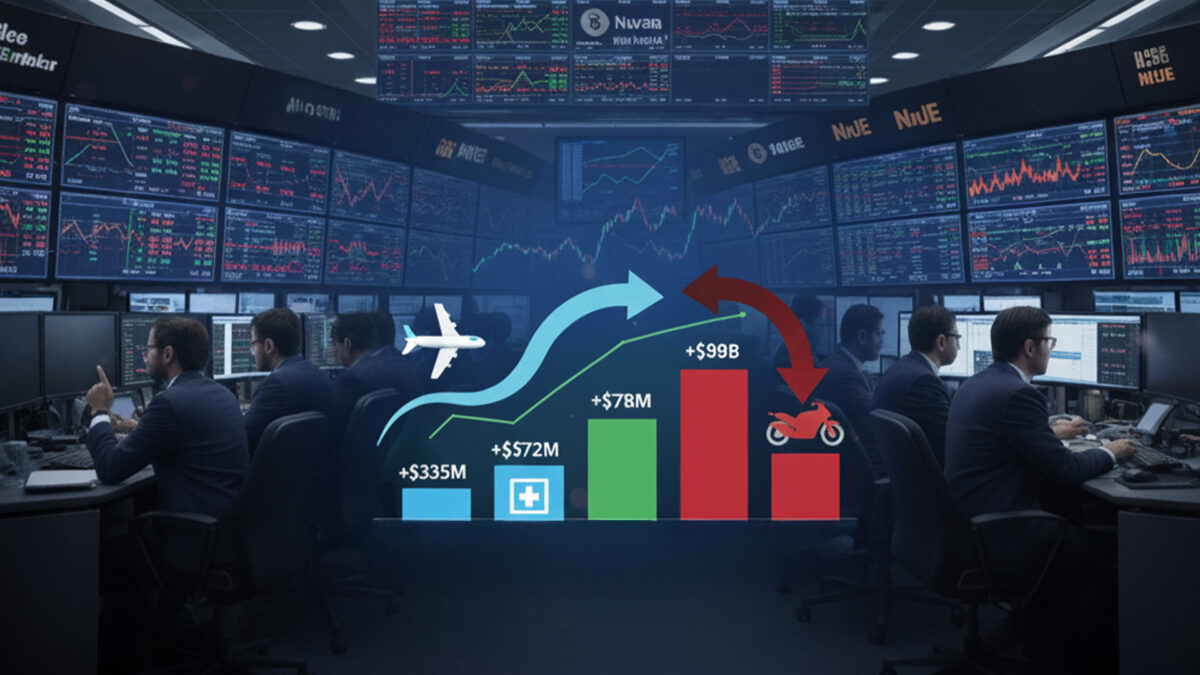
This change is expected to result in significant passive inflows into the newly added stocks. According to Nuvama Institutional Equities, IndiGo’s inclusion is anticipated to attract passive inflows of approximately $545 million, while Max Healthcare is projected to receive around $372 million. Conversely, Hero MotoCorp and IndusInd Bank are expected to experience outflows of $309 million and $217 million, respectively.

In addition to the constituent changes, the weightage of certain existing Nifty 50 stocks has been adjusted. Notably, State Bank of India (SBI), ITC, and Bajaj Finserv have seen increases in their index weightages, which could lead to additional inflows of $99 million, $38 million, and $19 million, respectively.

These adjustments reflect the dynamic nature of the market and aim to ensure that the Nifty 50 index accurately represents the top-performing companies listed on the NSE. The rebalancing is part of the NSE’s regular review process, which considers factors such as market capitalization and liquidity to determine index composition.

The inclusion of IndiGo and Max Healthcare in the Nifty 50 index underscores the growing prominence of the aviation and healthcare sectors in India’s economy. IndiGo, as the country’s largest airline, has seen significant growth in recent years, while Max Healthcare has expanded its presence in the healthcare industry. Their addition to the benchmark index is expected to enhance the representation of these sectors in the market.

The removal of Hero MotoCorp and IndusInd Bank from the Nifty 50 index reflects shifts in market dynamics and company performances. Hero MotoCorp, a leading two-wheeler manufacturer, has faced challenges in maintaining its market position, while IndusInd Bank has experienced issues affecting investor confidence. These changes highlight the evolving nature of the market and the importance of regular index reviews to ensure accurate representation.

Investors and market participants will closely monitor the impact of these changes on the Nifty 50 index and the broader market. The adjustments are expected to influence investment strategies and fund allocations, particularly for index-tracking funds and exchange-traded funds (ETFs) that replicate the Nifty 50 index.

Also Read: UST, Kaynes to set up ₹3,330 crore semiconductor facility in Gujarat

Categories
Corporate

Zelio E-Mobility Launches ₹78 Crore SME IPO

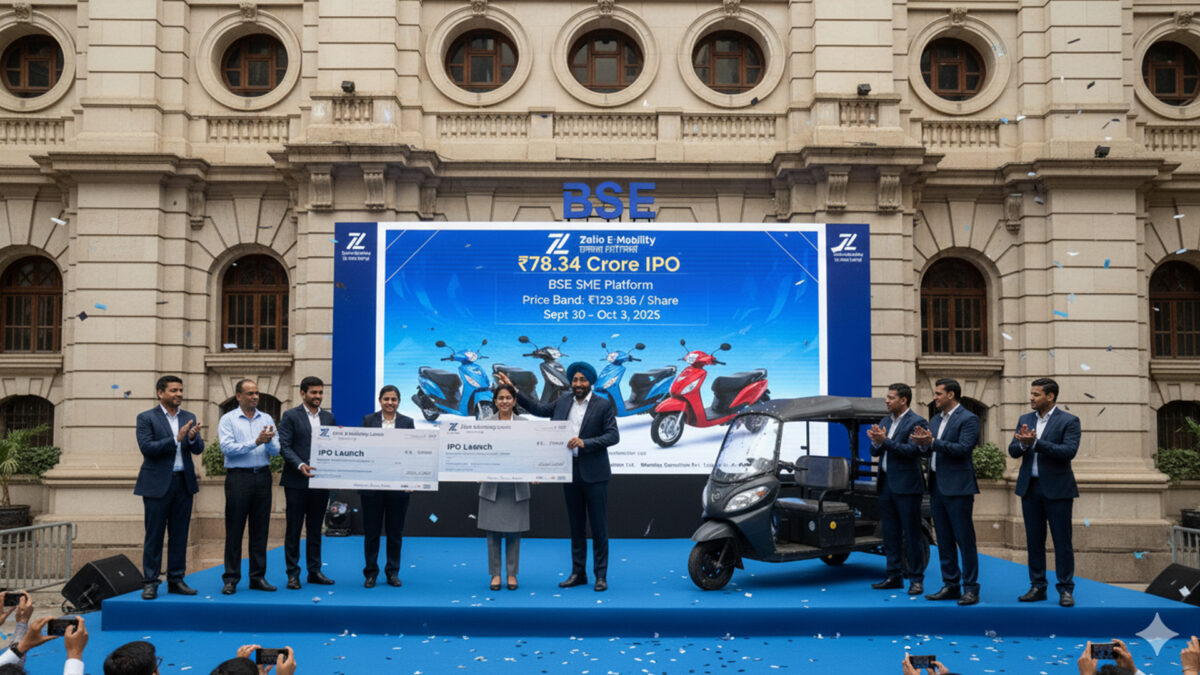
Zelio E-Mobility Limited, an electric vehicle manufacturer based in Haryana, has launched its ₹78.34 crore Initial Public Offering (IPO) on the BSE SME platform.

The IPO opened for subscription on September 30, 2025, and will close on October 3, 2025. The price band for the issue has been set between ₹129 and ₹136 per share, with a lot size of 1,000 shares, requiring a minimum investment of ₹2.58 lakh at the upper price band.

The issue comprises a fresh issue of 5,760,000 equity shares, aggregating to ₹78.34 crore, with no offer for sale component. The funds raised through the IPO are intended to support the company’s expansion plans, including enhancing manufacturing capabilities and expanding its dealer network.

Zelio E-Mobility manufactures electric two-wheelers under the brand name ‘Zelio’ and electric three-wheelers under the brand ‘Tanga’.

The company operates from a 24,458 square meter facility in Ladwa, Haryana, with an annual production capacity of 72,000 units. It distributes its products through a network of over 280 dealers across more than 20 states and union territories.

The IPO’s tentative listing date on the BSE SME platform is October 8, 2025. Hem Securities Ltd. is the book running lead manager for the issue, and Maashitla Securities Pvt. Ltd. is the registrar. Hem Finlease Pvt. Ltd. serves as the market maker for the company.

Also Read: Govt Weighs Overhaul of HAL to Improve Efficiency, Expedite Defence

Categories
Beyond

Sensex, Nifty Trade Flat Amid Market Uncertainties

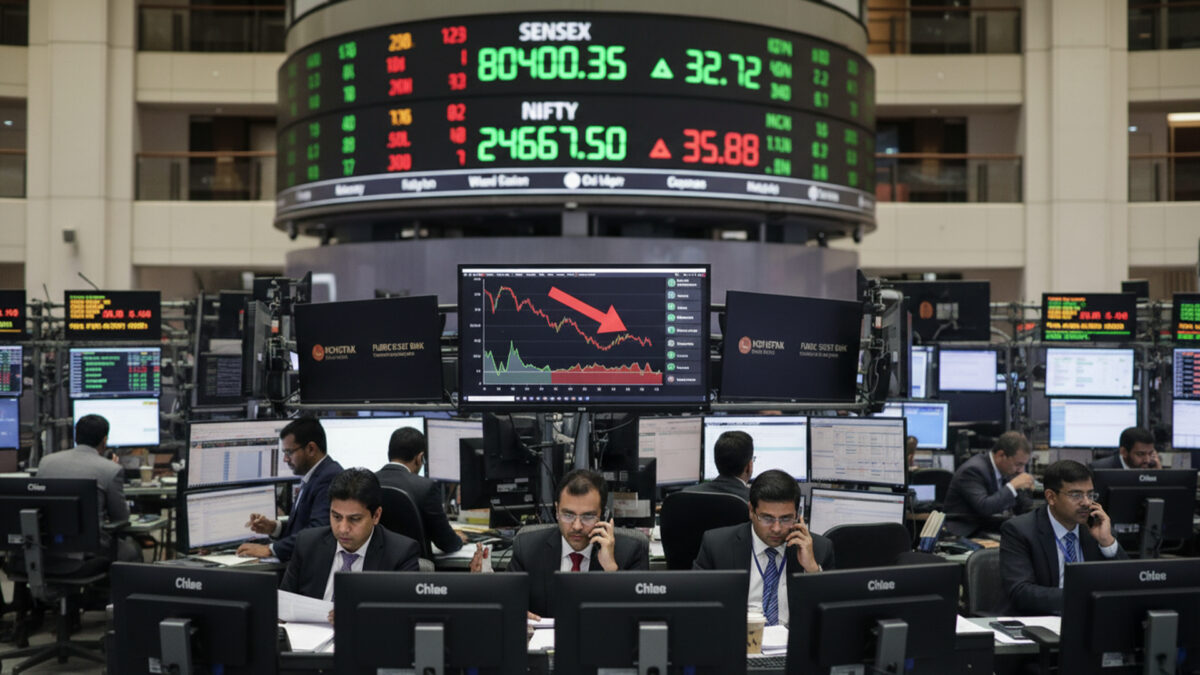
Indian equity benchmarks Sensex and Nifty experienced a sharp reversal in the early hours of September 30, 2025. The Sensex fell 450 points from its day’s high, while the Nifty declined by 131 points.

As of 11: 54 AM IST, the Sensex was at 80,344, down 20 points after hitting a low of 80,201 in early morning trade. The Nifty was well below 24,700, trading at 24,633 after hitting a low of 24,593 earlier today.

Analysts attribute the market’s uncertainty to three primary factors.

First, caution prevailed ahead of the Reserve Bank of India’s (RBI) Monetary Policy Committee (MPC) meeting scheduled for October 1.

While a majority of economists anticipate the RBI to maintain the current interest rate, some expect a dovish stance to support economic growth. Experts believe the present growth-inflation dynamics do not warrant a rate cut, suggesting the RBI may hold rates while sending a dovish message to support growth momentum.

Second, sustained foreign institutional investor (FII) selling has contributed to bearish sentiment. Despite a positive institutional inflow of over ₹1,000 crore, the market closed negatively, indicating that foreign selling continues to weigh on market performance.

The near-term market structure appears weak, experts believe, with sustained FII selling and absence of positive triggers preventing any strong recovery.

Despite these challenges, sectors such as metals and pharmaceuticals showed resilience, with the Nifty Metal index gaining 0.8% and the Nifty Pharma index advancing 0.5%. Public sector banks also saw positive movement, with the Nifty PSU Bank index rising 1.8% following the RBI’s easing of lending norms and tightening of oversight measures.

Investors remain cautious as they await the RBI’s policy decision, which could provide direction for the markets in the near term.

Also Read: Air India Raises $215 Million for Debt Refinance

Categories
Beyond

Gold Hits Record High Amid U.S. Shutdown Fears, Rate Cut Bets

Gold prices surged to a record high on Tuesday, surpassing $3,800 per ounce globally, driven by escalating concerns over a potential U.S. government shutdown and expectations of further interest rate cuts by the Federal Reserve.

Spot gold reached a peak of $3,833.37 per ounce, while December futures climbed to $3,894.90, marking a 12.1% increase for the month of September—the strongest monthly performance since August 2011.

In India, domestic gold prices mirrored the global trend, jumping to an all-time high on the Multi Commodity Exchange (MCX). Gold December futures surged to a new peak of ₹1,17,351 per 10 grams, reflecting strong safe-haven buying amid heightened investor concerns over the potential U.S. shutdown and associated market volatility.

Investor demand for safe-haven assets intensified as the deadline for a government funding agreement approached.

Without a deal, a federal shutdown could commence as early as Wednesday, disrupting economic data releases and potentially delaying key reports such as the September employment figures.

Analysts noted that the uncertainty surrounding the shutdown contributed to a weakening U.S. dollar, further boosting gold’s appeal.

The rally in gold was also supported by expectations of additional rate cuts by the Federal Reserve.

Traders are pricing in a high probability of a 25 basis point reduction in the upcoming Federal Open Market Committee meeting.

The prospect of lower interest rates diminishes the opportunity cost of holding non-yielding assets like gold, making it more attractive to investors.

Central banks and institutional investors have been increasing their gold holdings in response to these developments.

The SPDR Gold Trust, the world’s largest gold-backed exchange-traded fund, reported a 0.60% rise in holdings to 1,011.73 metric tons, the highest level since July 2022.

While gold has reached new heights, experts caution that the market may be approaching overbought territory. Some analysts suggest that the current rally is driven by a combination of geopolitical tensions, economic uncertainties, and speculative investments, which could lead to increased volatility in the short term.

Despite these concerns, the outlook for gold remains positive, with many investors viewing it as a hedge against economic instability and currency fluctuations.

As the situation in Washington continues to unfold, gold’s status as a safe-haven asset is likely to remain a focal point for investors seeking to mitigate risk in an uncertain global economic environment.

Also Read: UST, Kaynes to set up ₹3,330 crore semiconductor facility in Gujarat

Categories
Corporate

TCS Leases 1.75 Million Sq Ft Office Space in Bengaluru for ₹975 Crore

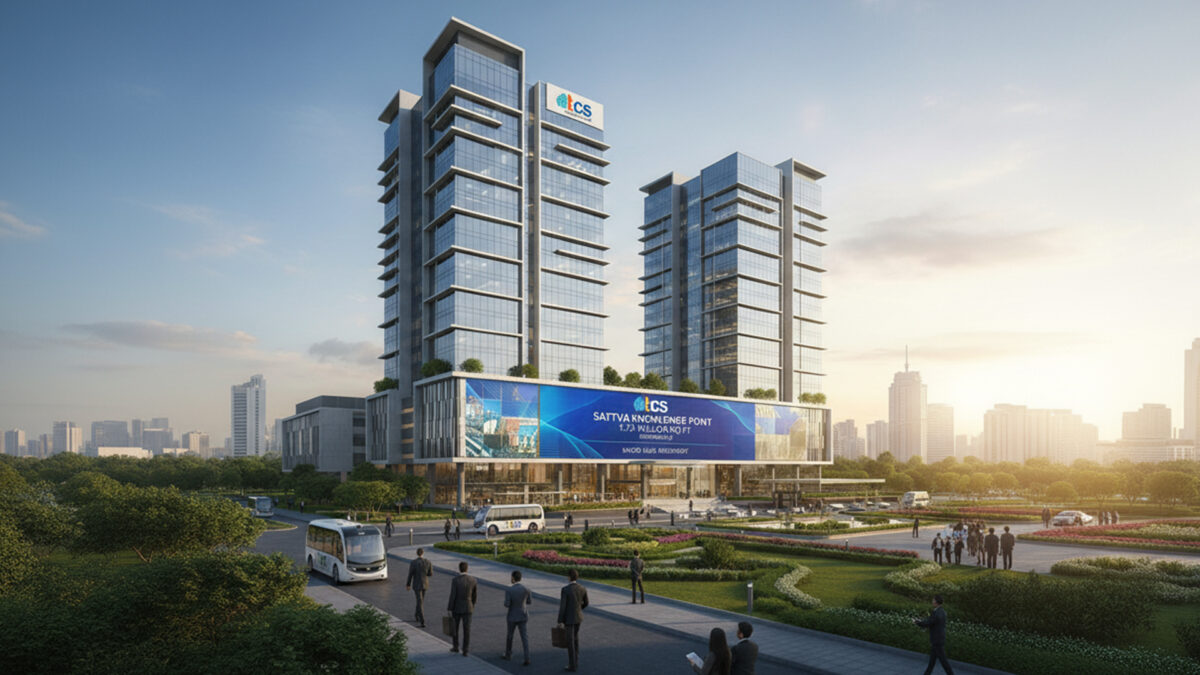
Tata Consultancy Services (TCS) has entered into a significant lease agreement for 1.75 million square feet of office space at Sattva Knowledge Point in Yeshwanthpur, Bengaluru.

The lease, valued at about ₹975 crore over five years, underscores TCS’s commitment to expanding its presence in the city’s thriving IT sector.

Under the terms of the agreement, TCS will pay a monthly rent of ₹15.37 crore, translating to ₹87.73 per square foot. A security deposit of ₹25 crore has been made, and the lease includes a 14% rental escalation every three years, with an option to renew for an additional five-year term. The leased space spans across three floors in both Tower A and Tower B of the development.

This move is part of TCS’s broader strategy to strengthen its infrastructure in key technology hubs. Earlier this year, the company secured another substantial lease for 1.4 million square feet at 360 Business Park in Bengaluru’s Electronic City, valued at ₹2,130 crore over 15 years. These strategic expansions align with TCS’s long-term growth objectives and its role as a leading player in the global IT services industry.

The Sattva Knowledge Point development, owned by Darshita Southern India Happy Homes Pvt Ltd, is among Bengaluru’s premier commercial properties, offering state-of-the-art facilities to meet the evolving needs of IT companies. TCS’s latest lease agreement reflects the sustained demand for high-quality office spaces in Bengaluru, driven by the city’s status as a major IT and business hub.

Also Read: Nifty 50 Index Undergoes Reshuffle; IndiGo, Max Healthcare Included