Categories
Corporate

HUL Q2 Net Profit Rises 3.8% to ₹2,694 Crore

FMCG major Hindustan Unilever Ltd (HUL) reported a 3.8% increase in consolidated net profit to ₹2,694 crore for the second quarter ending September 2025, compared with ₹2,595 crore in the same quarter a year ago.

Revenue for the quarter rose 2.1% to ₹16,034 crore, up from ₹15,703 crore in the corresponding period of 2024.

The company posted a consolidated Underlying Sales Growth (USG) of 2% and flat Underlying Volume Growth (UVG) for the quarter, reflecting a transitory impact from recent Goods and Services Tax (GST) reforms and prolonged monsoon conditions in certain parts of the country.

Total expenses rose 3.32% to ₹12,999 crore, while total income, including other revenue, increased 1.5% to ₹16,388 crore.

HUL’s board approved an interim dividend of ₹19 per share for fiscal year 2026 at a meeting held on Thursday.

The company’s performance highlights resilience amid temporary market adjustments caused by regulatory changes, which temporarily affected consumption patterns and product pricing.

Priya Nair, CEO and Managing Director of HUL, said the company delivered a competitive performance with a USG of 2% and an EBITDA margin of 23.2% for the quarter.

She noted that the recent GST reforms are expected to drive consumption by increasing disposable income and enhancing consumer sentiment, though the market needed time to adjust to the changes.

Nair added that the company anticipates normal trading conditions to return from early November, enabling a gradual and sustained market recovery.

Shares of HUL were trading at ₹2,597.60 apiece on the BSE on Thursday, up 0.23%, reflecting positive investor sentiment after the earnings announcement.

Analysts at Bloomberg and Reuters observed that while the quarter saw modest growth, HUL’s performance remained stable amid macroeconomic headwinds, highlighting the company’s strong portfolio and distribution network.

Industry experts noted that HUL’s steady earnings underscore the resilience of India’s FMCG sector despite regulatory transitions and weather-related challenges.

The company’s focus on premiumization, digital initiatives, and rural penetration continues to support growth, even as GST adjustments temporarily moderated consumer demand.

The results mark HUL’s continued ability to navigate structural shifts in the market, maintain profitability, and provide consistent shareholder returns.

Also Read: Reliance Industries to Adjust Russian Oil Imports Amid U.S. Sanctions

Categories
Corporate

Jaguar-Land Rover Cyberattack Becomes UK’s Costliest, Disrupts 5,000 Firms

A cyberattack on Tata Motors–owned Jaguar Land Rover (JLR) earlier this year has been identified as one of the most damaging ransomware incidents in British corporate history, affecting over 5,000 companies across the supply chain.

According to new research by cybersecurity analysts, the breach, attributed to the Russia-linked LockBit ransomware gang, caused widespread disruption to production, logistics, and supplier networks across the United Kingdom and Europe.

The ransomware attack, which targeted JLR’s parent company Tata Motors in late April, forced the luxury automaker to temporarily halt operations at multiple sites, including its main manufacturing plants in Solihull and Halewood.

The disruption also spread to several suppliers, leaving thousands of firms unable to fulfill parts orders or process invoices. Investigations revealed that the breach originated from a compromised supplier system that provided access to JLR’s digital infrastructure.

Researchers said the scale of the breach made it one of the largest supply-chain cyber incidents in British history. The attack reportedly disrupted the operations of logistics companies, component manufacturers, and dealerships connected to JLR’s systems.

Cybersecurity firm Sophos described the breach as an example of “ransomware contagion,” in which one attack on a central node spreads rapidly through interconnected systems.

The LockBit ransomware group, known for targeting multinational corporations, claimed responsibility for the incident and demanded a ransom payment to prevent the release of stolen data.

Although JLR did not confirm the details of the ransom negotiations, reports suggest that sensitive internal documents and production schedules were among the data exfiltrated during the breach.

The UK’s National Cyber Security Centre (NCSC) and law enforcement agencies launched a joint investigation into the incident.

JLR said in a statement that it had contained the attack and restored most of its systems within days, emphasizing that customer data remained secure.

The company has since enhanced its cybersecurity protocols and initiated a review of third-party vendor access.

It also said that the breach highlighted the need for stronger digital resilience across the automotive supply chain.

Industry analysts said the JLR attack underscores the growing vulnerability of large manufacturers to ransomware threats, particularly in an era of increasingly digitalized operations.

The incident followed a string of high-profile cyberattacks on global automakers and suppliers, including incidents involving Toyota and Continental AG.

The UK government has reiterated its warnings to businesses about the risks of ransomware and has urged organizations to improve their cyber hygiene and incident response systems.

Experts say the fallout from the JLR breach could cost hundreds of millions of pounds in direct and indirect losses, making it the most financially damaging cyberattack in the UK’s corporate history.

Also Read: Meesho Grapples with ₹127 Crore Arbitration Dispute with AWS

Categories
Corporate

Dubai Islamic Bank, HCLTech Launch AI Partnership

Dubai Islamic Bank (DIB), the world’s first full-service Islamic bank and the largest in the United Arab Emirates, has announced a strategic partnership with HCLTech, a global technology services company, to accelerate the adoption of artificial intelligence (AI) across its operations.

The deal, unveiled during the GITEX GLOBAL 2025 technology show in Dubai, marks a deliberate move by the bank to embed intelligent systems throughout its banking ecosystem in line with Shariah-compliant, ethical finance principles.

Under the collaboration, Dubai Islamic Bank plans to leverage HCLTech’s full-stack AI capabilities, including advisory services and alliances with global hyperscalers and technology partners, to deploy scalable, responsible AI solutions across its infrastructure.

The bank intends to apply these capabilities to personalize customer engagement, streamline decision-making, enhance process efficiency, and strengthen risk and compliance frameworks—all while upholding the integrity and transparency demanded by Islamic finance standards.

DIB’s Chief Operating Officer emphasized that the bank’s innovation strategy is anchored in responsibility and purpose.

He noted that the partnership with HCLTech marks a pivotal step in achieving an AI-driven future that boosts value for customers and employees while reinforcing governance structures.

Meanwhile, HCLTech’s Middle East country head highlighted that the combined effort would unlock innovation, boost operational agility, and deliver differentiated experiences for the bank’s clientele.

The collaboration arrives at a time when the Middle East fintech and banking sectors are increasingly turning to AI and digitalization to gain competitive advantage.

At GITEX GLOBAL 2025, major deals and innovations in artificial intelligence, data infrastructure, cybersecurity, and digital banking were featured, underscoring the region’s ambitions to emerge as a global tech hub.

The bank’s commitment to integrating AI sits squarely within its broader objective of leading the evolution of Islamic finance.

DIB has long positioned itself as a pioneer in Shariah-compliant banking, with operations across the Middle East, Asia, and Africa, and assets exceeding USD 95 billion according to recent disclosures.

The partnership is expected to bolster DIB’s ability to deliver future-ready services while maintaining the ethical and governance standards intrinsic to Islamic financial institutions.

For HCLTech, the agreement strengthens its footprint in the financial services sector in the Middle East and aligns with its strategy of partnering with major regional banks to deploy AI at scale.

The firm, with over 226,000 employees across 60 countries and revenues of around USD 14.2 billion for the 12 months ending September 2025, brings deep domain expertise in technology services and a strong track record in working with banks and financial institutions globally.

As the partnership moves into implementation, key areas to watch will include how swiftly AI capabilities are embedded within the bank’s operations, how governance and Shariah-compliance are maintained in AI deployment, and what measurable impact the initiative produces in terms of customer experience, operational efficiency, and risk management.

With DIB seeking to position Islamic finance not just as an alternative but as a technologically advanced proposition, the collaboration with HCLTech could set a new benchmark for responsible innovation in faith-based banking.

Also Read: Infosys Promoters Opt Out of ₹18,000 Crore Buyback

Categories
Corporate

Nifty 50 Crosses 26,000 Amid India-US Trade Optimism

The Nifty 50 breached the 26,000 mark for the first time in over a year on Thursday, signalling renewed investor confidence amid a wave of positive developments on both domestic and global fronts.

The rally was fuelled by optimism over a potential India–US trade agreement, sustained foreign fund inflows, strong buying in information technology stocks, and a strengthening rupee.

As of 10:21 a.m. IST, the benchmark Sensex was up 786 points, or 0.93 percent, at 85,212, while the Nifty 50 advanced 218 points, or 0.85 percent, to 26,087.

The milestone marked a significant comeback for the broader market, which has been gaining steadily on the back of easing global uncertainty and improving macroeconomic indicators.

Market sentiment improved sharply after reports suggested that India and the US were narrowing differences over tariff terms, with discussions focusing on reducing duties on certain goods to about 15–16 percent.

The prospect of a deal that could expand trade volumes between the two economies has sparked optimism among investors, particularly in export-oriented sectors.

Analysts observed that such an agreement could significantly improve India’s trade balance and boost market confidence ahead of the festive season.

Foreign institutional investors continued their buying streak for the fifth straight session, purchasing shares worth nearly ₹100 crore during the special one-hour Diwali trading window earlier in the week.

The steady inflows are being seen as a vote of confidence in India’s economic outlook, underpinned by solid macroeconomic fundamentals and robust corporate earnings.

The technology sector led the gains, with the Nifty IT index rising over 2 percent.

Stocks such as Infosys, HCL Technologies, Tech Mahindra, and Tata Consultancy Services advanced strongly after the US administration clarified that existing H-1B visa holders and certain international graduates would be exempt from a new $100,000 visa fee.

The clarification eased concerns about higher operating costs for Indian IT firms with significant exposure to the US market.

The rupee also strengthened, appreciating by 13 paise to 87.80 against the US dollar in early trade. Analysts attributed the movement to upbeat domestic equity sentiment, foreign inflows, and expectations of progress in trade negotiations.

From a technical standpoint, market experts noted that the Nifty’s strong momentum has kept it close to its upper Bollinger band, indicating continued bullishness.

Also Read: Walmart Pauses H-1B Hiring Amid Impact of $100,000 U.S. Visa Fee

Categories
Corporate

Meesho Grapples with ₹127 Crore Arbitration Dispute with AWS

E-commerce unicorn Meesho has become embroiled in a legal dispute with its key technology partner, Amazon Web Services India Private Limited (AWS), as revealed in the company’s draft red-herring prospectus (DRHP).

The dispute centres on alleged unpaid cloud service dues amounting to ₹127.45 crore (approximately US $14.44 million) claimed by AWS under a Private Pricing Addendum (PPA) signed in February 2022.

According to the DRHP, AWS initiated arbitration proceedings under the Arbitration and Conciliation Act, 1996, before a three-member arbitral tribunal in New Delhi.

The claim covers “spend commitment shortfall payment amount, pending service fees, interest on the respective payments and the cost of arbitration” tied to the special pricing agreement that Meesho entered into for cloud infrastructure and services.

Meesho has contested AWS’s claim, disputing the invoices and challenging the enforceability of the minimum-commitment clause in the PPA.

The company has alleged “deficiencies in the services provided by AWS” and argued that the contractual minimum spend commitment should not bind it under the terms of the addendum.

In a counter-move, Meesho filed a counterclaim on January 31 2025 for ₹86.49 crore, attributing the amount to business losses “due to disruption of business and inadequate support provided by AWS, salary costs incurred due to migration from services procured from AWS, along with interest and costs.”

AWS responded with its reply in March 2025, and the proceedings before the arbitral tribunal remain pending.

The arbitration dispute occurs at a critical juncture for Meesho, which is gearing up for one of India’s most anticipated tech initial public offerings (IPO) in 2026.

The DRHP indicates that the company plans to raise fresh funds of about ₹4,250 crore, of which approximately ₹1,390 crore is earmarked for strengthening technology and cloud infrastructure, among other strategic investments.

Beyond the AWS arbitration, the DRHP outlines a broader portfolio of legal and financial challenges for Meesho.

The company faces tax and vendor disputes aggregating more than ₹710 crore, including a tax demand of ₹572 crore. These proceedings are cited in its filing as key diligence points for investors.

Meesho processes a large volume of transactions — it recorded 1.59 billion orders in the financial year ended March 2025 — and its business model relies heavily on cloud-based systems for operations, payments, recommendation engines, and fulfilment services.

The arbitration dispute thus underscores both the company’s operational dependence on AWS and the potential cost and risk implications of a conflict with a major cloud provider.

While Meesho remains cash-flow positive and among India’s fastest-growing e-commerce platforms, the arbitration with AWS and its broader litigation exposure are likely to feature prominently in investor disclosures and regulatory scrutiny as the IPO process advances.

The company acknowledges in its DRHP that any adverse outcome of the AWS dispute could have a material impact on its business and operating model.

Also Read: Walmart Pauses H-1B Hiring Amid Impact of $100,000 U.S. Visa Fee

Categories
Corporate

Walmart Pauses H-1B Hiring Amid Impact of $100,000 U.S. Visa Fee

Walmart Inc. has paused making job offers to candidates requiring H-1B visa sponsorship, following sweeping changes introduced by the U.S. government that dramatically raise visa application costs, according to a Bloomberg report.

The decision comes in response to a new $100,000 fee for H-1B visa applications imposed by the Trump administration in September.

The measure, part of a broader overhaul aimed at tightening the program, is designed to discourage what the administration describes as overuse of foreign skilled workers.

The change has reverberated across technology, retail, and consulting industries that depend heavily on such visas.

Walmart is among the largest users of H-1B visas in the U.S. retail sector, employing around 2,390 H-1B holders out of its total workforce of about 1.6 million.

While that represents a small portion of its overall headcount, it underscores the company’s reliance on global talent in specialized corporate and technology roles.

A Walmart spokeswoman said the retailer remains “committed to hiring and investing in the best talent to serve our customers, while remaining thoughtful about our H-1B hiring approach.”

The new visa fee policy has drawn sharp criticism from industry groups and legal experts. The U.S. Chamber of Commerce recently filed a lawsuit challenging the legality of the $100,000 fee, calling it a “cost-prohibitive barrier” for employers, particularly start-ups and mid-sized businesses.

The Chamber argued that the rule undermines the purpose of the H-1B program, which was created by Congress in 1990 to allow American firms to access skilled foreign professionals when domestic shortages exist.

According to guidance from the U.S. Citizenship and Immigration Services (USCIS), the fee applies to new H-1B applications filed after September 21, 2025, but exempts current visa holders changing employers or status within the U.S.

Despite these clarifications, companies across sectors continue to express uncertainty about implementation timelines and compliance requirements.

Economists and education experts have cautioned that the new fee could significantly reduce the number of skilled foreign workers entering the U.S., particularly in STEM fields.

Universities and hospitals, which also rely on H-1B visas to recruit researchers and lecturers, have warned that the cost increase could strain their hiring pipelines.

Walmart’s decision adds to growing signs that the policy shift is reshaping corporate hiring practices across industries.

As reported by Bloomberg, the company’s pause illustrates how even major employers are reassessing recruitment strategies amid escalating visa costs and regulatory unpredictability.

Also Read: WeWork India Issues Detailed Response to InGovern Critique

Categories
Corporate

WeWork India Issues Detailed Response to InGovern Critique

WeWork India Management Ltd has responded comprehensively to a governance-watch report released by proxy advisory firm InGovern Research Services, issuing extensive clarifications on concerns raised ahead of its ₹3,000 crore initial public offering.

The company reaffirmed that it has complied with all regulatory disclosure norms and emphasised strong operational performance, countering InGovern’s earlier warnings over profitability path, promoter pledges, and the structure of the IPO.

InGovern had flagged several issues in its original note, pointing to a sole offer-for-sale structure for the IPO, meaning no fresh capital infusion into the company, and a negative net worth of around ₹437 crore as of 31 March 2024.

The advisory firm also cited heavy lease obligations consuming over 43 per cent of revenue and significant promoter share pledging, which it said posed risks to minority investors and raised governance concerns.

In its rebuttal, WeWork India said that its operations have generated positive cash flows since FY23, citing net cash from operations of ₹942 crore in FY23, ₹1,162 crore in FY24, and ₹1,290 crore in FY25.

It reported an adjusted EBITDA margin of 21.61 per cent in FY25 — among the highest in the industry — with occupancy for the quarter ended June 2025 at 81.23 per cent.

The company asserted that the absence of fresh capital in the IPO structure was deliberate, given its strong cash-generative position.

Addressing governance queries, WeWork India stated that all legal proceedings involving its promoters had been disclosed in the “Outstanding Litigation and Other Material Developments” section of its draft red-herring prospectus in line with Securities and Exchange Board of India norms.

The company added that the promoter share-pledge issue had been substantially addressed: the shares were unpledged prior to listing, and the remaining pledge stands at a nominal 15 per cent, significantly reducing any control-related risk.

On its brand-licensing arrangement with the U.S. parent firm WeWork Inc., WeWork India reassured the market that the long-term, exclusive agreement with real-estate group Embassy Group for the Indian market is stable and aligned with industry practice.

The company maintained that risks flagged by InGovern around brand continuity and licensing exposure are mitigated by contractual safeguards.

In an addendum to its earlier note, InGovern acknowledged that WeWork India executives had provided detailed clarifications and noted that the IPO listing on 10 October, and the associated disclosures, marked a positive step toward transparency and enhanced oversight.

The advisory firm, however, maintained that the company’s governance structure, promoter pledges, and debt exposure warrant close post-listing monitoring.

Also Read: Warner Bros. Discovery Opens Strategic Review After Multiple Buyout Approaches

Categories
Corporate

LTIMindtree President Nachiket Deshpande Steps Down

India’s sixth-largest IT services firm LTIMindtree Limited announced on Tuesday that Nachiket Deshpande will resign from his role as Whole-time Director and President, with his last working day set as 31 October 2025.

He will leave the company to “explore new opportunities beyond LTIMindtree,” the company said in a regulatory filing.

Deshpande had been a key member of the leadership team at LTIMindtree, first joining the entity in November 2022 following the merger of Larsen & Toubro Infotech (LTI) and Mindtree, and transitioning from his earlier role as Chief Operating Officer to become President.

In March 2025, Deshpande was reassigned to lead the newly formed global AI services business, strategic deals and partnerships at the firm.

In its formal communication to the stock exchanges, LTIMindtree said that it placed “on record its appreciation for the contributions made by Mr Deshpande during his association with the Company.”

The company’s Chairman, S N Subrahmanyan, remarked that Deshpande’s leadership and steadfast commitment had been “pivotal in shaping the foundation for the next phase of growth for LTIMindtree.”

Deshpande’s departure comes against a backdrop of senior-level exits and a broader leadership transition at LTIMindtree. In January 2025, the company’s President of Global Markets, Sudhir Chaturvedi, resigned ahead of being considered for the CEO role.

Meanwhile, the Chief Executive Officer and Managing Director, Debashis Chatterjee, opted for early retirement in May 2025 and was succeeded by Venu Lambu.

Deshpande, in his resignation letter, described LTIMindtree as “a remarkable organisation” and said he was proud of the transformative initiatives he had been able to lead.

He noted his decision after “seven remarkable years” with the company would allow him to pursue new personal growth and career opportunities.

The company did not announce any immediate successor for the President role.

Analysts said that the exit adds to the governance and leadership change narrative at LTIMindtree, even as the firm works to execute its growth strategy and consolidate its position among global IT service providers.

Also Read: Warner Bros. Discovery Opens Strategic Review After Multiple Buyout Approaches

Categories
1 Minute-Read

JSW Steel Shines in Q2, Profit at ₹1,623 Crore

Steelmaker JSW Steel reported a nearly fourfold jump in consolidated net profit to ₹1,623 crore for the quarter ended September 30, compared with ₹439 crore a year earlier.

The sudden rise was driven by higher sales volumes that offset weaker steel prices. Revenue rose 13.8% year-on-year to ₹45,152 crore, while adjusted EBITDA climbed 39% to ₹7,849 crore on lower input costs.

Crude steel output hit a record 7.9 million tonnes, up 17% year-on-year. The company reduced its net debt to ₹79,153 crore and maintained a full-year capex plan of ₹20,000 crore.

Categories
Corporate

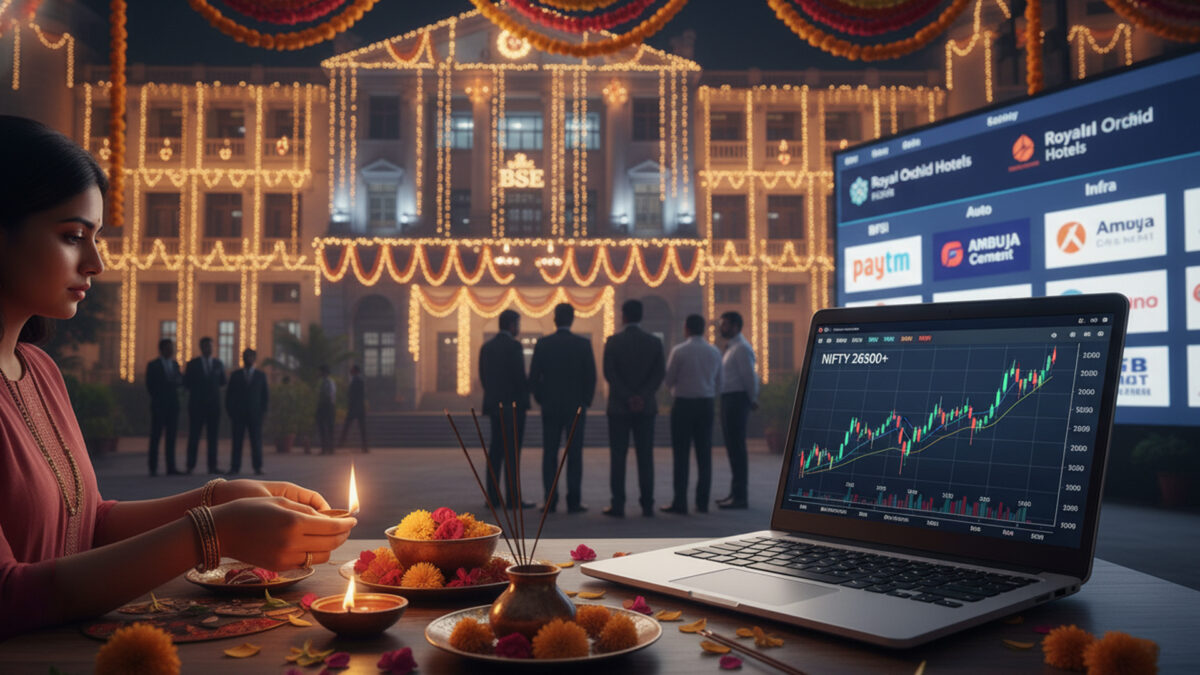
Samvat 2082 Opens on a High with Muhurat Trading

As Diwali ushers in Samvat 2082, Indian equity markets are looking forward to a brighter year after a period of consolidation. Samvat is the traditional Hindu calendar year, with Samvat 2082 corresponding roughly to 2025–26 in the Gregorian calendar.

Indian equity markets kicked off Samvat 2082 on a positive note with a vibrant Muhurat trading session on Diwali, reflecting investor optimism for the new financial year. The one-hour session, held between 1:45 PM and 2:45 PM IST, saw the BSE Sensex touch a high of 84,600 points, while the Nifty50 reached 25,850, closing in positive territory despite intraday fluctuations. Broader indices, including the Nifty Midcap 100 and Smallcap 100, also ended with gains, signaling a resilient market start.

During the session, DCB Bank emerged as the top gainer, surging 9.4% following a strong quarterly profit report. Tata Investment Corporation and Bajaj Finserv recorded notable gains, with Bajaj Finserv hitting a 52-week high of ₹2,155.30. Bajaj Finance and Bharti Airtel also touched 52-week highs, reflecting robust market sentiment. Other significant gainers included Styrenix Performance Materials, Supreme Petrochem, Bajaj Hindusthan Sugar, and Dish TV India.

On the other hand, several stocks underperformed, with Ujjivan Small Finance Bank, JM Financial, Shoppers Stop, HealthCare Global Enterprises, MTAR Technologies, and JK Paper recording losses.

Analysts remain cautiously optimistic for Samvat 2082, highlighting Banking, Financial Services & Insurance (BFSI), automobiles, and infrastructure as key growth sectors. Rising credit, supportive government policies, and strong consumer demand are expected to fuel momentum.

Promising stocks with strong fundamentals include Royal Orchid Hotels, Adani Green Energy, Paytm, Ambuja Cement, and V-Mart Retail. The auto sector is expected to benefit from GST reductions and rising consumer spending, while infrastructure firms with healthy order books may gain from government projects. BFSI players could see improved profitability through steady credit growth. Analysts forecast that the Nifty50 could reach 26,500–28,000 and Bank Nifty touch 62,500 by next Diwali, though they caution investors to monitor global market swings, inflation, and interest rate trends.

The Muhurat trading session, though brief, seamlessly combined festive tradition with market strategy, signaling a positive start to Samvat 2082 for investors.

Also Read: South Indian Bank Gains 19% on Q2 Profit