Categories
Corporate

Elon Musk’s xAI Sues Apple and OpenAI Over Alleged AI Market Monopoly

Elon Musk’s xAI Sues Apple and OpenAI Over Alleged AI Market Monopoly

Accusations of App Store bias and monopolistic behavior spark high-stakes legal showdown in Texas
Staff Writer

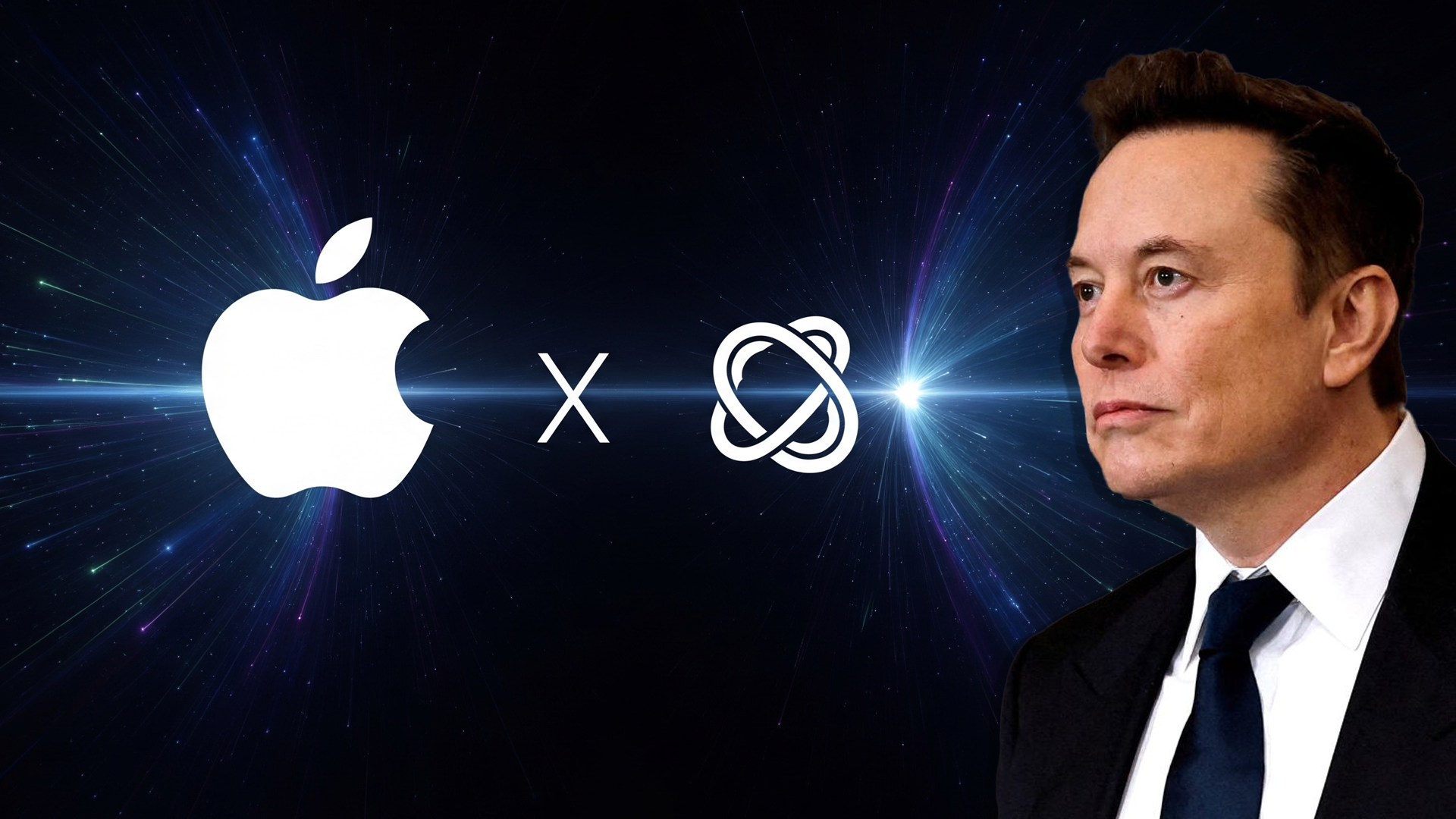
Fort Worth, Texas: In a sharp escalation of Silicon Valley’s tech wars, Elon Musk’s AI startup xAI, together with his social media platform X, has filed a sweeping antitrust lawsuit against Apple and OpenAI. The suit accuses the two companies of conspiring to dominate both the generative AI and smartphone markets by engaging in unfair competitive practices.

Filed in a federal court in Fort Worth, Texas, the case alleges that Apple and OpenAI are deliberately working to stifle competition in the AI space—specifically targeting Musk’s Grok chatbot and related services integrated with X.

The lawsuit accuses Apple and OpenAI of conspiring to:

  • Monopolize the generative AI chatbot market, using Apple’s ecosystem dominance to promote OpenAI’s ChatGPT over competing platforms;
     
  • Manipulate App Store rankings to disadvantage xAI’s Grok and the X app, blocking them from appearing in “Must-Have Apps” and other featured categories despite strong user metrics;
     
  • Restrict consumer choice by embedding ChatGPT within Apple’s new AI suite, Apple Intelligence, without offering equal integration opportunities to competitors.
     

xAI is seeking billions of dollars in damages and a court order to halt what it describes as “anticompetitive behavior.”

Musk’s AI Offensive

The lawsuit marks the latest move in Musk’s increasingly aggressive campaign against OpenAI, a company he co-founded in 2015 but has since sued separately for what he claims is a betrayal of its non-profit mission.

xAI, launched in 2023, has positioned Grok as a direct competitor to ChatGPT. Integrated across X and Tesla vehicles, Grok aims to offer a real-time, humor-infused alternative to traditional chatbots. Musk has complained that despite its popularity, Apple is actively obstructing its visibility through App Store design and algorithmic bias.

“Apple is gatekeeping innovation and giving preferential treatment to OpenAI,” Musk said in a post on X earlier this month, calling it “a direct assault on fair competition and consumer freedom.”

Reactions from Apple and OpenAI

After Musk’s threat to sue Apple, OpenAI CEO Sam Altman responded sharply, stating, “This is a remarkable claim considering the allegations I’ve heard about Elon manipulating X to benefit his own interests while disadvantaging competitors and critics.”

An Apple spokesperson maintained that the App Store is designed to be “fair and free of bias,” highlighting that it features “thousands of apps” evaluated through a variety of signals. The company emphasized that its editorial and algorithmic systems prioritize user safety, functionality, and engagement—not the manipulation of rankings to favor corporate partnerships.

In a counterclaim, OpenAI has accused Musk and xAI of engaging in “harassment” through persistent litigation, public attacks on social media and in the press, and a “sham bid” to acquire the ChatGPT-maker for $97.4 billion—an attempt allegedly aimed at damaging the company’s business relationships.

Broader Implications

The case comes at a time when Apple is already facing legal scrutiny in the U.S., Europe, and India over its App Store dominance. The latest complaint could add pressure from regulators examining whether Big Tech platforms are unfairly shaping access to emerging AI tools.

India Today and Hindustan Times have described the lawsuit as a significant moment in the global AI race, pointing out that Grok’s absence from prominent App Store feature sections may reveal broader systemic issues in platform gatekeeping.

Should the lawsuit prevail, it could compel Apple to reassess how it curates AI applications, potentially opening the market to greater competition in the generative AI sector. At the very least, the case guarantees an extended legal confrontation involving three of the most powerful companies in technology.


 

Categories
Corporate

Markets Slide as U.S. Tariff Threat Drags Nifty and Sensex Lower

Markets Slide as U.S. Tariff Threat Drags Nifty and Sensex Lower

The downturn came as the U.S. administration followed through on plans to raise tariffs on Indian goods from 25 percent to 50 percent, citing New Delhi’s continued purchases of Russian oil.

Staff Writer

Indian equity markets extended losses on Tuesday, August 26, 2025, as investors turned cautious ahead of a steep increase in U.S. tariffs on Indian exports set to take effect on August 27. At 11:01 a.m. IST, the BSE Sensex was down around 600 points at 81,031, while the NSE Nifty 50 shed nearly 180 points to trade just below 24,800. The losses were broad-based, with banks, metals and pharmaceuticals among the worst-hit sectors, and mid- and small-cap indices also slipping about one percent each, reflecting a cautious mood across the market.

The downturn came as the U.S. administration followed through on plans to raise tariffs on Indian goods from 25 percent to 50 percent, citing New Delhi’s continued purchases of Russian oil. The move, announced earlier this month, has heightened concerns about trade frictions and the potential earnings impact on exporters. The tariff announcement weighed heavily on market sentiment, erasing most of the gains made in August and adding to a series of headwinds facing investors, including foreign institutional investor (FII) selling, rupee weakness, a global equity slump and firm crude oil prices.

Analysts noted that despite the sell-off, the correction is unlikely to deepen significantly in the absence of major domestic triggers. Pankaj Pandey, head of retail research at ICICI Securities, observed that the market reaction, while sharp, was largely a reflection of sentiment and not a surprise event and that they do not expect deeper correction from hereon. Market watchers highlighted that robust domestic institutional investor inflows and steady liquidity have been key drivers of resilience, offsetting persistent FII outflows and keeping valuations elevated.

Among notable stocks, Reliance Industries, which carries significant weight on the Nifty, slipped around one percent despite UBS resuming coverage on the stock with a “buy” rating and a price target of ₹1,750, implying a 24 percent upside from Monday’s close. Titan also traded lower, in line with the weak market mood, even as Bernstein initiated coverage with an “outperform” rating and a target price of ₹4,200, citing its strong long-term growth prospects and leadership in India’s jewellery and lifestyle sectors. Sai Life Sciences fell as much as four percent after reports that TPG Asia had offloaded its entire 15.2 percent stake in the Hyderabad-based company through block deals worth nearly ₹2,810 crore. On the upside, consumer goods stocks outperformed the market, with modest gains of around 0.3 percent, reflecting their defensive nature amid broader volatility.

From a technical perspective, analysts said the Nifty’s immediate support level at 24,800 remains crucial. Sustaining above this threshold could limit further downside, while a decisive break below it could trigger deeper corrections. The index has been consolidating between a swing high of 25,150 and a swing low of 24,850, a range that reflects muted directional strength. Renewed call writing at higher strikes and sustained put additions suggest a continuation of sideways trade unless there is a breakout above 25,150 or a breakdown below 24,800. In this environment, a “sell-on-rise” strategy is seen as prudent, with traders watching tariff developments closely ahead of the August 27 implementation.

Tuesday’s losses marked a sharp reversal from last week’s positive momentum, which saw the Nifty briefly breach the 24,950 level and the Sensex notch a gain of over 300 points on hopes of a U.S. interest rate cut. However, global volatility, geopolitical uncertainty, and trade tensions have re-emerged as dominant themes, tempering investor appetite for risk. Analysts believe domestic markets are likely to remain volatile but supported by structural liquidity flows, which could prevent a steep downturn despite heightened near-term uncertainty.

With the U.S. tariff increase just a day away, markets are expected to see choppy sessions in the near term, with traders awaiting clarity on trade negotiations and the broader global macroeconomic outlook. The Supreme Court’s upcoming hearing schedules, the rupee’s trajectory, and crude oil price movements will also remain on investors’ radar as they navigate a volatile week.

Categories
Corporate

Databricks Soars Past $100 Billion Valuation as AI Funding Wave Intensifies

Databricks Soars Past $100 Billion Valuation as AI Funding Wave Intensifies

Databricks’ rapid valuation leap comes less than 12 months after it raised $10 billion in one of the largest venture capital funding rounds in history.

Staff Writer

San Francisco-based analytics firm Databricks has secured a valuation of more than $100 billion in its latest funding round, marking a 61% jump from less than a year ago and underscoring the surging investor appetite for artificial intelligence (AI) startups. The company said on Tuesday it has signed a term sheet for a Series K round, though it did not disclose the total amount being raised.

The fresh milestone highlights not only the market’s confidence in Databricks’ long-term prospects, but also the concentration of capital around a select group of firms seen as leaders in foundational AI and data infrastructure. “This valuation level indicates a concentration of late-stage capital into companies identified as market leaders in foundational technology sectors,” noted Derek Hernandez, senior research analyst at PitchBook.

From $62 Billion to $100 Billion in Under a Year

Databricks’ rapid valuation leap comes less than 12 months after it raised $10 billion in one of the largest venture capital funding rounds in history. That round, which valued the company at $62 billion, was hailed as a signal of investor conviction in platforms that enable enterprise AI adoption.

The company, founded in 2013 by the creators of Apache Spark at the University of California, Berkeley, provides a unified analytics and AI platform that helps businesses integrate data engineering, machine learning, and collaborative AI model development. Over the years, it has become central to the enterprise AI ecosystem, positioning itself as a rival to other cloud data giants like Snowflake.

Today, Databricks serves around 15,000 customers globally, including major names such as payments company Block, energy major Shell, and electric vehicle maker Rivian. The firm employs roughly 8,000 people worldwide.

The AI Rush and Corporate Demand

Databricks said it expects to use a portion of the latest funds for product development and to fuel acquisitions in the AI segment. As companies and governments worldwide scramble to harness efficiencies from AI, demand for enterprise-grade infrastructure that can manage data securely and at scale has intensified.

“AI hallucinations are hard to remove completely,” Naveen Rao, Vice President of AI at Databricks, recently remarked, highlighting the need for robust tools to manage generative AI’s unpredictability. The company is betting that corporations will continue to seek enterprise-focused AI systems that offer reliability alongside innovation.

Investors See Big Market, Durable Advantage

According to PitchBook’s Hernandez, the investor logic is simple: “The total addressable market will be large enough to support multiple high-value companies, and Databricks will maintain a durable competitive advantage.”

Analysts point to Databricks’ hybrid focus on both data and AI as key to its strength. Unlike pure AI players, it offers a full-stack ecosystem that integrates data storage, cleaning, and model training, making it an essential partner for large enterprises.

Its closest rival, Snowflake, has a current market capitalization of around $66 billion, which suggests investors see Databricks’ growth trajectory as even more ambitious.

A Shift in Startup Financing

The rise of Databricks also reflects broader shifts in startup financing. Traditionally, firms approaching valuations above $10 billion would look to tap public markets through an initial public offering (IPO). But in recent years, many companies have chosen to stay private longer, partly due to higher interest rates and unpredictable public market conditions.

“What used to be a pre-IPO round is now often Series G or later, and the capital coming in is frequently functioning like public equity, just without the public oversight,” said Chris Lawrence, founder and managing partner of Labyrinth Capital Partners.

Key Players at a Glance

  • Databricks: AI and data analytics firm founded in 2013, now valued at over $100 billion. Customers include Block, Shell, and Rivian.
  • Snowflake: Cloud-based data warehousing company with a market capitalization of about $66 billion; a key rival to Databricks.
  • OpenAI: Developer of ChatGPT, reportedly in talks for an employee share sale valuing it at around $500 billion.
  • SpaceX: Elon Musk’s space exploration firm, among the few other private companies with valuations north of $100 billion.

Private market investors, sitting on record levels of “dry powder” (unallocated capital), have been eager to deploy funds into late-stage winners like Databricks. The company’s valuation surge is part of a broader trend where late-stage venture financing increasingly mirrors the scale of public equity markets.

AI Leaders Attracting Unprecedented Capital

Databricks is not alone in commanding astronomical valuations. Earlier this month, reports suggested OpenAI, the maker of ChatGPT, was preparing to close an employee share sale valuing it at around $500 billion. The trend underscores how a handful of AI-focused companies are rapidly redefining startup valuation benchmarks.

For Databricks, the Series K round cements its position among the most valuable private technology firms globally, putting it in rarefied company alongside names like SpaceX and OpenAI.

As the AI gold rush accelerates, Databricks’ leap past $100 billion is less about a single company and more about the reshaping of venture capital itself—where late-stage startups can now command valuations once reserved for tech titans on Wall Street.

Categories
Corporate

SoftBank’s $2 Billion Bet Lifts Intel as U.S. Considers Direct Stake

SoftBank’s $2 Billion Bet Lifts Intel as U.S. Considers Direct Stake

Japanese investor’s deal sparks rally in Intel shares, spotlighting Washington’s semiconductor strategy

Staff Writer

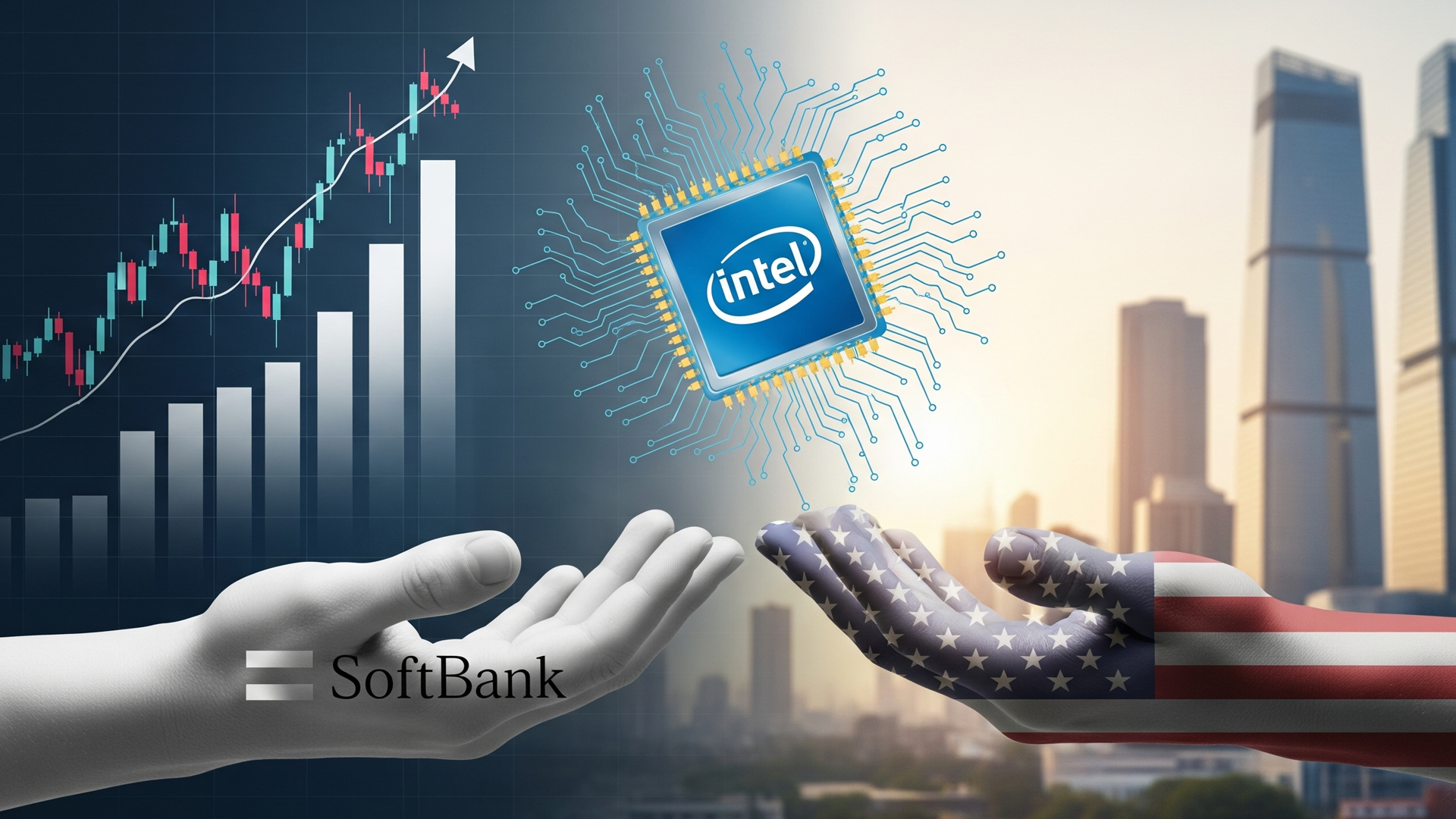
Intel stock jumped over 5% in after-hours trading on Monday, August 18,  after Japanese technology giant SoftBank announced a $2 billion investment in the U.S. chipmaker. The deal, struck at $23 per share, comes at a time when Washington is weighing a potential direct stake in Intel to secure America’s semiconductor supply chain.

SoftBank Chairman Masayoshi Son considers this step in business as a long-term bet on U.S. chip manufacturing, calling it a “strategic investment” that reinforces Intel’s role in next-generation semiconductors and AI hardware. The Japanese group, which has already expanded its U.S. presence with plans for AI data centers in Ohio, is signaling confidence in Intel’s turnaround under new CEO Lip-Bu Tan.

Intel has been under pressure in recent years, ceding market leadership to rivals Nvidia, TSMC, and Samsung. Tan has launched aggressive restructuring, cutting jobs, exiting its automotive unit, and slimming down its foundry operations, to sharpen focus on core clients and data center chips.

The investment also comes against a charged political backdrop. Reports last week suggested the Trump administration could convert government grants into a roughly 10% equity stake in Intel, though officials have stopped short of confirming any deal. The move, if approved, would mark a rare government intervention in a major U.S. corporation and signal Washington’s determination to anchor chipmaking capacity domestically.

Trump has publicly pressured Intel’s leadership, even calling for Tan’s resignation over alleged conflicts tied to China. Despite the rhetoric, the White House has held talks with the CEO on Intel’s role in building out a flagship semiconductor hub in Ohio.

Market analysts say the twin tracks of SoftBank’s capital injection and possible U.S. equity participation are reshaping sentiment around Intel. "[The Government's] agenda is clear: Accelerate domestic production, reduce dependence on Asia, and position Intel at the centre of the AI and national security landscape. This is a clear vote of confidence in Intel’s turnaround story,” said Dan Sheehan of Telos Wealth Advisors. “The U.S. agenda is clear: accelerate domestic production, reduce reliance on Asia, and position Intel at the heart of the AI and national security ecosystem.”

For investors, the developments suggest Intel could regain momentum not only as a technology player but also as a strategic asset in America’s industrial policy. With shares trading close to the SoftBank deal price and political support growing, the company may be positioned for a stronger rerating if execution on restructuring and U.S. government backing align.

Categories
Corporate

Reliance Power partners with Bhutan firm for a clean energy push

Reliance Power partners with Bhutan firm for a clean energy push

At Monday’s close of ₹43.27, Reliance Power commanded a market value of ₹17,895 crore

Staff Writer

Reliance Power, led by Anil Ambani, has taken another step toward clean energy by setting up a joint venture with Bhutan’s state-owned Green Digital Private Limited. The new entity, GDL–Reliance Solar Pte Ltd (GRSPL), was formally incorporated on July 24, 2025, under Bhutan’s Gelephu Mindfulness City, a Special Administrative Region envisioned as a hub for sustainability and innovation.

The venture is built on equal footing, with Reliance Enterprises Private Limited (a Reliance Power arm) and Green Digital each holding 50%. As part of the deal, Reliance subscribed to 2.25 lakh shares at $100 apiece, giving it an indirect 25% stake in GRSPL. While operations are yet to begin, the company will focus on renewable energy projects, aligning with Reliance Group’s larger strategy of diversifying into clean energy and defense.

Importantly, the JV does not fall under related party transactions, despite Reliance Infrastructure, Reliance Power’s promoter, holding an indirect 25% stake through REPL.

On the market side, Reliance Power shares closed at ₹43.27 on Monday, valuing the company at ₹17,895 crore. Investors are expected to closely monitor when GRSPL begins operations, as this could significantly impact sentiment around the stock.

Financially, Reliance Power has been showing signs of revival. The company reported a net profit of ₹125.6 crore in the March 2025 quarter, a sharp turnaround from a ₹397.6 crore loss a year earlier. Though revenue slipped marginally by 1% to ₹1,978 crore, operating performance improved dramatically, EBITDA surged over 11 times to ₹589.8 crore, lifting margins from 2.4% to 29.8%.

The tie-up with Bhutan not only strengthens Reliance Power’s renewable energy portfolio but also underscores the growing role of cross-border collaborations in meeting global sustainability goals. For investors, the venture signals long-term ambition, even as the immediate focus remains on execution.

Categories
Beyond

The Proposed GST Revamp Has Energised Markets: Here’s All You Need to Know

The Proposed GST Revamp Has Energised Markets: Here's All You Need to Know

Daily-use items set to get cheaper; PM Modi signals rollout of next-gen GST reforms by Diwali

Staff Writer

India’s indirect tax regime is headed for its biggest reset in years, and it aims to reduce the tax burden across the country. The Goods and Services Tax (GST) Council will meet in September–October to consider a two-slab structure of 5% and 18%, along with compliance reforms aimed at easing business processes and lowering taxes on daily-use items.

Such has been the buzz around this news that Monday saw both Sensex and Nifty hit new heights. The Sensex stood at 81,460.52 at 2:17 pm, up over 1%, while Nifty crossed the 25,000 in early hours of Monday. Nifty was at 24,930 at around 2:17 pm. 

Prime Minister Narendra Modi, in his Independence Day address, announced that next-generation GST reforms would be rolled out by this Diwali to lower taxes on daily-use items. The Centre will begin consultations with states in the coming weeks to build consensus on the plan.

Two Slabs and a High Sin Tax

The Centre has proposed two main GST slabs, 5% and 18%, alongside a 40% rate for sin goods such as tobacco and pan masala. Nearly 99% of goods currently taxed at 12% will move to 5%, while most products in the 28% bracket, including televisions and refrigerators, will shift to 18%.

The current compensation cess would be scrapped, replaced by the steep sin tax. Essential exemptions and special rates for bullion, jewellery, and export-oriented sectors will continue.

Boost to Consumption and Growth

Currently, 67% of GST revenue comes from the 18% slab, while 7% comes from the 5% rate. While the rejig may temporarily impact collections, officials expect lower rates to spur consumption, eventually offsetting revenue losses and supporting GDP growth.

The reforms are also designed to resolve inverted duty structures that have hurt sectors like textiles and fertilisers, while cutting litigation over product classification.

Faster Registrations, Quicker Refunds

Beyond rates, the Centre has outlined structural reforms to ease compliance:

  • Business registration within three days in 95% of cases
     
  • Automated refunds for exporters and sectors with inverted duties
     
  • Pre-filled returns to reduce mismatches and disputes
     

After Prime Minister Narendra Modi announced plans to rationalise GST, the Congress sought an official discussion paper on “GST 2.0.” Party General Secretary Jairam Ramesh said the reform should become a “Good and Simple Tax,” noting it was a key pledge in the Congress’s 2024 manifesto.

As legislative changes are not required, the reforms can be notified once the GST Council clears them. Given the scope of the proposals, multiple meetings are expected before final approval. If consensus is reached, the new GST structure could take effect in Q3 FY25.


Categories
Technology

Anthropic’s $1 Claude AI Power Play Wins Washington

Anthropic’s $1 Claude AI Power Play Wins Washington

This highlights the growing competition among AI firms to bid for federal contracts

Sreelatha M

Anthropic is offering its Claude AI chatbot to U.S. government agencies for just $1, stepping up efforts to become a key player in Washington’s rapidly evolving AI landscape. The Amazon-backed startup now joins OpenAI and Google in providing discounted access to AI tools as the federal government accelerates adoption across departments.

The announcement comes on the heels of a similar move by OpenAI, which recently offered ChatGPT Enterprise to government agencies at the same nominal price. Just last week, the U.S. government officially approved Claude, ChatGPT, and Google’s Gemini for federal use, thus clearing a path for these tools to power everything from national security to research and administrative operations.

“By offering expanded Claude access across all three branches of government, we're helping the federal workforce leverage frontier AI capabilities to maintain our competitive advantage and better serve the American people,” Anthropic CEO Dario Amodei said in a statement.

The symbolic $1 offers reflect a broader strategy by AI companies: securing a foothold within government operations as a way to influence how AI is regulated, developed, and deployed. Federal agencies represent not only a major market but also a powerful endorsement in the global AI race.

Anthropic has already released models designed specifically for U.S. national security needs and has landed contracts from the Department of Defense, alongside Google, OpenAI, and xAI- Elon Musk’s AI venture, which has introduced a “Grok for Government” product line.

With OpenAI also planning to open a Washington, D.C. office, the push to win over policymakers is intensifying. Companies see long-term partnerships with federal agencies as critical, keeping in mind the revenue, elevated industry standards, and regulations perspective.

As the U.S. government lays the groundwork for responsible AI use, tech firms are racing to become its go-to providers. Their offers that are available for free are strategic intentions to become embedded in the infrastructure of AI governance and deployment.

Anthropic’s $1 offer is aimed with a clear objective to play a defining role in how AI supports, secures, and serves the public sector.


Categories
Beyond

Income Tax Bill 2025: What Indian Taxpayers Can Expect in Relief & Reform

Income Tax Bill 2025: What Indian Taxpayers Can Expect in Relief & Reform

Revised Income Tax Bill 2025 aims to modernize India’s tax laws, boost clarity, and ease compliance.

Sreelatha M

As the revised Income Tax Bill 2025 prepares to take center stage in the Lok Sabha on August 11, 2025, the nation watches closely. This landmark legislation promises to transform India’s tax landscape by simplifying the code, enhancing taxpayer benefits, and offering fresh incentives to businesses for strengthening the country’s economic future.

This is cited as a significant landmark move by the government that aims to replace the decades-old Income Tax Act of 1961 by consolidating over 4,000 amendments into 536 sections and 16 schedules. By incorporating 285 Select Committee recommendations, the bill uses clearer language to simplify the tax code and reduce complexity for taxpayers and professionals. strengthening the country’s economic future.

What the Revised Bill Brings: Key Highlights

  1. Simplified Tax Structure
    The bill removes ambiguous provisions to reduce litigation and improve compliance by making the tax code clearer and more organized.
     
  2. Enhanced Taxpayer Benefits
     

    • Rebate threshold under Section 87A raised from ₹7 lakh to ₹12 lakh.
       
    • Maximum rebate increased from ₹25,000 to ₹60,000.
       
    • Introduction of a standard deduction of ₹75,000, effectively making income up to ₹12.75 lakh tax-free for salaried individuals. Allow taxpayers to avail NIL TDS certificate.
       
  3. Refund Flexibility
    Taxpayers can claim refunds even if returns are filed after the due date, provided other conditions are met, resolving a long-standing refund issue.
     
  4. Property Taxation
    Proposed higher taxes on vacant properties have been dropped, maintaining current tax treatment and easing the burden on property owners.
     
  5. Taxpayer-Friendly Compliance Measures
    Genuine mistakes will no longer attract penalties, encouraging voluntary compliance. The bill also emphasizes straightforward language for better understanding of tax obligations.
     
  6. Restoration of Section 80M Deduction
    Deductions on inter-corporate dividends are reinstated, benefiting companies enjoying concessional tax rates.
     
  7. Introduction of ‘Tax Year’ Concept
    The bill replaces “Previous Year” and “Assessment Year” with a single, simplified term — “Tax Year.”
     
  8. Strengthened Digital Administration
    The Central Board of Direct Taxes (CBDT) gains expanded rule-making powers to promote efficient, technology-driven tax administration.
     

The revised Income Tax Bill 2025 underscores the government’s commitment to creating a more transparent, efficient, and taxpayer-friendly system. This is expected to take effect from the next financial year and it promises to ease compliance and provide greater benefits for individuals and businesses across India.


Categories
Counterpoint

Can Indians afford Elon Musk’s cars?

Can Indians afford Elon Musk's cars?

The move comes amid intensifying discussions surrounding Tesla’s entry into India. On February 13, Musk met Prime Minister Narendra Modi in Washington, DC, fueling speculation about the company’s long-awaited arrival

Staff Writer

Tesla has taken a significant step towards its India expansion, reportedly securing a prime office space in Mumbai’s Bandra Kurla Complex (BKC).

The Elon Musk-led electric carmaker has leased a 4,003-square-foot space in the Maker Maxity building. The licensee for the agreement, reports claim, is Tesla India Motor & Energy Pvt., which currently operates from Panchsheel Business Park in Pune’s Viman Nagar. The licensor is Univco Properties LLP. As part of the lease deal, Tesla India has put down a security deposit of Rs 2.11 crore and will pay Rs 35.26 lakh in monthly rent, with a 5 per cent annual escalation.

The agreement is valid for five years.

The move comes amid intensifying discussions surrounding Tesla’s entry into India. On Feb. 13, Musk met Prime Minister Narendra Modi in Washington, DC, fueling speculation about the company’s long-awaited arrival. Since then, Tesla has listed 20 job openings across India—15 in Mumbai and five in Pune—and is actively exploring showroom locations in Mumbai and Delhi. Tesla’s India launch is likely to happen in the second half of 2025, with the Model Y expected to be the first offering. The vehicle is anticipated to be priced between Rs 60-70 lakh, positioning it against entry-level electric offerings from Mercedes-Benz, BMW, and Audi. If Tesla’s pricing stays above Rs 50 lakh, it could challenge the dominance of German luxury carmakers. If priced in the Rs 25-35 lakh range, the competition would extend to Indian manufacturers like Tata Motors and Mahindra. For Tesla, India could provide a much-needed boost.

The company is facing slowing sales globally, with declining shipments across key markets like the U.S., Germany, and China—where it already operates multiple factories. However, an immediate manufacturing facility in India appears unlikely, with Tesla initially expected to import its vehicles. The Tesla Model 3, the company’s most affordable offering, is expected to cost between Rs 35-40 lakh in India. This estimate considers a base price of around $35,000 (approximately Rs 30.4 lakh) in the U.S., reduced import duties of 15-20 per cent, and additional costs such as road tax and insurance. A calculation suggests that the total cost of owning a Model 3 in India could be around Rs 45.5 lakh, factoring in road tax (Rs 3.5 lakh), insurance (Rs 1.75 lakh), and an import duty of 15 per cent (Rs 5.25 lakh).

Categories
Technology

Tesla announces job openings amid India sales debut plans

Tesla announces job openings amid India sales debut plans

Elon Musk-owned company's hiring and expansion efforts in India highlight its commitment to cash in on the burgeoning electric vehicle market

Staff Writer

Tech billionaire Elon Musk-led electric vehicle manufacturer Tesla is ramping up its hiring efforts in India. Amid reports that the EV maker is finalising a deal for a showroom in Mumbai's Bandra Kurla Complex (BKC), Tesla has listed 20 open positions in Maharashtra, including 15 in Mumbai and five in Pune.

Tesla’s hiring and expansion efforts in India highlight its commitment to cash in on the burgeoning electric vehicle market. Tesla is looking to fill various positions, including Desktop Support Technician, Charging Developer, Service Advisor, Parts Advisor, Service Technician, Service Manager, Tesla Advisor, Store Manager, Business Operations Analyst, Customer Support Supervisor, Customer Support Specialist, Delivery Operations Specialist, Order Operations Specialist, Inside Sales Advisor, Consumer Engagement Manager. Moreover, the company is reportedly finalising a deal for a new showroom in Mumbai's prestigious Bandra Kurla Complex, which will cover an impressive 4,000 square feet.

The Mumbai showroom in the upscale BKC will reportedly have a monthly lease of around Rs 35 lakh, as one of the highest commercial rents in the region, reflecting Tesla’s confidence in the Indian market. n Pune, which houses Tesla's first office in India, five roles up for grabs. These include Application Product Engineer, Frontend Software Engineer, Application Support Analyst, Regional Security Specialist, PCB Design Engineer, Electronic Systems.

Pune is rapidly becoming an automotive hub, hosting major manufacturers like Mercedes-Benz and Tata Motors, making it a strategic location for Tesla. Tesla’s future ambitions in India include the potential establishment of a manufacturing facility. Reports suggest that government officials have proposed sites in Chakan and Chikhali, near Pune. These locations are well-known for housing significant automotive operations, further supporting Tesla’s strategic expansion plans.

Following the Mumbai showroom, Tesla plans to open another showroom in Delhi’s Aerocity. This expansion into India's capital city underscores Tesla’s intent to capture a significant market share by offering closer access to its products and services.