Categories
1 Minute-Read

RIL has invested ₹50,000 crore in Bengal, will double it by end of the decade: Mukesh Ambani

RIL has invested ₹50,000 crore in Bengal, will double it by end of the decade: Mukesh Ambani

According to the RIL Chairman, investments have created over 1 lakh direct jobs and spurred significant economic growth in West Bengal

Staff Writer

Mukesh Ambani, Chairman of Reliance Industries Ltd (RIL), announced that the conglomerate will double its investments in West Bengal by the end of the decade. Ambani was speaking at the West Bengal Investment Summit, in the presence of West Bengal CM Mamata Banerjee. 

“Reliance's commitment to Bengal's all-around development remains unwavering. In 2016, when I first attended this summit, Reliance’s investments were below Rs 2,000 crore. Today, in less than a decade, our investments in Bengal have increased 20 times, and we have invested over Rs 50,000 crore. We shall double this investment by the end of this decade,” he said. 

Ambani further added, “More importantly, our investments have created over 1 lakh direct jobs and spurred significant economic growth in West Bengal.” 

He said that the investments would be made across multiple sectors including digital services, green energy, and retail. Ambani also highlighted Reliance’s role in transforming Bengal’s business landscape. 

The Reliance Chairman said that this was the best time to invest in Bengal. 

Bengal is witnessing a Renaissance in economy and business, he said. Ambani added that today Bengal means soaring vision, mighty ambition, and efficient implementation.

Ambani congratulates Mamata Banerjee for the summit. He said Bengal under CM Mamata Banerjee means business.

Categories
Beyond

Ananya Birla bets on the Indian beauty, personal care industry with new venture

Ananya Birla bets on the Indian beauty, personal care industry with new venture

Ananya Birla's company will launch products in categories such as makeup and fragrances, targeting a diverse consumer base through a phased rollout

Staff Writer

Entrepreneur and artist, Ananya Birla, has announced her entry into the booming Indian beauty and personal care industry. Her new venture aims to introduce a range of innovative beauty and personal care brands across India throughout 2025. 

The Indian BPC market is expected to reach $34 billion by 2028, growing at a compound annual growth rate of 10-11 per cent, driven by increasing disposable incomes, e-commerce growth, and consumer openness to new products.

Ananya Birla's company will launch products in categories such as makeup and fragrances, targeting a diverse consumer base through a phased rollout. She emphasised that the Indian beauty industry is evolving rapidly, with consumers seeking products that reflect their individuality. 

The venture will focus on a product-first strategy, featuring differentiated packaging and international quality standards.

Ananya Birla's latest business move highlights her entrepreneurial journey, which began at 17 with the launch of Svatantra Microfin. She is also a mental health advocate through the Ananya Birla Foundation, which has partnered with over 25 nonprofits, affecting more than 30,000 people in five states. Ananya Birla also launched Sophius, an AI platform, at IIT Bombay, with plans for global expansion. 

Ananya Birla serves on the board of the Aditya Birla Group’s apex strategic body and contributes to the boards of Hindalco, Grasim, and ABFRL.

Categories
Counterpoint

Hindenburg’s Nate Anderson says stands by Adani report, closure not due to any threat

Hindenburg’s Nate Anderson says stands by Adani report, closure not due to any threat

Anderson told PTI that Hindenburg’s January 2023 report accusing Adani Group of “the largest con in corporate history” was a result of following “red flags” raised against the conglomerate in media reports


Staff Writer

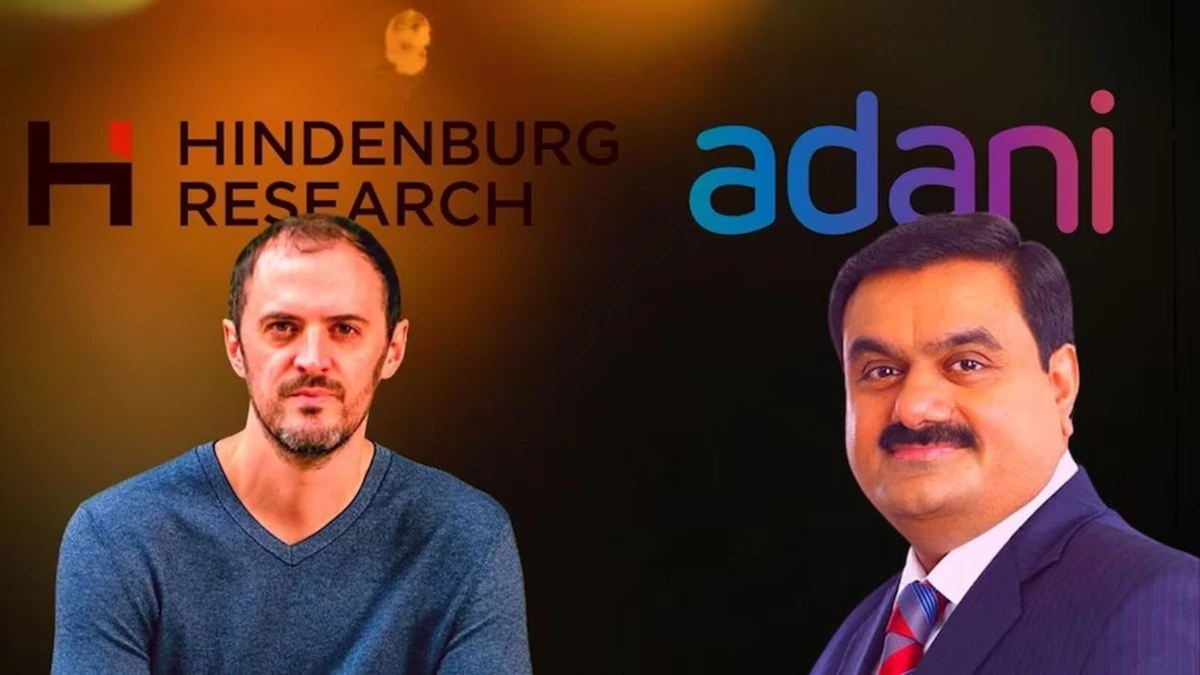
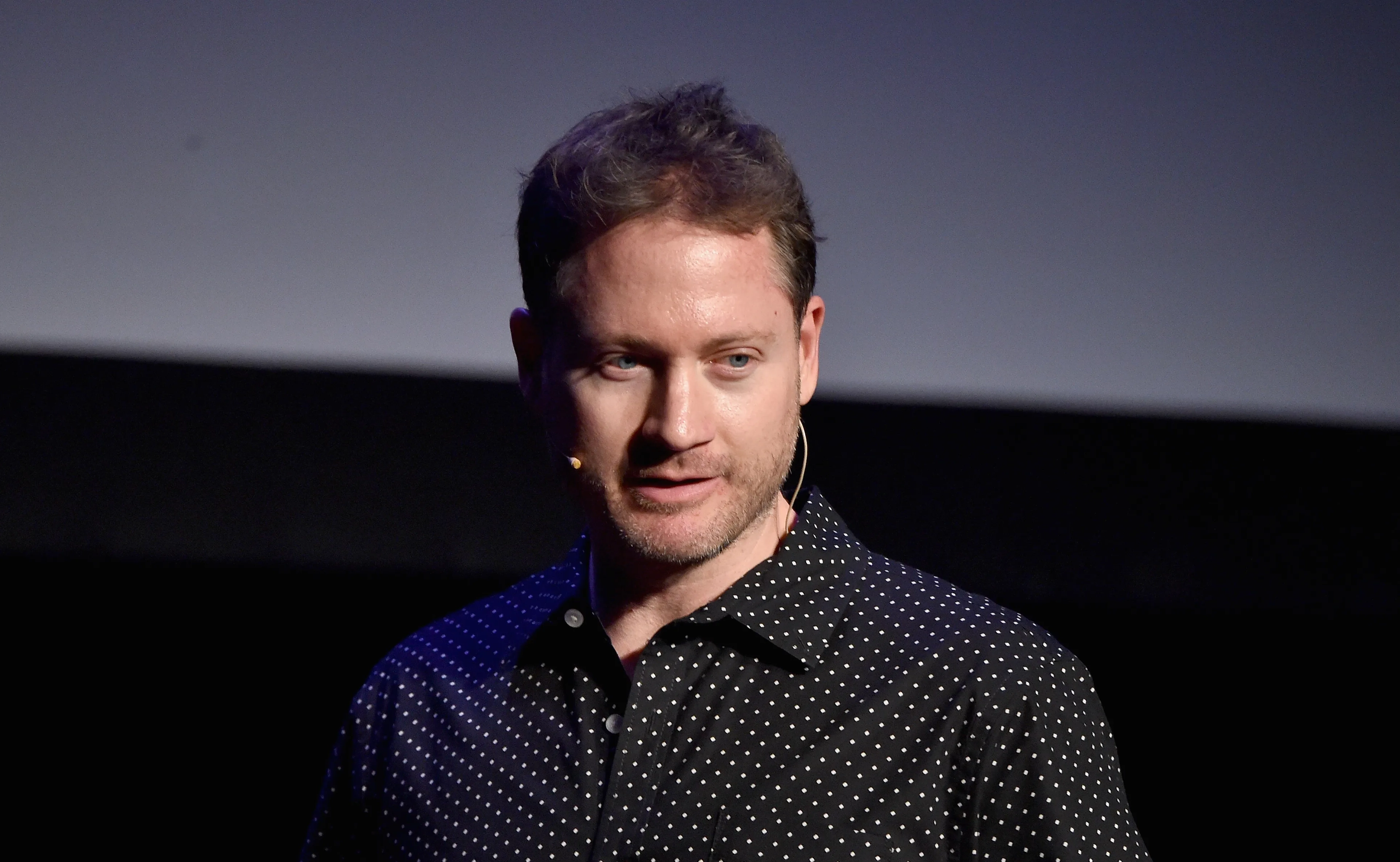
Activist short-seller Nathan Anderson, known for his high-profile campaigns against the likes of Adani Group, said he is closing his firm, Hindenburg Research, not because of any threat – legal or otherwise – and that he stands by all its reports.

Anderson told PTI that Hindenburg’s January 2023 report accusing Adani Group of “the largest con in corporate history” was a result of following “red flags” raised against the conglomerate in media reports.

Adani group had repeatedly denied all allegations in the report.

He termed as “goofy conspiracy” the attempts by some to link Hindenburg with alleged anti-India groups like OCCRP and George Soros, saying his outlet never commented on them as it followed the policy of not feeding into “silly conspiracy theories”.

Anderson, who came to be known for meticulously detailed reports against companies he alleged were committing fraud, last month announced shutting down his forensic research firm nearly eight years after he founded it.

Asked why he chose to shut down Hindenburg when he could have stepped back and passed on the reins of the company to someone else, he said there is “no way to separate me from the brand.” “Hindenburg is basically synonymous with me,” he said. “If it was a software application or a bicycle factory you can sell the application or the factory. But when it’s research driven by me, you can’t really just hand that off, and so I would not actually be ‘done’. But I am happy to support the team if they want to launch a new brand, which I expect they will.” Anderson, who first shot to fame with a report against electric truck company Nikola and had gone after the companies of major financial figures, including Carl Icahn’s Icahn Enterprises LP, had last month blamed the “intensity and focus” of the job for the decision to wind up.

He had spent much of the last eight years either in fights or preparing for the next fight. Many times during this period, he was often trailed and attempts were made to infiltrate his system.

“As to why I retired – it is all in the letter (released on January 16 that announced shutting down of Hindenburg) – it is not based on any threat, health issue, personal issue or otherwise,” he said.

Conspiracies theories like being on the verge of an investigation by the US Department of Justice and/or US SEC to “concoct a counter-narrative about my retirement is a great example of why I am happy to instead be enjoying more time with family, friends and good music,” he said.

Hindenburg has said it is not under investigation by the US SEC over anonymous reports linking its founder to a hedge fund for preparing reports targeting companies.

Asked if he stood by Hindenburg reports particularly against the Adani group, Anderson said, “We 100 per cent stand by all of our research findings.” Hindenburg had alleged that Adani Group had used a web of companies in tax havens to inflate its revenue and manipulate stock prices, even as debt piled up. The conglomerate vehemently denied all claims but the damning report at one point sheared over USD 150 billion off its value, losses it eventually recouped in over a year’s time.

The issue was agitated before the Supreme Court which did not find any need for a probe other than the one market regulator SEBI had initiated into certain issues prior to the Hindenburg report.

On some seeing the Hindenburg report as against India and its growth story, Anderson said, “We have always believed in India’s potential and view market transparency and strong corporate governance as key factors that can fuel India’s growth story.” He did not elaborate.

“We initially saw media articles outlining red flags, took a closer look, and just kept following the evidence,” he said on why Adani group was chosen.

On allegations of being in cohorts with OCCRP and George Soros, he said, “Of course not, but we have a policy of not feeding into silly conspiracy theories. When the main response to 100+ pages of evidence (presented in the report against Adani Group) is a goofy conspiracy, we view it as a sign that we were right on the mark.” Asked about the response of regulatory bodies in India to Hindenburg reports, he said, “We view our role as researching and writing about issues in need of transparency. The rest is out of our hands.” He dismissed allegations of sharing reports with hedge funds, saying, “We have always maintained full editorial control over all of our research.” “As we and many other US-based short sellers have discussed in public interviews for years, our model involves investing our own capital and sometimes also bringing on a balance sheet partner. This is one of the most common business models in our industry, it is fully compliant with all applicable laws, and we disclose this in our reports,” he added.

The 40-something son of a university professor and a nurse, Nathan (Nate) Anderson on January 15 issued a personal note that Hindenburg Research was being wound up after it “finished the pipeline of ideas we were working on.” The Connecticut man, who worked for 10 months as an ambulance driver in Israel, studied international business, finance, and accounting, managed money for the rich, believed he could make money by exposing corporate corruption.

Hindenburg, founded in 2017, placed bets against the companies it was researching. And it made money when stock prices of its targets tumbled on disclosure of fraud and other abuses that it unearthed through deep forensic financial research.

It however made surprisingly little money — just over USD 4 million — from the report on billionaire Gautam Adani’s sprawling business empire in January 2023.

That figure, disclosed for the first time by Hindenburg on its website last year, along with details of a letter it said it had received from India’s markets regulator, SEBI.

Anderson appears to be wanting to move on, having achieved what he and his colleagues wanted. “We shook some empires that we felt needed shaking,” he wrote in a personal memo last month.

But, this did take a toll on him. “It has come at the cost of missing a lot of the rest of the world and the people I care about,” he had written. “It wasn’t always obvious to me, but I now view all of this as a love story.” Hindenburg’s research has led to fraud charges and indictments against dozens of individuals, but has also resulted in expensive legal battles. The firm had just 11 employees.

Its last published report was on online car retailer Carvana earlier this year.

Categories
Corporate

Nissan may call off merger talks with Honda

Nissan may call off merger talks with Honda

Honda, Japan's second-largest carmaker, and Nissan, the third-largest, had announced last year that they were in talks to merge, which would have marked a significant shift in an industry

Staff Writer

Japan's Nissan may potentially end its merger discussions with Honda, as per a report. Nissan's board members are expected to convene soon to decide their next steps. 

According to a report in Reuters that quoted sources, this development casts uncertainty over a merger that could have resulted in the world's third-largest automaker by sales and raises questions about Nissan's ability to navigate its current challenges without external support.

The news of the potential end to merger talks led to a rise in the shares of both companies on Wednesday, with Honda's shares increasing by over 2 per cent and Nissan's by 1.6 per cent, despite a slight decline in Tokyo's Nikkei 225 index.

Honda, Japan's second-largest carmaker, and Nissan, the third-largest, had announced last year that they were in talks to merge, which would have marked a significant shift in an industry facing competition from China's BYD and other electric vehicle newcomers. However, sources indicated that the discussions have been complicated by growing differences between the two parties, as per the report.

Nissan's board is reportedly set to deliberate on ending the merger talks after Honda proposed making Nissan a subsidiary, a move that deviates from their initial discussions. Honda, with a market value nearly five times that of Nissan, is increasingly concerned about Nissan's progress in its recovery plan.

Japan's Asahi Shimbun newspaper had earlier reported that the merger might be called off. Representatives from both companies declined to comment on the status of the merger talks but stated that an announcement would be made in mid-February, as previously indicated.

Nissan has faced greater challenges than some other automakers in the transition to electric vehicles, having not fully recovered from the crises following the arrest and removal of former Chairman Carlos Ghosn in 2018. The merger discussions have also coincided with potential tariff disruptions from the United States. Analysts suggest that tariffs against Mexico could impact Nissan more severely than Honda or Toyota.

Nissan's long-term alliance partner, Renault, had expressed openness to the merger with Honda. The French automaker holds a 36 per cent stake in Nissan, including 18.7 per cent through a French trust.


Categories
Leaders

Money is a nightmare, says tech millionaire Bryan Johnson to Nikhil Kamath

Money is a nightmare, says tech millionaire Bryan Johnson to Nikhil Kamath

Nikhil Kamath asked Bryan Johnson if he could have it another way, with no money and no importance that comes with it, would he prefer it.  “If that were the case, I would rationalise it," he said

Staff Writer

Bryan Johnson, tech millionaire, anti-aging influencer, and founder and CEO of Blueprint, said in a podcast with Nikhil Kamath, that money is a nightmare. He said that money colours everything and all relationships. Prashanth Prakash, Founding Partner of Accel India, founder of BioPeak and Longevity India, argued that money brings in the liberty to do whatever one wants. 

In the latest episode of ‘WTF is with Nikhil Kamath’ podcast, Johnson said, “When I made money, I wish somebody would have given me advice like…let me just sit you down and tell you – money is a nightmare. It is, on so many levels. It warps all of your relationships, like every person in your life. It’s like you have three people in your relationship, you, your money and the person, you are in a polyamorous relationship.” 

He elaborated this with the example of the relationship between an uncle and a niece. “Your niece has a birthday party and it is customary for a $10 gift. Your niece is like, ‘oh my rich uncle can certainly afford a $500 gift’,” said Johnson, adding that if you give a $10 gift they would argue about what you are doing and why you are not giving them a $500 gift.

“Or you are out with friends for dinner and the cheque comes, and everyone’s eyeballing each other and it’s like ‘why didn’t you grab the cheque, you have the most amount of money?’ So it is like it colours everything. It gets more complicated with stuff like dating,” said Kamath.

Nikhil Kamath asked Bryan Johnson if he could have it another way, with no money and no importance that comes with it, would he prefer it. 

“If that were the case, I would rationalise it in my mind and make a case for it. I think in any situation we are all going to make the argument that whatever situation we are in now is the best situation,” said Johnson. He said given a choice of being either a millionaire who gets a lot of attention vs someone who did not make that kind of money, he would “flip a coin”. 

Prashanth Prakash said, “But remember, the independence that you have now and your ability to kind of define and redefine and do things your way, would you still be able to do it without money?” 

Johnson replied, “I am calling bullshit on myself. If you ask this open-ended, suggestive question of this parallel life without money, we are all going to just make shit up.” 

Categories
1 Minute-Read

Nestlé plans to bring ready-to-drink Starbucks coffees outside its cafes

Nestlé plans to bring ready-to-drink Starbucks coffees outside its cafes

The arrangement with Nestlé is exclusive of Starbucks’s joint venture with Tata Consumer Products that operates its stores

Staff Writer

Nestle is reportedly planning, in a partnership with Starbucks, to bring the global coffee chain’s products to the retail market outside cafes. Nestle has a global coffee partnership with Starbucks that allows both the companies to bring out a wide range of products.

According to a report in The Economic Times, head of Nestle’s coffee strategic business unit, Axel Touzet, the company is planning to expand their coffee portfolio in India to target different coffee consumption moments.

Nestle and Starbucks had signed a global deal in 2018 that gave Nestle rights to market Starbucks’ packaged coffee and food service products outside of its coffee shops. The report added that this does not impact Starbucks’ joint venture with Tata Consumer Products that operates the coffee chain in the country. 

The two companies said that they are extending their partnership to launch ready-to-drink coffee beverages in markets across Southeast Asia, Oceania and Latin America, under which they would roll out products like Frappuccinos and Doubleshots. 

Touzet said that Nestle has the right to distribute Starbucks ready-to-drink coffees as FMCG products, and they are keen on exploring India as it is one of the fastest markets for Nescafe. Even though India is a tea-drinking market, there is tremendous potential for coffee, he said. 

They are jointly developing a range of products including wholebean, roast, ground and premium instant Starbucks coffees, capsules, Nespresso pods and creamers. 

Starbucks had entered India in October 2012 through a 50:50 joint venture with Tata Consumer Products. The joint venture operates more than 470 stores. The arrangement with Nestle is exclusive of Starbucks’s joint venture with Tata Consumer Products, the report added.

Shares of Tata Consumer Products were trading higher in pre-opening trade today. The stock has climbed around 13 per cent in 2025 so far

Categories
Corporate

Budget 2025: Tax relief for middle-class to bolster growth in 2025, says Corporate India

Budget 2025: Tax relief for middle-class to bolster growth in 2025, says Corporate India

The budget emphasises on long-term growth through substantial infrastructure investments and a strong focus on innovation

Staff Writer

Continuing its focus on rapid infrastructure development, the government this time has aided its growth formula with major tax relief for the low-to-mid income individuals. As Finance Minister Nirmala Sitharaman lowered the income tax burden on individuals earning up to Rs 12 lakh per annum, coupled with boosts for the agricultural sector, corporate India cheered the union budget for FY2026.

According to Anish Shah, Group CEO & MD at Mahindra Group, the theme of ‘Make in India for the world’ remains a key focus in this budget, with efforts to reduce India's manufacturing costs poised to significantly enhance the country's global competitiveness. In addition to providing an immediate stimulus for demand and growth, the budget emphasises on long-term growth through substantial infrastructure investments and a strong focus on innovation.

“We commend the 2025 Union Budget for its continued support of robust consumption growth through changes in the tax structure, effectively placing more disposable income in the hands of the Indian consumer. This will encourage private sector capex to move in a positive direction,” says Shah.

Mohit Malhotra, CEO, Dabur India feels that tax reliefs offered in the budget will help boost the economy by increasing consumption. “Union Budget 2025-26 marks a pivotal step towards enhancing the financial well-being and quality of life for millions of middle-class families. The substantial tax relief measures, particularly making income up to ₹12 lakh tax-free, will provide essential financial respite to middle-class families, increasing their disposable income, encouraging spending, and promoting overall economic growth. This focus on the middle class addresses a long-standing demand and is a positive step towards a more inclusive and robust economy. I am optimistic that this move will help stem the slowdown in urban consumption and bring it back on the growth track,” says Malhotra.

According to him, the budget's emphasis on the agricultural sector, with enhanced support for farmers through increased Kisan Credit Card limits and targeted financial incentives, is commendable. These measures will not only strengthen the agricultural backbone of our country but also ensure food security and sustainable growth in the sector.

“The Union Budget 2025-26 is a bold and forward-looking plan that places the middle class at its core while ensuring inclusive and sustainable growth across all sectors. For middle-class families, strategic focus on targeted tax relief and enhanced social security measures, will uplift household sentiments, boost disposable income and drive consumption. This will provide much-needed financial stability to the masses,” says Saugata Gupta, MD & CEO of FMCG major Marico.

According to Gupta, the allocation of Rs 1.71 lakh crore to agriculture and allied activities, coupled with initiatives like the National Mission for Edible Oilseeds, Aatmanirbharta in Pulses, and the Prime Minister Dhan-Dhaanya Krishi Yojana, will drive agricultural productivity, stabilize rural economies, and ensure farmers have access to essential resources.

"This is a well-structured and progressive budget, aligned with the Government’s vision of a Viksit Bharat. It maintains a strong focus on inclusive growth, covering key sectors such as agriculture, farming, women’s empowerment, and manufacturing. The continued emphasis on capital expenditure is commendable,” says Harsha Vardhan Agarwal Vice Chairman & MD, Emami Ltd, adding that a major highlight of this budget is the significant announcement on personal income tax. “By putting more money in the hands of consumers, this step is expected to boost consumption and drive an increase in discretionary spending, ultimately strengthening overall economic momentum."

Sanjay Dutt, CEO and MD, TATA Realty and Infrastructure feels that the budget underscores India’s forward-looking vision for sustainable growth, urban transformation, and infrastructural excellence. 

“We commend the government’s comprehensive approach with its emphasis on increasing purchasing power by increasing the tax limit, strengthening urban infrastructure, governance, and land-use planning, with housing continuing to be a pillar of national growth. Additionally, the extension of tax benefits for self-occupied properties and interest subsidies further empowers homeowners, making housing more accessible and financially feasible,” says Dutt.


Categories
Corporate

Economic Survey says ‘brace for a breakdown’ amid 70 to 90-hour workweek row

Economic Survey says ‘brace for a breakdown’ amid 70 to 90-hour workweek row

The debate is not unique to India. In China, the infamous ‘996 culture’—where employees work from 9 am to 9 pm, six days a week—has faced increasing scrutiny

Staff Writer

As corporate leaders push for longer workweeks, the Economic Survey 2024-25 has issued a stark warning: excessive work hours can take a serious toll on mental health.

Citing global studies, the survey highlighted that working over 60 hours a week can lead to significant health risks, with those clocking 12-hour days at their desks showing “distressed” levels of mental well-being. The findings arrive amid a heated debate over the 70-90-hour workweek proposal, which has divided India’s business community.

The Economic Survey referenced a study by the Sapien Labs Centre for Human Brain and Mind, reinforcing that long hours at a desk harm mental health. “Individuals who spend 12 or more hours at a desk have distressed/struggling levels of mental well-being, with a mental well-being score approximately 100 points lower than those who spend less than or equal to two hours at a desk,” the survey noted.

Beyond mental health, workplace culture and lifestyle choices were also found to impact productivity. The survey indicated that stronger workplace relationships and a better sense of purpose at work could reduce workday losses by 2-3 days per month. Conversely, poor management relationships and low workplace pride were linked to increased absenteeism.

Still, the survey acknowledged that productivity is influenced by multiple factors, cautioning that even in organizations with strong managerial relationships, an average of five workdays per month are lost. Citing World Health Organization (WHO) data, it also highlighted that depression and anxiety result in a global loss of 12 billion workdays annually, amounting to an economic hit of $1 trillion. “In rupee terms, this translates to about ₹7,000 per day,” it added.

The survey’s findings come in the wake of remarks by industry leaders advocating for extended workweeks. Larsen & Toubro Chairman S N Subrahmanyan recently suggested a 90-hour workweek, arguing that employees should work even on Sundays rather than “sit at home.” His comments echoed similar views from Infosys co-founder Narayana Murthy, who proposed a 70-hour workweek, and Adani Group chairman Gautam Adani, who joked that spending too much time at home could lead to marital discord.

However, calls for grueling schedules have met resistance from within the corporate world. RPG Group Chairman Harsh Goenka warned that excessive work hours lead to burnout, not success. Mahindra Group Chairman Anand Mahindra also pushed back, stating that productivity should be prioritized over work hours. ITC Ltd Chairman Sanjiv Puri further emphasized the importance of empowering employees rather than measuring their worth by time spent working.

The debate is not unique to India. In China, the infamous ‘996 culture’—where employees work from 9 am to 9 pm, six days a week—has faced increasing scrutiny. The Economic Survey concluded that if India hopes to achieve its economic goals, it must address lifestyle choices from an early stage. Toxic work cultures and excessive hours, it warned, could ultimately hinder the country’s economic growth.


Categories
Leaders

Anupam Mittal on his Shark Tank India investments: 5 of them earning over ₹50 crore annual revenue

Anupam Mittal on his Shark Tank India investments: 5 of them earning over ₹50 crore annual revenue

The Shark Tank India judge and the founder-CEO of Shaadi.com spills the beans on the returns he's yielded on some of his investments

Staff Writer

Anupam Mittal, Shark Tank India judge and the founder-CEO of Shaadi.com, looked back at his investments on Shark Tank India so far. In a recent conversation, he spilled the beans on the returns he's yielded on some of his investments. 

Mittal said at a podcast that initially, people poked fun at founders during the first season of the show but as of now, he is invested in 5 Shark Tank India companies.

He mentioned that all of these companies have an annual revenue run rate of more than ₹50 crore.

Looking back at Shark Tank India season 1, Mittal said: “Let me tell you honestly about the first season, without holding my words, no one wanted to come on Shark Tank. People would make fun of us. Nobody wanted to come, not as sharks, not as founders,” he said.

He further said the very people who looked down took back their words as the show became highly successful. Mittal mentioned that he initially thought people who are not funded by venture capital firms would only come on the show such as family entrepreneurs and mom and pop shops.

Anupam noted that now, everyone has understood that Shark Tank can change the game and now everybody wants to be a 'shark' or an investor on the show. He also said that he saw it as "desh sewa" and not an opportunity to make money when the show. 

“Previously, I thought that I won’t make any money on Shark Tank because the best companies won’t come here but I told myself that let’s think of it as ‘desh sewa’ so as long as I break-even, maybe it is worth my time. Now, I have five Shark Tank companies in my portfolio that are doing more than Rs 50 crore annual revenue run rate. I never expected that.”

In season 1, Mittal invested around ₹5.4 crore across 24 companies whereas in season 2, he invested in 25 businesses. Details of his investments in season 3 are not publicly available yet. Some of his top investments on the show are Skippi Ice Pops, Sunfox Technologies, CosIQ, Thinkerbell Labs, and InACan. 

Categories
Leaders

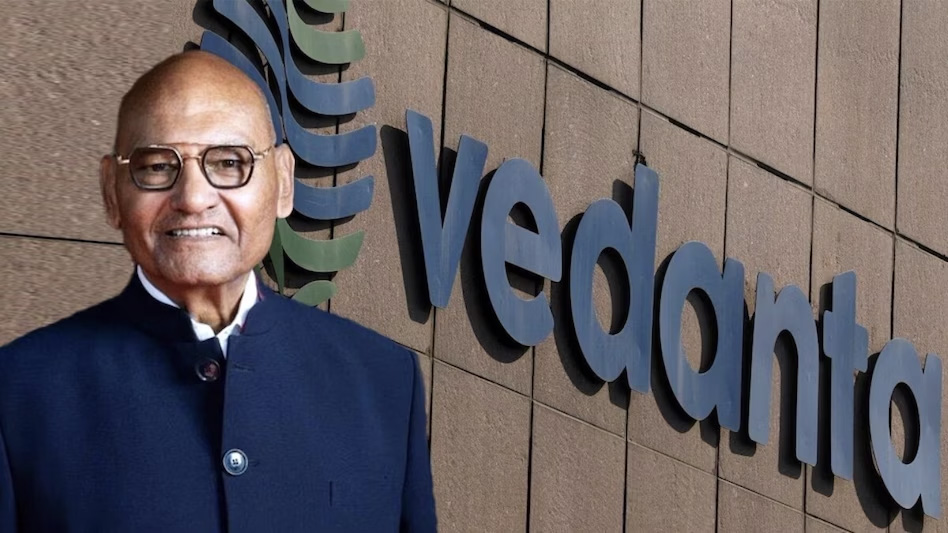
Bank mein sirf ₹75,000 the…Vedanta’s Anil Agarwal on buying his first flat in Mumbai

Bank mein sirf ₹75,000 the…Vedanta's Anil Agarwal on buying his first flat in Mumbai

Despite financial constraints, he set his sights on buying a flat—not in the suburbs, where most advised him to look, but in Malabar Hill, near Peddar Road, where Mumbai’s elite resided.

Staff Writer

Anil Agarwal’s journey from a small office in Kalbadevi to becoming the chairman of Vedanta Group is a story of relentless ambition. 

Recalling his early days in Mumbai, Agarwal in a post shared how he dared to dream big despite limited resources.

“When I first came to Bombay, I was living near Cotton Exchange near Kalbadevi. My first business partner had a small office there, and that’s where it all began. Life was simple, but my dreams were not,” Agarwal wrote.

Despite financial constraints, he set his sights on buying a flat—not in the suburbs, where most advised him to look, but in Malabar Hill, near Peddar Road, where Mumbai’s elite resided. 

“Sapne bade the, lekin bank mein sirf ₹75,000 the,” he recalled.

Eventually, he bought a 330 sq ft flat in Navranga Apartment. “It was a small 330 sq ft flat, but it felt like my biggest achievement. That house wasn’t just bricks and walls, it was my belief that I was moving in the right direction.”

Reflecting on his journey, Agarwal emphasized the power of perseverance. “Looking back, I’ve learned one thing; life is all about dreaming big and believing in yourself. Start small, work hard, and never let anyone tell you what you can or cannot achieve. Dream it. Believe it. And one day, you will live it.”

As Vedanta prepares to announce its Q3FY25 results on January 31, investor sentiment remains positive. The stock rose 1.62% to an intraday high of ₹437.60 before paring gains to ₹433 by 1:20 PM. In comparison, the BSE Sensex was up 0.31% at 76,772.32.

Vedanta’s earnings are expected to reflect strength in its base metals segment, with analysts predicting a 6-7% quarter-on-quarter increase in EBITDA. Higher aluminum and zinc prices are likely to support this growth, while the oil and gas segment may see a decline due to lower volumes.