
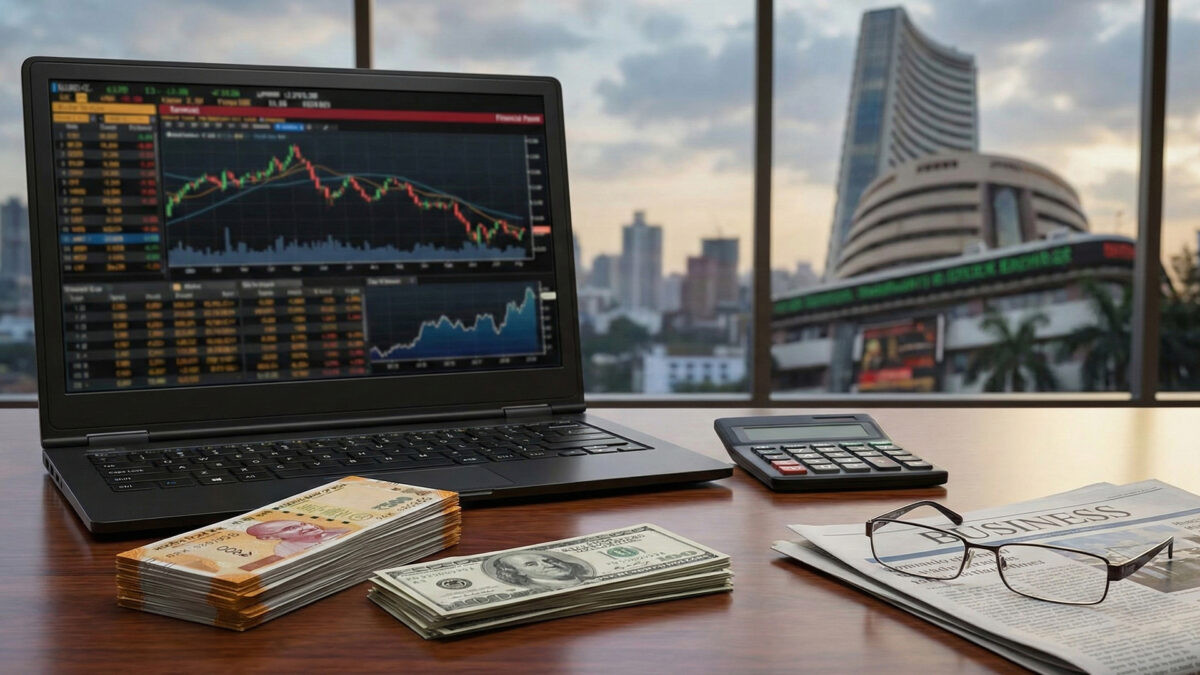
Rupee fell sharply to a record low of ₹92 per US dollar on January 23, 2026, before recovering slightly to ₹91.88. Experts attribute the slide to foreign investors pulling out funds and continued strong dollar demand from importers.
This depreciation affects both households and businesses. Imported goods, particularly crude oil, electronics, and machinery, are becoming more expensive. With India importing nearly 85% of its crude oil, fuel prices and inflation are expected to rise. Families face higher costs for overseas travel and education, while Non-Resident Indians (NRIs) benefit slightly as their remittances now convert into more rupees.
Exporters stand to gain from the weaker rupee, receiving more rupees for every dollar earned. However, companies that rely heavily on imported materials may see their benefits limited. Sectors such as textiles, which are less import-dependent, are likely to benefit the most.
Looking ahead, a Business Standard poll suggests the rupee could trade near ₹92.50 per dollar by the end of March 2026 if current trends persist and foreign outflows continue. Analysts point to delays in a US‑India trade deal and ongoing global uncertainties as key factors keeping the currency under pressure.
The Reserve Bank of India (RBI) has intervened at times to curb volatility, but broader global and domestic forces continue to influence the rupee. Policymakers face the challenge of balancing currency stability with inflation control and economic growth, as households, businesses, and exporters navigate the effects of a weaker rupee.
Also Read: ChatGPT cites Elon Musk’s Grokipedia in responses