
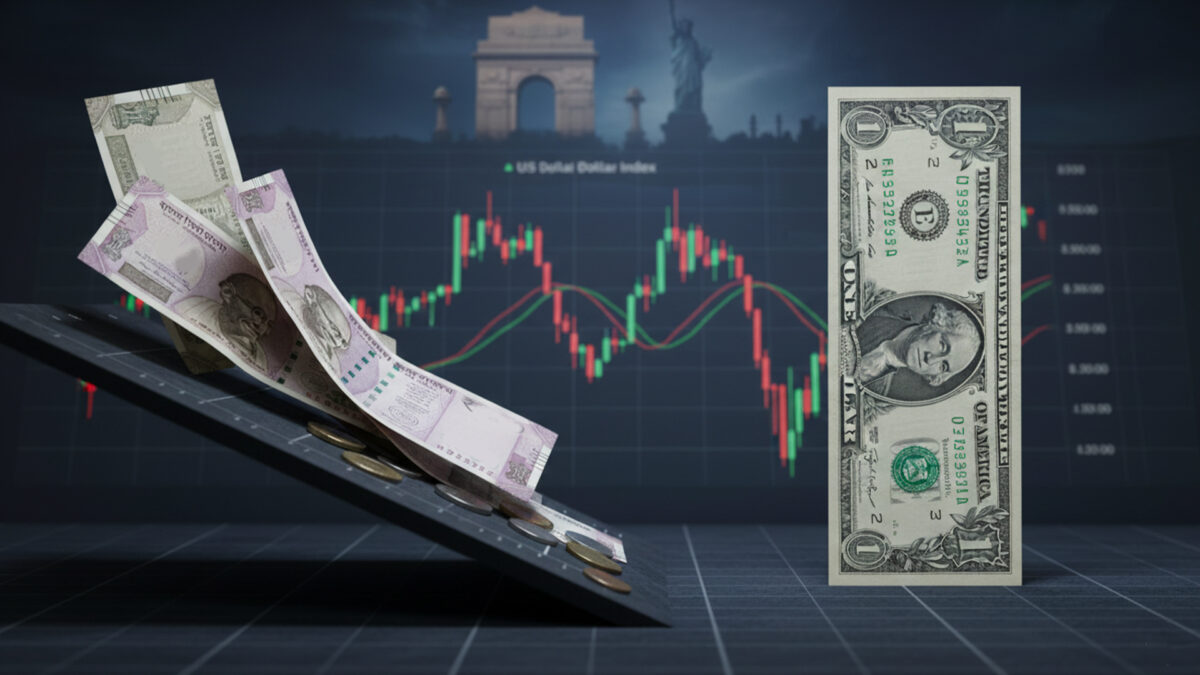
The Indian rupee slipped further on Friday, closing at a record low of ₹90.41 against the US dollar, down 9 paise from the previous session. This marks another milestone in the rupee’s ongoing depreciation trend.
Traders said the fall was mainly due to high demand for dollars from importers who needed to pay for overseas goods and services. At the same time, foreign investors have been pulling money out of Indian stocks and bonds, adding to pressure on the currency.
Global factors also played a role. A stronger dollar abroad and uncertainty in financial markets made investors cautious, keeping the rupee under stress. Analysts said that while the Reserve Bank of India can step in to stabilize the currency, its ability to stop the decline is limited when import demand and capital outflows are high.
The rupee’s slide reflects wider economic challenges, including a trade gap, where India imports more than it exports, increasing the need for foreign currency. Experts expect the rupee to face continued pressure in the coming weeks as global market volatility and domestic economic factors play out.
Despite the fall, some believe the rupee may find temporary support if global dollar strength eases or if capital inflows improve. For now, businesses and consumers may feel the pinch as imports become more expensive and foreign travel or overseas education costs rise.
Also Read: IndiGo moves court for ₹900 crore refund