
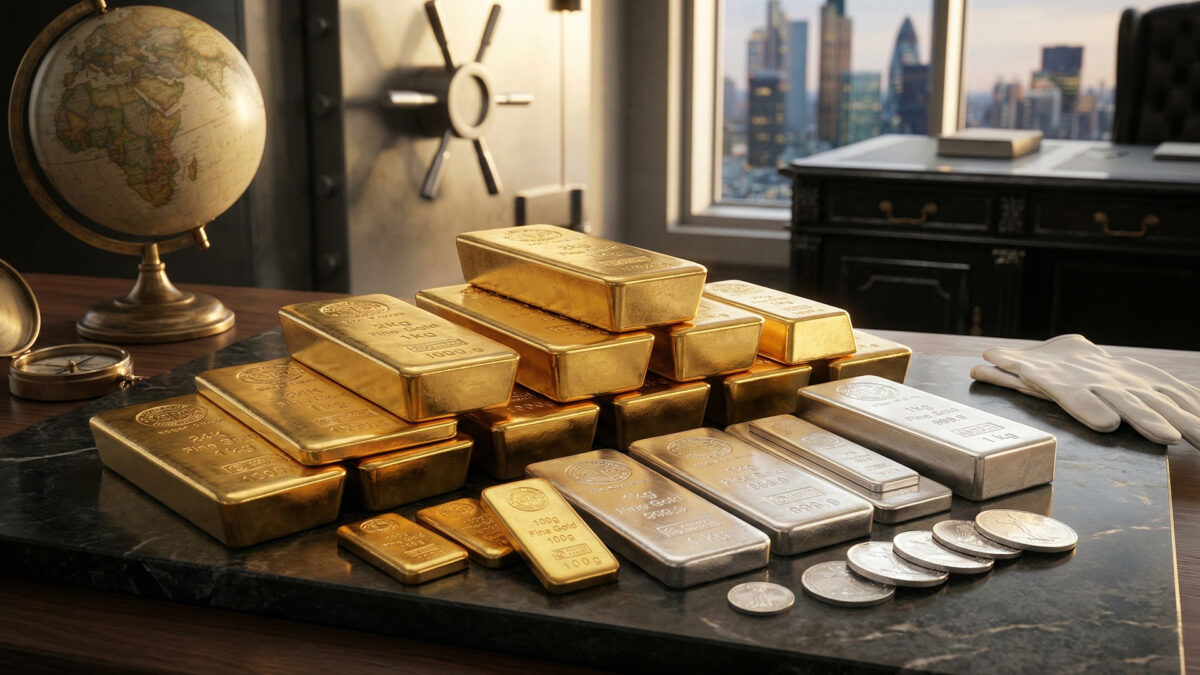
Gold and silver prices regained some ground on Wednesday, September 30, after coming under pressure in recent sessions. MCX gold futures rose 0.64% to ₹1,49,810 per 10 grams, while silver gained 0.43% to ₹2,26,270 per kg around 9.13 am. The recovery came as investors reassessed the outlook for US interest rates, the dollar and global markets.
The precious metals market has entered a volatile phase, with prices responding quickly to changes in bond yields, currency movements and geopolitical developments. Gold, traditionally viewed as a safe-haven asset, is also facing competition from higher-yielding assets as investors assess the path of US monetary policy.
International prices were also firmer. Spot gold climbed 1.42% to $4,173 an ounce, while US gold futures rose 0.54% to $4,202 an ounce. The gains followed a 0.32% decline in domestic spot gold in the previous session.
Gold remains near ₹1.5 lakh
Domestic retail gold prices remained close to the ₹1.5 lakh mark for 10 grams across major markets.
In Delhi, 24K gold was priced at ₹1,49,280 per 10 grams, while 22K gold stood at ₹1,36,840. The 999-purity silver rate was ₹2,25,470 per kg.
In Mumbai, 24K gold was quoted at ₹1,49,530 per 10 grams, while 22K gold was priced at ₹1,37,069. Silver stood at ₹2,25,860 per kg.
In Kolkata, 24K gold was available at ₹1,49,320 per 10 grams and 22K gold at ₹1,36,877. Silver was quoted at ₹2,25,690 per kg.
Among other major markets, Bengaluru recorded a 24K gold rate of ₹1,49,640 per 10 grams, while Hyderabad was at ₹1,49,760. Chennai reported the highest 24K gold rate among the listed cities at ₹1,49,950 per 10 grams. Its 999 silver rate stood at ₹2,26,650 per kg.
Retail rates can differ across cities because of local taxes, transportation costs, demand and dealer margins. Jewellery prices can be higher than quoted bullion rates once making charges and applicable taxes are added.
US rates, dollar remain key drivers
The biggest factor for gold right now is the direction of US interest rates. Since gold does not generate interest income, higher bond yields can make the metal less attractive compared with interest-bearing investments.
The dollar is equally important. A stronger US currency generally puts pressure on internationally traded gold because the metal becomes more expensive for buyers using other currencies.
That dynamic is particularly relevant for India. The rupee touched around ₹96.20 against the US dollar on Tuesday, its weakest level in two months. A weaker rupee can push up the domestic cost of imported gold, even when global prices remain steady.
Crude oil has added another layer of uncertainty. Brent crude recently moved above $108 a barrel before easing towards $105. Higher oil prices can increase India’s import bill and add to inflation concerns, factors that can influence both the rupee and investor sentiment.
Silver follows a different path
Silver has also remained firmly above the ₹2 lakh mark, but its price drivers are broader than those of gold.
The metal is widely used in industrial applications, including electronics, solar equipment and manufacturing. This means silver prices can respond not only to investment demand but also to expectations for global economic and industrial activity.
On Wednesday, MCX silver futures traded at ₹2,26,270 per kg, while retail 999-purity silver remained around ₹2.25 lakh per kg in several major cities.
The gap between retail prices reported across markets can reflect differences in timing and local dealer pricing.
What could move prices next?
US economic data will remain an important trigger for bullion markets. Inflation and employment figures could influence expectations about the Federal Reserve’s next policy moves. Any shift in rate expectations could quickly affect the dollar and Treasury yields, and in turn, gold prices.
Investors will also keep an eye on geopolitical developments and crude oil prices. Higher uncertainty can support safe-haven demand for gold, while a stronger dollar and higher yields can work in the opposite direction.
Indian buyers face an additional variable: the global gold price, rupee-dollar exchange rate and domestic demand all influence the final gold rate. Jewellery prices can also vary depending on purity, making charges, taxes and local market conditions.
With bullion markets caught between safe-haven demand and pressure from interest rates and a strong dollar, volatility is likely to remain a key feature. Consumers and investors tracking gold rates and silver rates today will be watching the rupee, US yields and global bullion prices closely in the sessions ahead.