
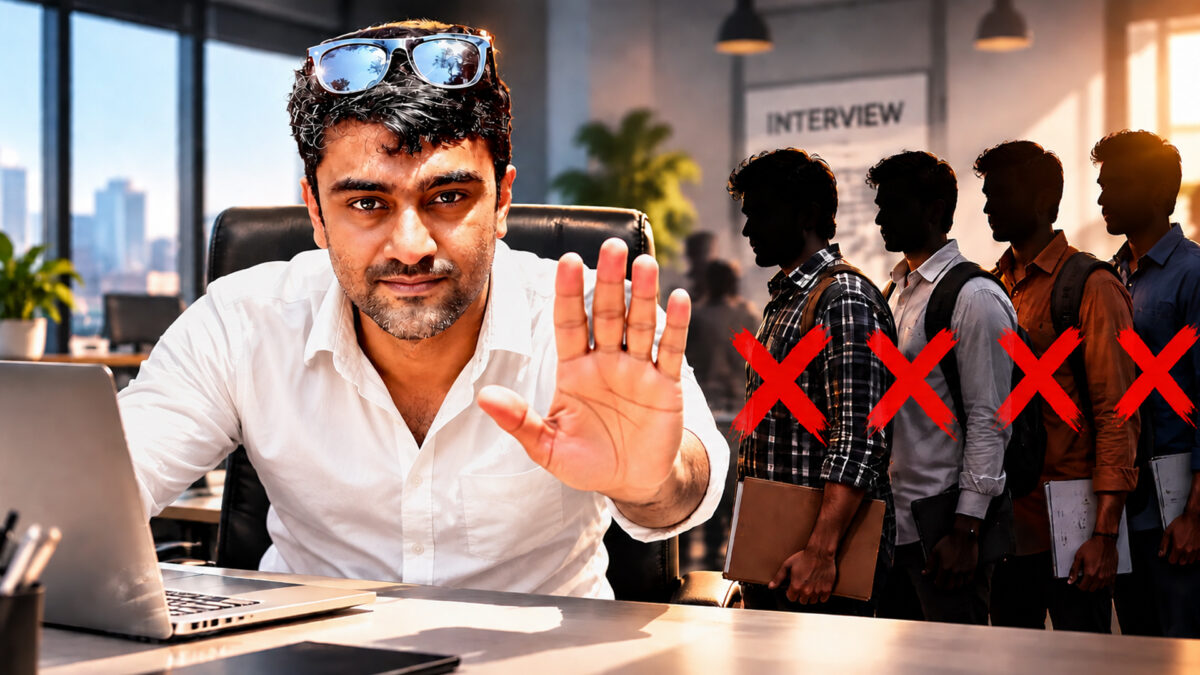
A hiring decision by a Bengaluru entrepreneur has triggered a wider conversation about workplace safety, recruitment practices and regional bias after he announced that his company would not hire male candidates from four states.
Karthik SG, founder of Bengaluru-based A1 Sports World, said in a post on X that the company had decided not to recruit male candidates from Uttar Pradesh, Bihar, Rajasthan and Madhya Pradesh. He said the decision followed a “lengthy discussion and quarrel” within the company.
The announcement quickly spread online, drawing sharply different reactions. While some social media users said they understood the concern about protecting women employees, others questioned whether a candidate’s state of origin should determine their eligibility for a job. The discussion has since widened into a debate about workplace discrimination, employee screening and how companies should respond to incidents of misconduct.
What led to the decision?
Karthik later provided more context about the decision. According to his posts, the company recently dismissed a male employee from one of the four states after repeated complaints about his behaviour towards female colleagues.
He alleged that the employee had received two warnings but continued behaving abusively and had attempted to force himself on a female colleague. Karthik said the incident became particularly concerning because A1 Sports World works with young children as part of its sports programmes. The allegations have been presented by the entrepreneur; the former employee’s side has not been reported in the available accounts.
Karthik said the company has 32 employees, including 14 women. He also said 20 employees are from outside Karnataka, with 12 coming from non-Southern states. He cited these figures while defending his decision and explaining the broader composition of his workforce.
The entrepreneur has also argued that conventional recruitment checks may not always reveal problematic behaviour. He said the employee involved had an MBA and appeared suitable during the hiring process, but allegedly began displaying abusive behaviour around two months after joining.
Karthik has maintained that he stands by the decision, framing it as a measure taken after an experience that raised concerns about employee safety.
Debate over regional bias
The controversy, however, has moved beyond the original workplace incident.
Critics have questioned the logic of excluding an entire group of candidates because of their gender and state of origin. They argue that recruitment decisions are generally expected to focus on an individual’s qualifications, experience and conduct rather than assumptions based on where they were born.
Some online responses described the policy as regional discrimination and argued that the actions of one employee should not be used to make assumptions about thousands or millions of people from a particular state. Others raised a different concern: if an employer believes workplace safety was compromised, stronger individual screening and accountability may be more appropriate than a blanket hiring restriction.
The debate also reflects a difficult question for employers: how far can a company go in trying to prevent workplace misconduct while ensuring that recruitment remains fair and individualised?
Workplace safety at the centre
At the heart of the controversy is a legitimate concern shared by employers across industries — creating a workplace where employees, particularly women, feel safe.
Companies increasingly rely on background verification, reference checks, interviews, workplace policies and complaint mechanisms when hiring and managing employees. Yet the Bengaluru episode highlights the limitations of relying on a resume or a standard background check to understand how a person may behave in a workplace.
At the same time, a safe workplace also depends on clear codes of conduct, accessible reporting mechanisms, prompt investigation of complaints and appropriate action when misconduct is established.
The controversy therefore brings two issues into the same conversation: the responsibility of employers to protect their teams and the importance of avoiding broad assumptions about potential employees.
For business leaders and HR teams, the episode is a reminder that hiring decisions can have consequences far beyond recruitment. Questions around workplace culture, employee safety, diversity, inclusion and fair hiring can quickly become public issues, particularly when companies announce their policies on social media.
The Bengaluru founder’s post has made that tension visible. What began as a company’s response to an alleged employee misconduct incident has evolved into a larger discussion about how employers can balance workplace safety with equal opportunity and individual accountability.
The online debate remains divided, but the central issue is clear: organisations need effective ways to identify and address misconduct without losing sight of fairness in the hiring process.