
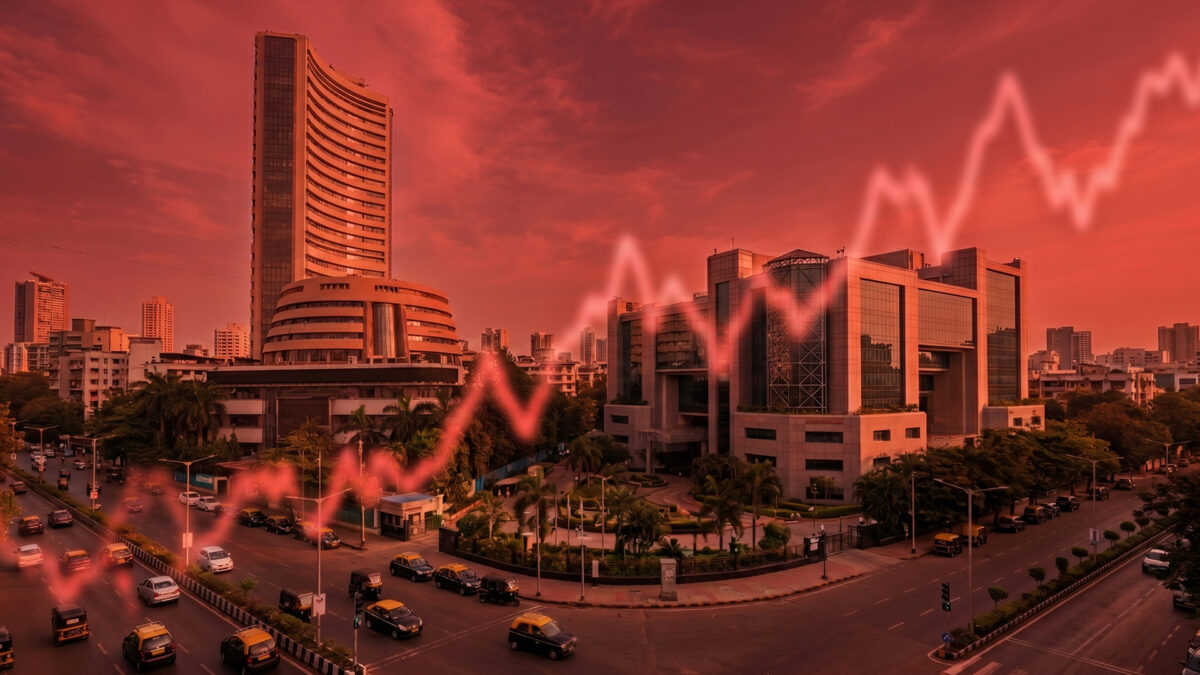
A fresh wave of selling hit Indian equities on Thursday, with the Sensex opening 573.95 points lower at 74,254.30 and the Nifty falling 202.90 points to 23,243.90, as weak global cues and rising bond yields weighed on sentiment.
The sharp fall came a day after domestic equities had staged a recovery. On Wednesday, the Sensex gained 299.17 points, or 0.40%, to close at 74,828.25, while the Nifty 50 rose 117.80 points, or 0.50%, to finish at 23,446.80. Thursday’s opening decline erased a sizeable part of those gains as investors turned cautious.
Selling was broad-based at the opening bell. Around 1,591 stocks declined against 806 advances, pointing to weak sentiment across the wider market. The Nifty Midcap and Smallcap indices also faced pressure, although some individual stocks managed to hold on to gains.
Financial stocks under pressure
Financial stocks were among the biggest drags on the benchmark indices. HDFC Life, Bajaj Finance, Bajaj Finserv, Axis Bank and SBI Life Insurance featured among the major Nifty losers in early trade.
The selling in financial shares came after the sector had participated in the previous day’s recovery. Investors appeared cautious about interest-rate conditions and the impact of higher global bond yields on equity valuations.
The pressure was not uniform across sectors. Tech Mahindra, NTPC, TCS, Infosys and HCL Technologies were among the top gainers on the Nifty in early trade. The gains in these stocks offered some support to the index but were not enough to counter the broader market decline.
Rising US bond yields weigh
A major trigger for the sell-off was the sharp rise in US Treasury yields. The 10-year US Treasury yield climbed to around 5.11%, while the 30-year yield touched nearly 5.4%.
Higher bond yields can make fixed-income assets more attractive compared with equities. They can also increase the cost of capital for companies and put pressure on valuations, particularly in emerging markets such as India.
The rise in US yields followed stronger-than-expected US economic data, which raised concerns that inflation could remain persistent and interest rates may stay higher for longer. Investors are therefore closely watching signals from the US Federal Reserve on the future path of monetary policy.
The rise in global yields also supported the US dollar, adding another layer of pressure for emerging-market currencies and equities.
Crude oil adds to concerns
Crude oil prices are another major concern for Indian investors. Brent crude had moved above $102 a barrel after gaining nearly 4% in the previous session.
Oil prices have remained volatile amid geopolitical developments in West Asia, particularly uncertainty surrounding the US-Iran conflict and the movement of oil through the Strait of Hormuz.
Prices eased slightly on Thursday after Iran signalled that it remained open to diplomatic efforts. However, uncertainty around the conflict continues to keep oil markets sensitive to fresh developments.
For India, higher crude prices are particularly important because the country depends heavily on imports to meet its oil requirements. A sustained increase in crude can raise the import bill, widen the trade deficit and add to inflationary pressure.
Higher oil prices can also affect the rupee and corporate costs across several sectors, making crude movements an important factor for the Sensex and Nifty.
Rupee opens weaker
The Indian rupee also started the session on a weaker note. It opened at around ₹95.83 against the US dollar, compared with ₹95.74 in the previous session.
The combination of higher US yields, a stronger dollar and elevated crude prices has kept pressure on the domestic currency. A weaker rupee can make imported commodities such as crude oil more expensive and can affect companies with significant foreign-currency exposure.
Investors are therefore watching currency movements alongside global bond yields and oil prices to assess the direction of Indian equities.
FII flows provide some support
Foreign institutional investors had returned to buying in the previous session, offering some support to domestic markets. FIIs purchased Indian equities worth around ₹1,600 crore on September 23, ending a two-day selling streak.
Domestic institutional investors remained buyers as well, investing around ₹2,341 crore in Indian equities.
However, Thursday’s weak opening shows that domestic fund flows alone may not be enough to shield the market from strong global risk-off sentiment. Investors are balancing domestic liquidity against concerns over global interest rates, crude oil and geopolitical risks.
GIFT Nifty had already indicated a weak start before the market opened on Thursday, signalling that the pressure was likely to continue after Wednesday’s recovery.
What investors will watch
The focus now shifts to crude oil prices, US Treasury yields, the rupee, foreign fund flows and developments in West Asia. Global equity markets and expectations around US interest rates will also influence investor sentiment during the session.
The Nifty’s move below 23,250 is likely to remain an important point for traders after the index closed above 23,400 on Wednesday. Investors will watch whether buying emerges at lower levels or whether the selling pressure intensifies.
The sharp opening decline also highlights the fragile nature of the recent market recovery. While domestic institutional buying and selective stock gains are providing some support, global factors continue to play a major role in determining the near-term direction of the Indian stock market.