
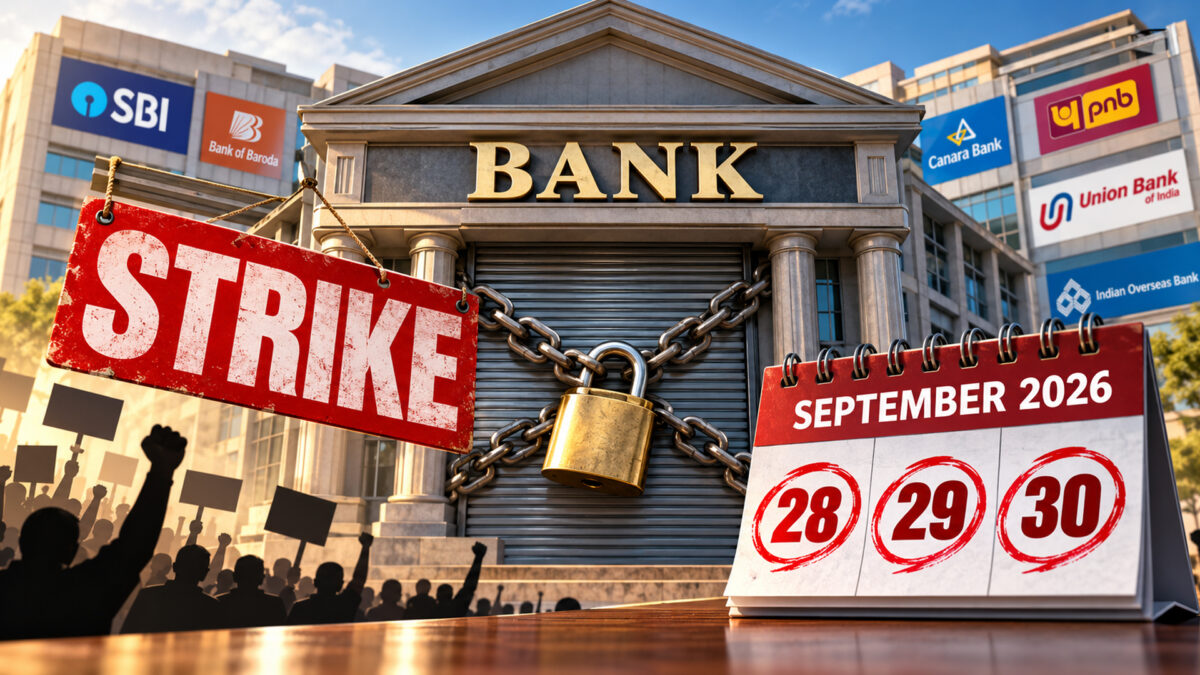
Bank customers will get an extra day to complete branch-related work before a proposed three-day nationwide bank strike. Public sector banks and regional rural banks will remain open on Sunday, September 27, ahead of the strike planned from September 28 to 30.
The special Sunday opening has been arranged to reduce the impact of the proposed strike and help customers complete important transactions before services are disrupted. September 26 is the fourth Saturday and would normally be a bank holiday, followed by Sunday.
With the proposed strike beginning on Monday, customers could otherwise have faced several consecutive days of limited branch services.
The United Forum of Bank Unions (UFBU) has called the three-day strike over a number of employee demands, with the introduction of a five-day banking week among the main issues.
Bank unions have been seeking a five-day working week for several years. Under the proposal, all Saturdays would become holidays for bank employees.
At present, bank branches are closed on the second and fourth Saturdays of every month. Other Saturdays are generally working days.
The unions have said the five-day banking week was part of the wage revision settlement reached in March 2024, but its implementation is still pending.
Employee unions are also seeking changes related to pensions, recruitment, staffing and working conditions.
Another major issue is the Performance Linked Incentive (PLI) scheme. Bank unions have opposed changes to the scheme and are demanding that it be withdrawn.
Pension-related demands include changes to pension benefits and issues affecting retired bank employees. The unions have argued that these matters need to be resolved along with other pending employee concerns.
The proposed strike follows several rounds of discussions between bank unions, government representatives and bank managements.
The government and bank managements have appealed to the unions to withdraw the strike and continue negotiations. However, key issues remain unresolved.
The five-day banking week is among the demands that continue to be discussed. The unions have maintained that the proposal should be implemented as part of the commitments made during the wage settlement.
The timing of the proposed strike is also important because September 30 is the half-yearly closing of banks. A strike at the end of the half-year could affect businesses and financial transactions that need to be completed before the reporting deadline.
The strike is expected to mainly affect physical bank branches.
Customers visiting branches for cash deposits or withdrawals, cheque-related work, demand drafts, document submission and other staff-assisted services could face delays.
People who have important branch-related work are therefore likely to benefit from completing it before September 28 or using the special Sunday opening on September 27.
Digital banking services are expected to continue as usual. UPI, internet banking, mobile banking, IMPS and ATM services generally operate independently of regular branch staffing and are expected to remain available.
However, services that require physical processing or staff intervention could take longer during the strike period.
The impact may also differ from one bank to another. The strike is primarily associated with unions representing employees of public sector banks and other participating institutions. Private sector banks are not expected to be affected in the same way.
The Centre has also taken steps to prevent delays in salary and pension payments because of the proposed strike.
The September salaries, wages and pensions of central government employees and pensioners will be credited on September 25, ahead of the strike.
The advance payment is intended to ensure that government employees and pensioners receive their monthly payments without being affected by possible disruption to banking operations at the end of the month.
This arrangement applies to central government employees and pensioners. It does not mean that salaries for employees in private companies or other organisations will automatically be credited early.
Sunday, September 27, would normally be a holiday for banks. Keeping public sector banks and regional rural banks open gives customers an additional opportunity to complete transactions before the proposed strike begins.
The Reserve Bank of India has also made arrangements for banking operations on the day, including relevant offices and currency-related facilities.
Customers who need cash, have pending documentation or need to submit cheques and other physical documents can use the additional working day where their bank branch is covered by the arrangement.
Those who primarily use digital banking services are less likely to be affected by the strike.
Customers with urgent branch-related work should avoid waiting until the last minute. Cash requirements, cheque deposits, documentation and other services requiring staff assistance can be completed before the strike or on Sunday, September 27, where available.
Routine payments and transfers can continue through UPI, mobile banking, internet banking and ATMs, subject to normal technical availability.