
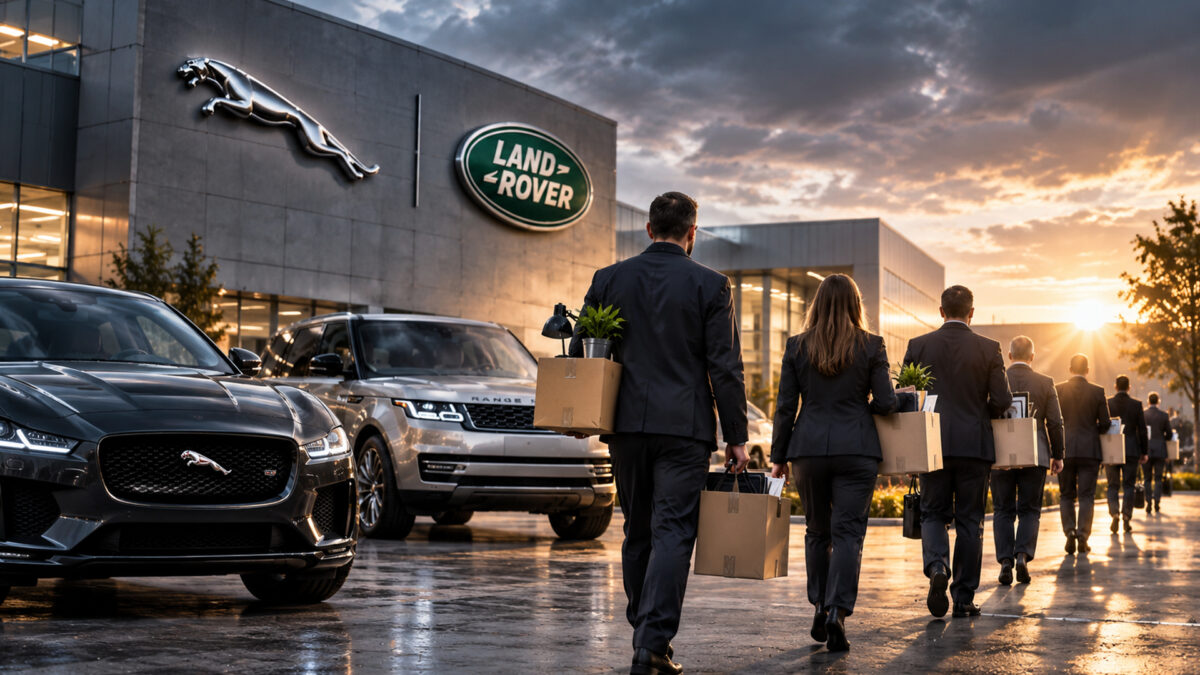
Jaguar Land Rover (JLR) is set to cut around 4,000 jobs over the next two years as the Tata Motors-owned luxury carmaker faces a difficult mix of falling sales, US tariffs, intense Chinese competition and rising operating costs.
The planned reduction, which amounts to nearly 10% of JLR’s global workforce, is part of a broader cost-cutting programme aimed at saving about £1.7 billion ($2.3 billion) over the next two years. The company is expected to focus largely on salaried and management positions, particularly in the UK, rather than factory-floor jobs.
JLR employs about 44,000 people globally, with roughly 34,000 based in the UK. The company has opened a voluntary redundancy programme as it looks to simplify its operations and make the business more competitive in a rapidly changing global car market.
The job cuts come at a challenging time for the British luxury automaker. JLR has been hit by weaker demand in China, one of the world’s most important markets for premium vehicles. At the same time, Chinese carmakers are becoming increasingly competitive, particularly in electric vehicles, putting pressure on established global brands.
The company is also dealing with the impact of US trade tariffs. The United States is a major market for JLR, but the company does not have a large manufacturing base there, making it more exposed to tariffs on vehicles shipped from its UK plants. The additional costs have added to pressure on margins at a time when the global automotive industry is already dealing with high production and investment costs.
JLR has also had to deal with the fallout from a damaging cyberattack that disrupted its operations. The incident affected production and added further financial strain to a business already navigating weaker demand and a costly transition towards electric vehicles.
The restructuring is not simply about reducing its workforce for JLR. The company is trying to change the economics of its business so it can remain profitable even at lower production volumes. As part of that effort, it is targeting a break-even point of around 300,000 vehicles a year.
The strategy comes under JLR’s wider “Growth Reimagined” transformation plan, which is aimed at improving efficiency, reducing costs and strengthening the company’s long-term competitiveness. The automaker is also continuing to invest in new electric models despite the pressure on its finances.
The transition to electric vehicles has become another major challenge for traditional luxury carmakers. Companies such as JLR are having to spend heavily on new technologies while demand for electric vehicles remains uneven across major markets. At the same time, Chinese manufacturers have moved quickly into the EV space, offering increasingly sophisticated vehicles at competitive prices.
JLR is preparing for the next phase of its electric vehicle strategy, including the launch of the Range Rover Electric. Jaguar is also being repositioned as an all-electric brand. The company is therefore trying to balance substantial investment in future products with the immediate need to reduce expenses.
The latest restructuring has also raised concerns among suppliers and workers in the UK. JLR is a major employer and plays an important role in the West Midlands economy, supporting a large network of automotive suppliers and related businesses. Any prolonged reduction in production could therefore have consequences beyond the employees directly affected by the redundancy programme.
The UK government has indicated that it does not plan to provide another financial rescue package for JLR, despite having previously backed a £1.5 billion recovery loan. Regional authorities, however, have said they are prepared to support workers affected by the cuts.
The developments for Tata Motors, which acquired Jaguar and Land Rover from Ford in 2008, highlight the growing pressures facing its global luxury automotive business. JLR remains an important part of Tata Motors’ international portfolio, but the company now has to navigate a market shaped by tariffs, geopolitical uncertainty, changing consumer demand, the EV transition and tougher competition from China.
The immediate priority is to make the business leaner without weakening its ability to develop new vehicles. The planned 4,000 job cuts are therefore being presented as part of a wider attempt to protect JLR’s future rather than simply a response to one difficult year.
For employees, suppliers and the wider British automotive industry, however, the restructuring is a stark reminder of how quickly the global car market is changing. JLR’s challenge is now to cut costs while continuing to invest enough to compete in the next generation of luxury vehicles.