
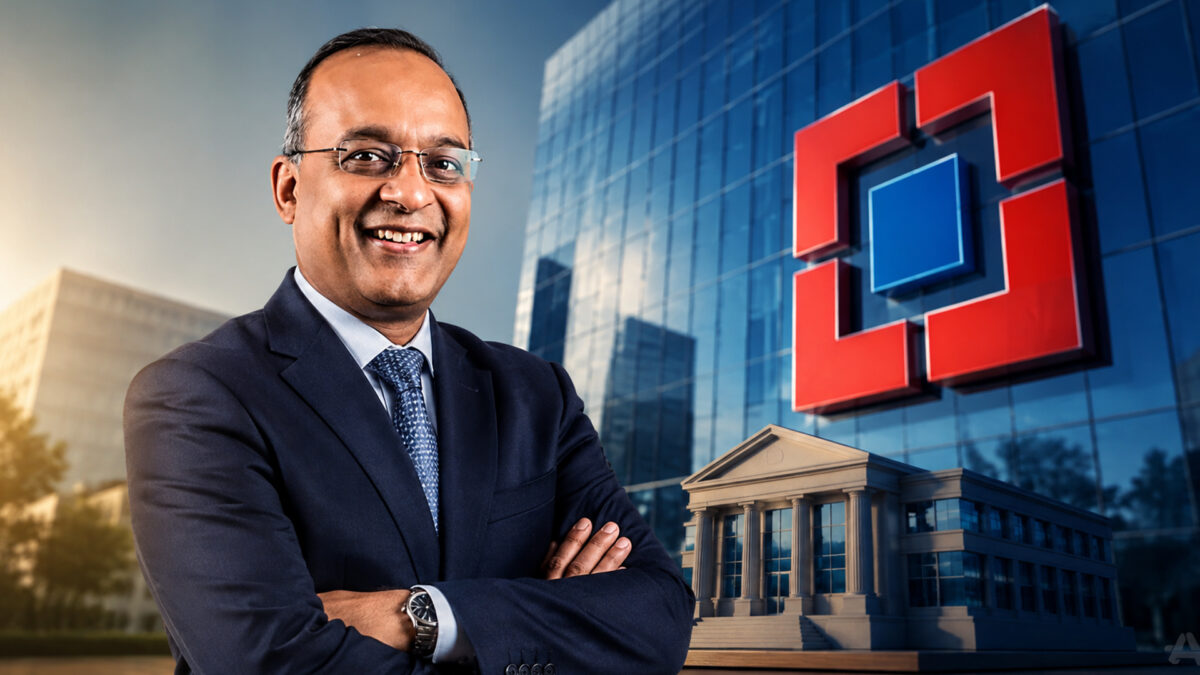
HDFC Bank is preparing for a major leadership transition after managing director and chief executive officer Sashidhar Jagdishan decided not to seek another term and will retire on October 26, 2026.
The decision brings an end to nearly six years of Jagdishan’s tenure as head of India’s largest private-sector bank and has prompted the lender’s board to accelerate the search for his successor. The next CEO will take charge at a crucial stage for the bank, which continues to work through the integration and growth challenges following its merger with HDFC Ltd.
Jagdishan communicated his decision to the board on August 29. The board had sought to persuade him to continue, but he remained firm about not seeking reappointment. The development ends uncertainty over whether he would remain at the bank beyond his current term.
Jagdishan became HDFC Bank’s managing director and CEO in October 2020, succeeding long-serving chief Aditya Puri. He had joined the bank in 1996 and rose through its finance operations before eventually taking charge of the institution.
His tenure was defined by the landmark merger of HDFC Ltd with HDFC Bank in 2023. The transaction brought India’s largest housing finance company into the banking group and significantly increased HDFC Bank’s scale.
The enlarged lender has since been focused on integrating operations while seeking to unlock the benefits of the merger. The combination created opportunities through a wider customer base, housing finance capabilities and cross-selling potential. However, investors have continued to watch whether these advantages can translate into stronger growth and improved returns.
Jagdishan’s exit comes amid increased scrutiny of HDFC Bank’s leadership and governance. Questions emerged following the departure of former chairman Atanu Chakraborty earlier this year. An independent review did not substantiate concerns raised around the bank’s governance.
The board also took action against Jagdishan and two other senior executives over an issue involving the pricing of large deposits. The development brought additional attention to the bank’s internal decision-making and governance practices.
The succession process is now expected to be closely watched. HDFC Bank is considering both internal and external candidates, with deputy managing director Kaizad Bharucha emerging as one of the prominent internal contenders.
Bharucha has spent several years with the bank and has experience across its retail and wholesale banking operations. His familiarity with the lender’s business could make an internal transition smoother, although the final decision will rest with the board and will require regulatory approval.
An external candidate could also enter the race. The Reserve Bank of India plays an important role in the appointment of CEOs and managing directors at banks, making the regulatory process a key part of the transition.
The leadership change has also come at a challenging time for HDFC Bank’s shares. The stock has faced pressure this year amid concerns over growth, post-merger performance, governance and shareholder returns. The retirement announcement, however, was followed by gains in the stock, suggesting that some investors may view the leadership uncertainty being resolved as a positive development.
The new CEO will inherit a bank with enormous scale and a strong franchise, but expectations will be equally high. A key priority will be extracting greater value from the HDFC Ltd merger while improving growth and profitability.
Maintaining asset quality will also remain important. With a vast loan book and exposure across retail, corporate and commercial banking, the bank will need to balance expansion with prudent risk management.
The incoming leadership will also be expected to strengthen governance and provide greater clarity on the bank’s long-term strategy. Rebuilding investor confidence and improving shareholder returns are likely to form an important part of that agenda.
The transition marks the beginning of a new phase. Jagdishan guided the lender through the pandemic and one of the biggest mergers in India’s financial sector. His successor will now have the task of turning that expanded scale into sustainable growth.
The board has only a limited window to complete the selection and ensure a smooth handover before Jagdishan retires in October. The eventual appointment will not only determine who leads the bank but could also shape its strategy, performance and standing in India’s highly competitive banking sector over the coming years.