
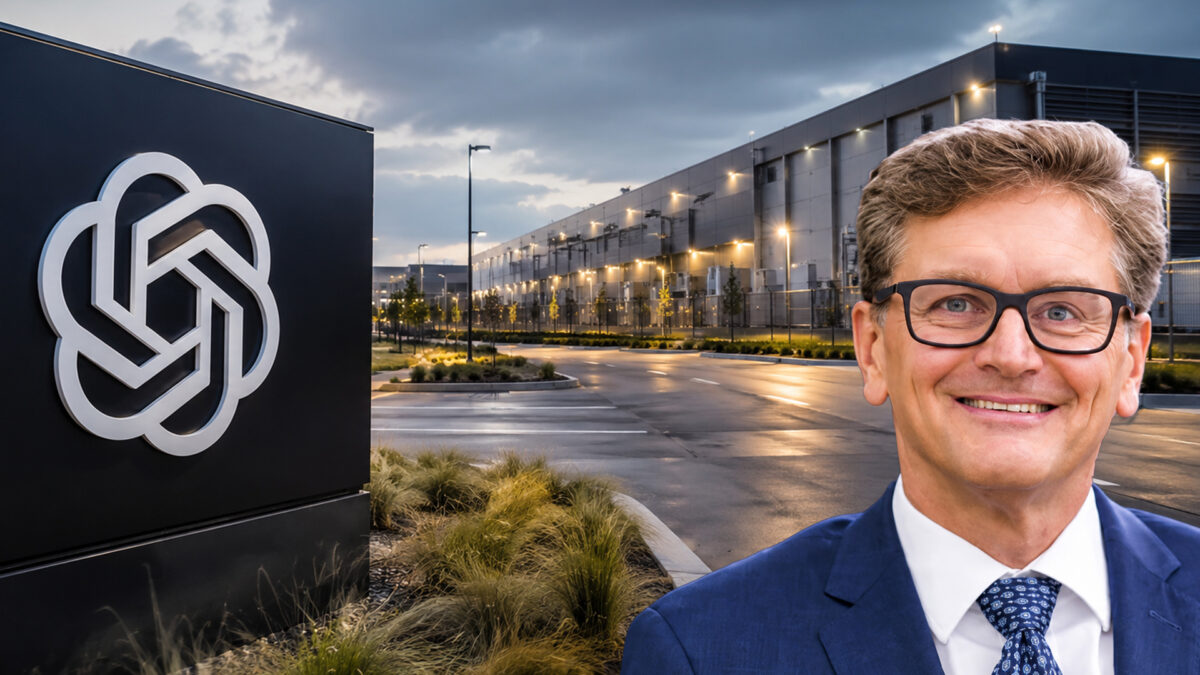
Chris Malone, OpenAI’s head of data centres, has left the company after roughly 17 months, becoming the latest senior executive to depart the ChatGPT maker as it undergoes major changes to its business and infrastructure strategy. OpenAI confirmed Malone’s exit this week but did not give a specific reason for his departure.
Malone joined OpenAI in March 2025 after spending more than a decade at Google and nearly five years at Meta, where he worked on data centre infrastructure. His experience made him a key hire for OpenAI as the company began pursuing one of the technology industry’s most ambitious plans to expand its computing capacity.
His departure comes at a particularly important moment for OpenAI. The company needs enormous amounts of computing power to train and operate increasingly sophisticated artificial intelligence models, while demand for ChatGPT and other AI products continues to grow.
OpenAI has been investing heavily in AI infrastructure, including through the Stargate project. The initiative was designed to build large-scale data centres and computing infrastructure in the United States, with OpenAI working with partners including Oracle and SoftBank. Malone was initially brought in to help oversee this broader infrastructure push.
The company, however, has been changing how it approaches data centre expansion. Instead of relying only on building new facilities, OpenAI is increasingly looking at leasing entire data centres to secure computing capacity. The shift could give the company more flexibility as it tries to expand quickly without taking on all the costs and risks associated with constructing and owning every facility itself.
OpenAI has also reorganised its infrastructure leadership. The company said earlier this year that it changed the structure of its infrastructure organisation to keep up with the scale and speed of its work. It said a strong and experienced data centre team remains in place with clear leadership.
That reassurance is important because data centres have moved from being a largely behind-the-scenes part of the technology industry to becoming central to the AI race. Powerful AI models require thousands of specialised chips running continuously in large facilities. Those facilities consume huge amounts of electricity and, depending on their cooling systems, significant quantities of water.
That demand has sparked growing opposition in parts of the United States. Communities and politicians are questioning whether the economic benefits promised by AI data centres justify their impact on local power supplies, water resources and the environment.
The backlash is becoming a bigger political issue as the US approaches the 2026 midterm elections. Data centre proposals are facing resistance in several states, with concerns ranging from higher electricity demand to water use and the effect of large industrial projects on local communities. Recent polling has also indicated widespread opposition to data centre construction near residential areas.
The timing creates an unusual challenge for OpenAI. The company cannot easily slow its infrastructure expansion because its competitors are pursuing the same goal. At the same time, spending hundreds of billions of dollars on computing capacity creates pressure to make sure those investments generate enough revenue.
OpenAI’s infrastructure ambitions have become especially large. Recent reports indicate that the company now expects its computing-related spending through 2030 to reach roughly $750 billion, higher than earlier estimates. The figure underlines how expensive the race to build next-generation AI systems has become.
One major project is taking shape in Ohio, where OpenAI and its partners are developing what is expected to be one of the world’s largest AI data centres. The project illustrates both sides of the current debate: supporters see major investment and job creation, while local residents and environmental groups have raised questions about energy use, pollution and the wider impact on the surrounding community.
Malone’s exit also adds to a noticeable wave of leadership changes at OpenAI.
Longtime chief operating officer Brad Lightcap announced earlier this month that he would leave the company to pursue a new project. Revenue chief Denise Dresser also announced her departure after less than a year. Fidji Simo, who previously served as OpenAI’s product and business chief, stepped down in July. Other senior executives, including former product chief Kevin Weil, have also left this year.
The departures are attracting attention because OpenAI is preparing for a possible initial public offering in 2027. A company preparing for a major stock market listing typically faces greater scrutiny over its leadership, finances and long-term strategy.
OpenAI President Greg Brockman has argued that executive departures at a fast-growing company are not necessarily unusual. The company has also continued hiring and reshaping its leadership structure as it moves from an AI research organisation into a much larger technology business.
For Malone, the next step remains unclear. He has not publicly explained why he left OpenAI, and the company has not suggested that his departure will slow its infrastructure plans.
The bigger question is whether OpenAI can execute its enormous computing strategy while keeping costs under control and dealing with growing public resistance to AI data centres.
The company is effectively trying to solve two problems at once: build enough infrastructure to stay ahead in the global AI competition and convince communities that the enormous facilities required to power that technology are worth the cost.
Malone’s departure is therefore more than another executive change. It comes at a moment when OpenAI’s physical infrastructure has become just as important to its future as its AI models. How successfully the company manages that expansion could have a major bearing on its ambitions, finances and potential IPO in the years ahead.