
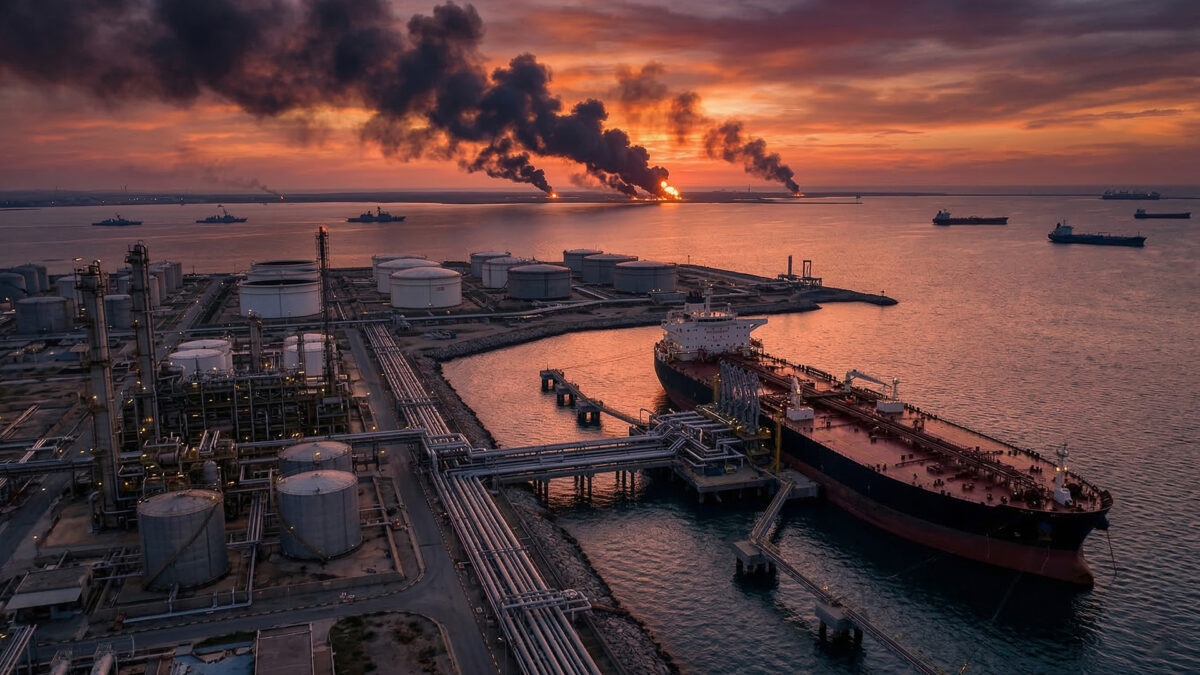
Global oil prices rose by more than 2% on Tuesday as growing tensions in the Middle East increased fears of disruptions to global energy supplies. Markets reacted to the ongoing conflict involving Iran and the risk it poses to oil shipments passing through the Strait of Hormuz, one of the world’s most important energy routes.
Benchmark crude prices moved sharply higher during trading. Brent crude climbed to around $102–$103 per barrel, while U.S. West Texas Intermediate (WTI) crude approached $96 per barrel. The increase reflects rising concerns among traders that the conflict could restrict oil exports from the Gulf region.
The Strait of Hormuz is a crucial shipping corridor connecting major oil-producing countries in the Middle East to global markets. Nearly one-fifth of the world’s oil supply normally moves through this narrow passage. Any disruption in the route can quickly affect global oil availability and push prices upward.
Recent developments in the region have heightened market anxiety. Reports of attacks targeting shipping and energy infrastructure near key Gulf oil hubs have raised fears that the conflict could expand and further disrupt supply chains. The situation has also slowed tanker movement in the area, creating uncertainty for exporters and buyers.
Some Gulf producers have already been affected by the disruption. Reduced shipments and logistical challenges have forced certain producers to scale back production temporarily. This has added to concerns that global oil supplies could tighten if the conflict continues.
Energy analysts say the situation remains highly uncertain and markets are reacting to the risk of further escalation. If tensions persist or shipping through the Strait of Hormuz remains restricted, oil prices could remain volatile in the coming weeks.
There are also discussions among major energy organizations about possible measures to stabilize the market. One option being considered is the release of oil from strategic reserves to offset potential supply shortages.
The Middle East plays a central role in global energy supply, and prolonged instability in the region can have wide economic impacts. Higher oil prices could increase fuel costs and add inflationary pressure in many countries.
Also Read: Rupee settles at 92.42 against US dollar