
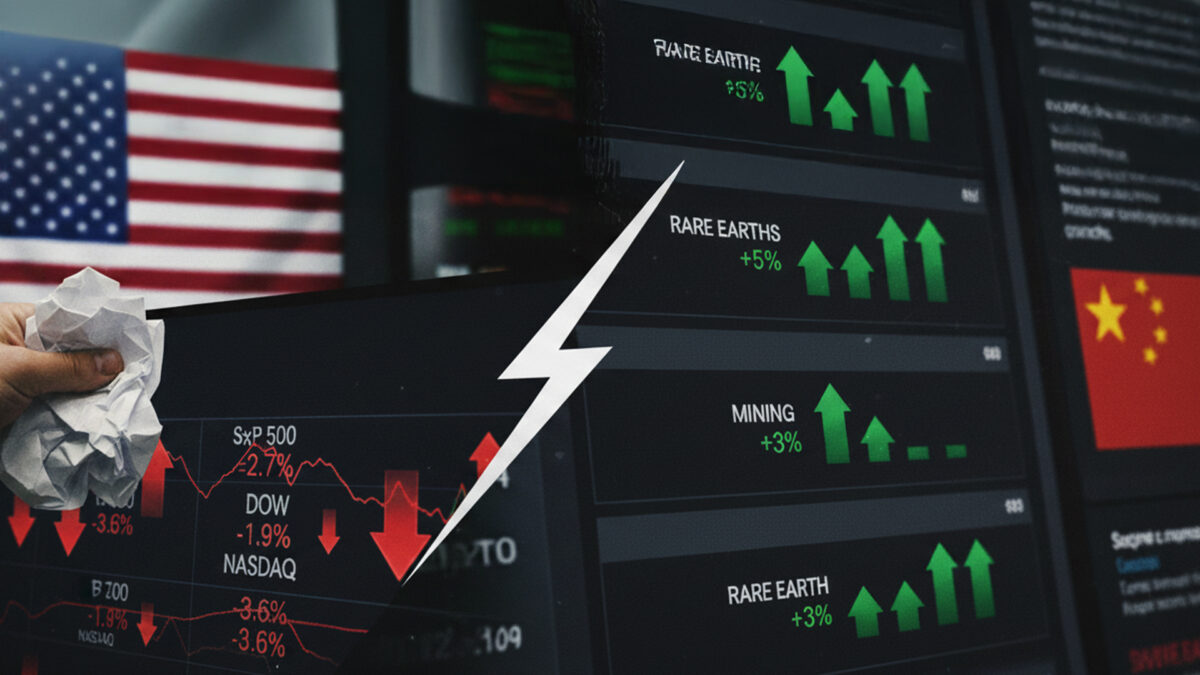
The United States has announced plans to impose 100 percent tariffs on Chinese imports beginning November 1, intensifying tensions between the world’s two largest economies.
President Donald Trump said the move responds to China’s recent restrictions on rare earth exports, materials vital for semiconductor, defense, and green technology industries.
He described Beijing’s actions as “hostile” and accused China of unfair trade practices, adding that there was “no reason” to meet with Chinese President Xi Jinping at this stage.
The new tariffs effectively double the current import duties, placing greater pressure on American importers and global supply chains.
Analysts have warned that the sweeping levies could raise prices for U.S. consumers and complicate business planning for industries dependent on Chinese components.
Trump also signaled forthcoming export controls on “critical software,” expanding the confrontation beyond goods trade into the technology sector.
The announcement marks a sharp escalation after months of relative calm in U.S.-China economic relations. Financial observers note that the administration’s stance could be aimed at securing leverage ahead of any future negotiations.
However, experts caution that such moves risk triggering a full-scale trade war, potentially undermining global growth and investor confidence.
Wall Street Suffers Worst Day Since April
The tariff announcement sent shockwaves through global financial markets. Wall Street experienced its steepest single-day decline in six months, with the S&P 500 falling 2.7 percent, the Dow Jones Industrial Average dropping nearly 1.9 percent—or about 878 points—and the Nasdaq Composite sliding 3.6 percent.
The Philadelphia Semiconductor Index, which tracks chipmakers heavily exposed to China, tumbled more than 6 percent. Shares of major technology firms such as Nvidia, AMD, and Tesla led the downturn.
Investors fled to safer assets as market volatility spiked. The CBOE Volatility Index (VIX), often referred to as Wall Street’s “fear gauge,” surged sharply.
Energy stocks also weakened amid declining oil prices and fresh concerns about global demand. The sell-off was broad-based, with decliners far outnumbering gainers on the New York Stock Exchange.
Meanwhile, rare-earth and U.S. mining companies gained modestly, buoyed by expectations of domestic supply expansion.
For the week, all major indexes closed lower, reversing earlier gains. Analysts attributed the drop to renewed uncertainty over trade and the potential inflationary effects of new tariffs. The timing of the escalation added to market jitters, coming amid a partial government shutdown that has delayed key economic data releases.
Economists warn that higher import duties could worsen inflation pressures, disrupt manufacturing supply chains, and dampen consumer spending in the months ahead.
China has already begun retaliatory steps, including antitrust investigations targeting U.S. tech firms and expanded export restrictions. Observers fear the confrontation may extend into broader areas such as finance, energy, and national security.
The renewed tariff threat underscores the fragility of global markets and the interconnected nature of U.S.-China trade.
With both nations adopting hardline stances, investors and businesses are bracing for a period of heightened volatility and uncertainty across major economies.
Also Read: Natco Pharma Secures Legal Victory to Launch Generic Risdiplam in India