
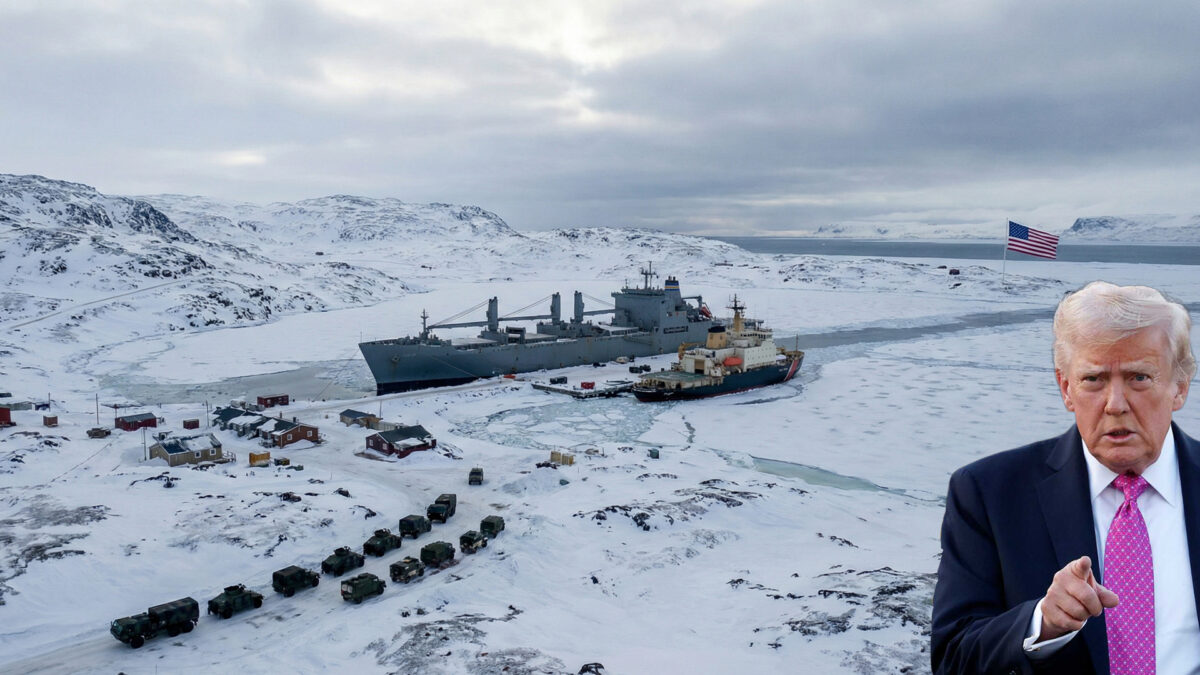
President Donald Trump has revived his ambition to acquire Greenland, calling the Arctic island a US national security priority. The White House confirmed that Trump and his advisers are exploring multiple options, including the possible use of the US military, to gain control of the strategic territory.
“The president and his team are discussing a range of options to pursue this important foreign policy goal, and of course, utilizing the US military is always an option at the commander-in-chief’s disposal,” the statement said.
Greenland, a semi-autonomous territory of Denmark with around 57,000 residents, has repeatedly said it is not for sale. European powers and Canada have rallied in support of the island, warning that any US military action would shock NATO and strain ties with long-standing allies.
Despite this opposition, Trump’s interest in Greenland has been reignited following the recent US operation in Venezuela that led to the capture of President Nicolás Maduro. Administration officials describe Greenland as strategically important due to its location and untapped mineral resources crucial for high-tech and military applications.
Several avenues are reportedly under consideration, including a direct purchase of Greenland or establishing a Compact of Free Association, which would give the US influence without full sovereignty. Diplomacy remains the preferred route if a deal can be negotiated, sources said. Secretary of State Marco Rubio assured lawmakers that recent comments did not indicate an imminent invasion.
Some members of Congress, including Republicans, have voiced concerns over the administration’s rhetoric, emphasizing the need to respect Denmark’s sovereignty and treaty obligations. “When Denmark and Greenland make it clear that Greenland is not for sale, the US must honor its treaty obligations,” said Democratic Senator Jeanne Shaheen and Republican Senator Thom Tillis.
Officials stressed that Trump’s drive to acquire Greenland will continue throughout his remaining three years in office. They argue that securing the island would strengthen US influence in the Arctic, counter growing Russian and Chinese activity, and tap valuable resources that remain largely undeveloped.
Trump’s push highlights ongoing tensions between unilateral US ambitions and the cooperative approach expected by NATO allies in managing Arctic security.