Categories
Technology

Windows 11 updates paint and notepad with AI

Microsoft adds creative AI tools to Paint and smarter writing features to Notepad for a more modern Windows 11 experience.

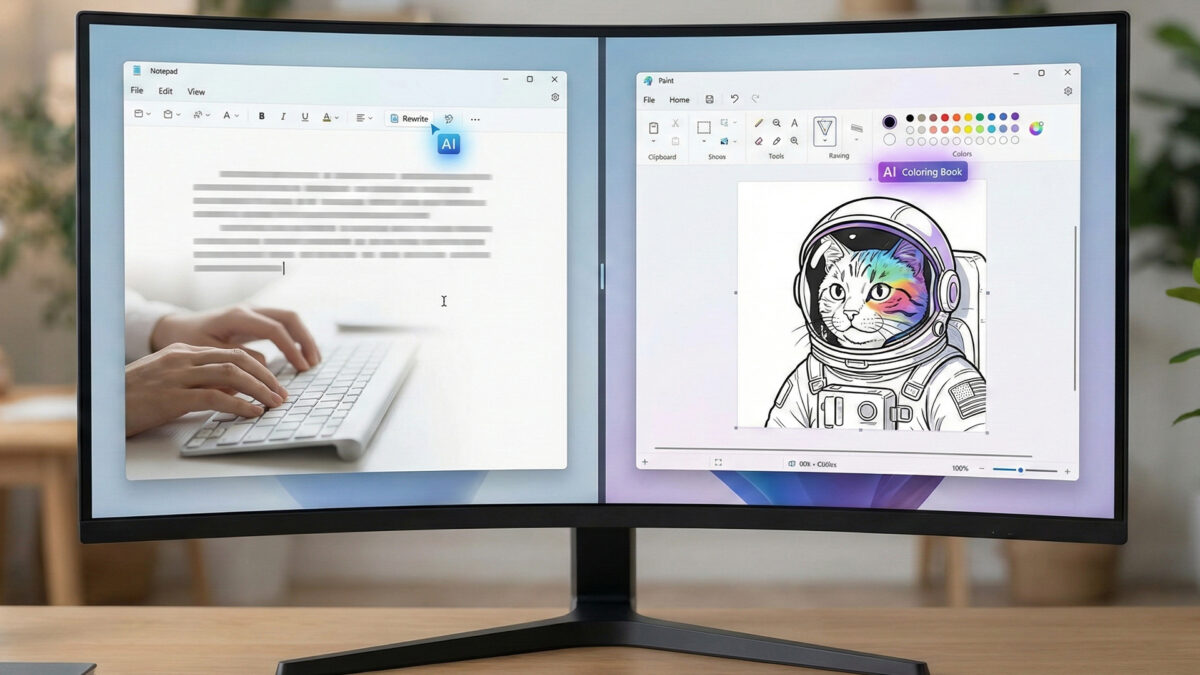
Microsoft is refreshing two of its most familiar Windows apps, Paint and Notepad, with new AI-driven features and usability upgrades in Windows 11. The updates are currently being rolled out to users enrolled in the Windows Insider programme, giving them early access before a wider public release.

In Paint, the standout addition is an AI-powered colouring book feature. Users can simply type a description, such as an animal, object or scene, and Paint will generate a clean outline that can be coloured digitally or printed. The tool is aimed at making creativity more accessible, especially for children, casual users and educators. It is available through the Copilot menu and works on Copilot+ PCs with a Microsoft account.

Paint has also become more precise with the introduction of a fill tolerance control. This allows users to decide how much area the Fill tool should cover, making it easier to colour detailed images accurately or experiment with artistic effects.

Notepad, traditionally known for plain text editing, is also seeing meaningful improvements. Microsoft has expanded Markdown support, adding features like strikethrough text and nested lists. These options can be used through shortcuts, a toolbar or Markdown syntax, helping users format content quickly without switching to heavier applications.

In addition, Notepad’s AI writing tools, including Write, Rewrite and Summarise, now respond faster by showing text as it is being generated. Microsoft says these updates reflect its effort to modernise core Windows apps while keeping them simple and lightweight. The features are expected to reach all Windows 11 users in the coming weeks through app updates.

Also Read: Adani Group fully acquires IANS

Categories
Technology

Microsoft speeds up Windows encryption

Microsoft has rolled out a major upgrade to BitLocker, its built-in drive encryption tool for Windows, promising faster performance and better efficiency for users. The new feature, called hardware-accelerated BitLocker, is being introduced with the latest Windows 11 updates and is designed to make encryption less demanding on the system.

Traditionally, BitLocker relied mainly on the computer’s central processing unit (CPU) to encrypt and decrypt data stored on a device. While secure, this software-based approach could slow down performance, especially on laptops or systems handling large amounts of data. With the new update, Microsoft is shifting much of this work to specialised cryptographic hardware built directly into modern processors.

By using dedicated hardware for encryption, Windows can now secure data more quickly and with far less strain on the CPU. According to Microsoft, this change can deliver significantly faster read and write speeds on encrypted drives, bringing performance closer to that of unencrypted storage. It also reduces overall power consumption, which can help improve battery life on portable devices.

The hardware-accelerated BitLocker feature will automatically turn on for devices that meet the required hardware standards. These include newer processors and system-on-chips (SoCs) that support built-in encryption engines. Systems without compatible hardware will continue using the existing software-based BitLocker, ensuring no loss of functionality or security.

Security remains a key focus of the update. By handling encryption keys at the hardware level, the new approach adds an extra layer of protection. This reduces the risk of certain attacks that target encryption keys stored in system memory, complementing existing safeguards such as the Trusted Platform Module (TPM).

The rollout has begun with Windows 11 Insider Preview builds, including upcoming versions like 24H2 and 25H2. Microsoft is expected to make the feature more widely available as part of future stable releases, with support gradually expanding across more devices and hardware platforms.

Also Read: Russia eyes moon nuclear power by 2036