Categories
Corporate

SEBI plans 30‑day delay for stock data use in education

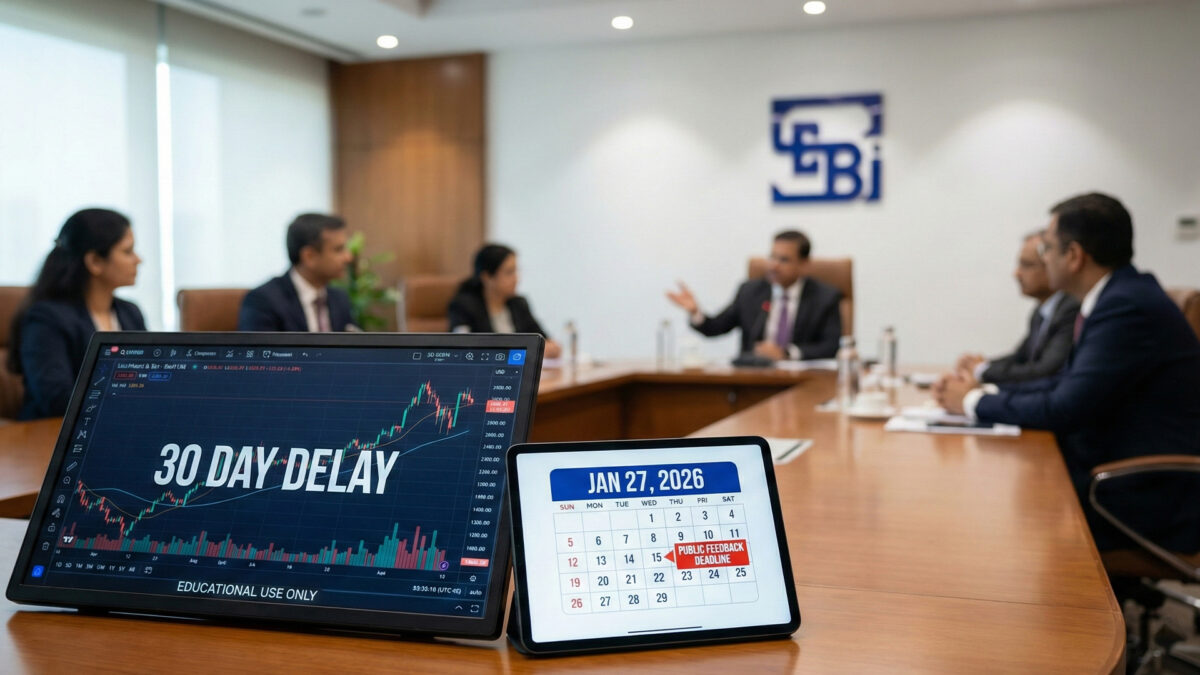
The Securities and Exchange Board of India (SEBI) has proposed a 30‑day delay for sharing and using stock market price data in educational content. The aim is to prevent misuse of live market prices while still allowing investors to learn from recent market trends.

Currently, exchanges and market intermediaries can share data with a one‑day delay, but educational content often uses data that is three months old. SEBI said this difference creates confusion and could let some use near real-time data improperly, which should normally require registration as investment research or advisory.

The new proposal would standardize the delay to 30 days for both sharing and using data. SEBI said this is enough to protect sensitive market information while keeping educational material meaningful. Existing rules on prohibited activities will still apply, and entities focused only on education must continue to follow them.

The regulator has opened the proposal for public comments until January 27, 2026, before finalizing the rules. SEBI’s move comes after concerns that some online platforms and educators were misusing live market data under the guise of teaching investors.

By setting a uniform 30‑day delay, SEBI aims to tighten safeguards around stock price data, reduce confusion, and support credible and safe investor education across India.

This proposal is part of SEBI’s broader efforts to balance market transparency with investor protection, making sure educational content is helpful without allowing it to be used as a shortcut to trade on inside or real-time information.

Also Read: Rekha Jhunjhunwala’s Titan stake hits ₹20,000 crore

Categories
Corporate

SEBI clears 8 IPOs, Indira IVF among them

The Securities and Exchange Board of India (SEBI) has approved initial public offering (IPO) plans of eight companies, signalling steady activity in the primary market. The companies that received the regulator’s clearance include Indira IVF, Rays of Belief, RKCPL Ltd, Chartered Speed, Glass Wall Systems (India), Shriram Food Industry, Tempsens Instruments (India), and Jerai Fitness.

SEBI’s approval, referred to as regulatory “observations”, allows these companies to move ahead with their IPO process. They can now update their offer documents, finalise issue details, and plan market launches, depending on investor demand and market conditions.

Among the approved firms, Indira IVF stands out as a well-known fertility care provider with clinics across several Indian cities. The company had earlier withdrawn its IPO papers and later refiled them using the confidential route, which keeps draft documents private until SEBI grants its observations. Rays of Belief, which works in child development and therapy services, also used the confidential filing route and has now received approval.

The remaining companies filed their IPO applications through the regular process. RKCPL Ltd operates in the infrastructure and civil construction space, while Chartered Speed provides passenger transport and mobility services. Glass Wall Systems (India) is engaged in façade and building solutions, supplying products for commercial and residential projects.

Shriram Food Industry is involved in food processing and exports, and Tempsens Instruments (India) manufactures thermal engineering products and specialised cables used in industrial applications. Jerai Fitness, another company on the list, is known for making gym and fitness equipment for both commercial and home use.

The approvals were issued between late December and early January. Once SEBI observations are received, companies usually have a limited period to launch their IPOs, subject to market conditions.

Market participants see these approvals as a positive sign for India’s IPO pipeline. The presence of companies from diverse sectors such as healthcare, infrastructure, manufacturing, fitness, and food processing reflects broad interest in raising funds from public investors. Investors are now expected to closely watch the final offer details and timelines of these upcoming IPOs.

Also Read: Adani Enterprises opens Rs 1,000 cr NCD issue

Categories
Beyond

SEBI to strengthen non‑farm commodity derivatives

The Securities and Exchange Board of India (SEBI) is taking steps to strengthen the country’s non‑agricultural commodity derivatives market. Chairman Tuhin Kanta Pandey said SEBI will soon set up a working group to review how these markets function and suggest improvements. The move is aimed at increasing market depth, participation, and efficiency, while keeping investor protection intact.

The panel will examine key aspects such as margin rules, position limits, settlement processes, and delivery mechanisms. Its goal is to identify ways to make trading smoother and more transparent, helping both businesses and investors manage risk better. Recommendations from the working group will guide SEBI’s future policy changes.

India already has expert committees studying agricultural commodity derivatives, which have been successful in suggesting measures to deepen participation and improve risk management. SEBI plans to apply similar insights to non-farm commodities, where trading has been growing but liquidity remains a challenge.

SEBI is also in talks with the Reserve Bank of India (RBI) and the Insurance Regulatory and Development Authority (IRDAI) to allow banks and insurance companies to trade in these markets. Greater institutional participation is expected to improve liquidity, enhance price discovery, and make hedging more efficient.

Another key focus is addressing GST-related hurdles that currently complicate delivery and settlement of commodities on exchanges. SEBI is working with the central government to resolve these issues, aiming to better connect derivative markets with physical trading.

The regulator’s move comes at a time of rapid growth in India’s commodity derivatives space. SEBI now oversees over 100 notified commodities, with active trading in many contracts. As the market expands, the working group’s recommendations are expected to make trading easier, safer, and more attractive for investors and businesses alike.

Also Read: Elon Musk net worth nears $750 billion

Categories
Corporate

SAT grants interim relief to Avadhut Sathe Trading Academy

The Securities Appellate Tribunal (SAT) has granted interim relief to Avadhut Sathe Trading Academy Private Limited and its promoters, Avadhut Sathe and Gauri Avadhut Sathe, in a case challenging an interim order passed by the Securities and Exchange Board of India (SEBI). The tribunal has allowed the academy to withdraw limited funds for essential expenses and fixed the next hearing for January 9, 2026.

SEBI, in its interim order issued earlier this month, had impounded ₹546 crore and barred the academy and its promoters from accessing the securities market. The market regulator alleged that the academy was effectively providing unregistered investment advisory and research analyst services while presenting itself as a stock market education and training platform. SEBI also directed banks to freeze the accounts of the academy and its promoters.

Challenging the order before SAT, the academy argued that the action was passed without giving it a prior hearing and had severely disrupted its operations. During the hearing, the tribunal considered the academy’s request to release funds to meet routine operational costs, including salaries, rent, and other basic expenses.

SAT allowed the withdrawal of up to ₹2.25 crore from the frozen accounts for one month to meet essential expenses. The tribunal, however, did not accept the academy’s higher request for funds, noting objections raised over expenses such as advertising and large seminar-related costs, which were not considered critical at this stage.

The tribunal has asked SEBI to file its detailed response to the appeal within six weeks. Until the next hearing, the interim directions of SEBI will continue to remain in force, except for the limited relief granted for operational expenses.

SEBI has maintained that its order was based on evidence gathered during investigations, including searches conducted earlier this year. The regulator has claimed that the academy made misleading claims about trading success and engaged in activities that fall under regulated investment advisory services without proper registration.

The case has drawn attention to the regulatory scrutiny of stock market training platforms and the fine line between education and investment advice. The outcome of the January hearing is expected to be closely watched, as it could have wider implications for similar entities operating in the financial education space.

Also Read: TikTok US joint venture limits ByteDance stake

Categories
Beyond

SEBI makes mutual funds cheaper for investors

The Securities and Exchange Board of India (SEBI) has announced new rules to make mutual funds cheaper and more transparent for investors. These rules will start from 1 April 2026.

One major change is that SEBI has cut the maximum fees mutual funds can pay for buying and selling shares. For regular stock trades, fees will drop from 0.12% to 0.06%, and for derivatives trades, from 0.05% to 0.02%. This will reduce the trading costs that affect investors’ returns.

SEBI is also changing how mutual fund costs are shown. Funds will now display a Base Expense Ratio, which includes main costs like fund management and running the fund. Other charges like taxes and stamp duties will be listed separately. This makes it easier for investors to see what they are paying for.

Another important change is that SEBI has removed the extra 0.05% fee that some funds charged when investors sold their units early. This will further lower hidden costs.

SEBI says these changes are meant to protect investors and make fees clearer, not just reduce them. Experts say the effect on costs will differ between funds, but overall, many investors are likely to benefit.

Also Read: B. Sairam appointed chairman of Coal India Limited

Categories
1 Minute-Read

SEBI gives a go-ahead to 7 companies for IPO Launch

Capital markets regulator SEBI has cleared the draft IPO papers of seven companies, moving them closer to listing on the stock exchanges.

The firms include Turtlemint Fintech Solutions, Yashoda Healthcare Services, Fusion CX, SFC Environmental Technologies, RSB Retail India, Orient Cables India and Lohia Corp. SEBI issued its observations on their draft prospectuses between December 8 and 12.

Receipt of these observations allows companies to file final offer documents and launch their public issues within the prescribed timeline. Details such as issue size, pricing and exact IPO launch dates will be announced separately by the companies.

Categories
Corporate

SEBI starts ₹18 cr recovery against finfluencer ‘Baap of Charts’

The Securities and Exchange Board of India (SEBI) has initiated recovery proceedings worth nearly ₹18 crore against stock market influencer Mohammad Nasiruddin Ansari, widely known as ‘Baap of Charts’, along with Rahul Rao Padamati and Golden Syndicate Ventures Pvt. Ltd. The move comes after the entities failed to comply with earlier regulatory orders and did not pay penalties imposed on them.

SEBI had earlier found that Ansari and his associates were offering investment advice and stock trading recommendations without mandatory registration. Through social media platforms, paid courses, and online groups, they allegedly promised high returns to investors, which is a violation of securities market regulations meant to protect retail participants.

According to the regulator, the recovery amount includes penalties, interest, and additional charges arising from earlier enforcement orders. As part of the recovery process, SEBI has directed banks and depositories to freeze accounts and assets linked to the defaulters. The regulator has also restricted them from selling or transferring any movable or immovable property until the full amount is recovered.

SEBI noted that the funds currently available in the bank accounts of the individuals and the company may not be sufficient to cover the total dues. Therefore, it has invoked recovery mechanisms similar to those used for tax arrears, including attachment of assets and possible sale if payments are not made.

This action is part of SEBI’s intensifying crackdown on unregulated finfluencers, who have gained popularity on social media by offering market tips without accountability or oversight. The regulator has repeatedly warned investors to be cautious of online personalities who are not registered investment advisers or research analysts.

Over the past year, SEBI has taken several steps to curb misleading financial content, including issuing advisories, imposing penalties, and tightening disclosure norms for social media influencers promoting financial products.

Market experts say such enforcement actions send a strong signal that regulatory compliance is non-negotiable, regardless of an individual’s online following or popularity. SEBI has reiterated that only registered entities are permitted to provide investment advice and that violations will attract strict action to safeguard investor interests.

The recovery proceedings underline SEBI’s message that financial influencers operating outside the regulatory framework will face serious consequences, especially when investor money and trust are at stake.

Also Read: Meesho shares soar 13%, market cap crosses ₹85,000 cr

Categories
Beyond

SEBI to review key mutual fund, broker and IPO rules

The Securities and Exchange Board of India (SEBI) is set to take up a wide range of regulatory proposals at its upcoming board meeting, with a focus on mutual funds, stock brokers, IPO regulations and credit rating agencies. The discussions are expected to influence how key segments of India’s capital markets operate in the coming months.

One of the major areas under review is the mutual fund industry. SEBI is examining changes to existing norms to improve transparency in costs charged to investors. This includes a closer look at commissions and brokerage fees paid by mutual fund houses to distributors, as well as possible refinements to the total expense ratio framework. The regulator’s aim is to ensure that investors have a clearer understanding of charges and that costs remain reasonable across schemes.

The board will also deliberate on proposals related to stock brokers. These are expected to focus on rationalising compliance requirements and reducing regulatory burden, particularly for smaller intermediaries, while maintaining adequate safeguards for investors. Simplified norms could help improve operational efficiency without diluting market integrity.

Another key item on the agenda is a review of IPO lock-in rules. SEBI may consider the use of technology to streamline lock-in monitoring, especially in cases where shares are pledged. Any changes in this area could make the public issue process smoother for companies while ensuring that lock-in conditions are enforced more efficiently.

The role and mandate of credit rating agencies (CRAs) will also come under discussion. SEBI is looking at ways to strengthen the credit rating ecosystem by clarifying responsibilities and improving oversight, with the objective of enhancing the quality and reliability of ratings in the debt market.

In addition, the board may review measures related to dematerialisation of older share certificates, updates to conflict-of-interest norms for SEBI officials, and possible incentives for public debt issuances. Collectively, these proposals reflect SEBI’s ongoing effort to balance ease of doing business with robust investor protection and market transparency.

Also Read: SBI bets big on new YONO app

Categories
Corporate

SEBI approves 5 new IPOs, 2 firms withdraw

The Securities and Exchange Board of India (SEBI) has approved the initial public offerings (IPOs) of five companies, paving the way for them to raise capital from the market. The approved firms include Molbio Diagnostics, LEAP India, Foodlink F&B Holdings (India), Technocraft Ventures, and Eldorado Agritech.

Two other companies, Inox Clean Energy and Sky Alloys & Power, have withdrawn their IPO proposals, citing internal decisions, highlighting that regulatory clearance does not always translate into a public listing.

The approvals allow the cleared companies to launch their share sales within the next year, or up to 18 months for those that filed confidentially. The draft filings for these IPOs were submitted between June and September, with SEBI issuing its observations from late November to early December.

Molbio Diagnostics, a Goa-based diagnostics company backed by investors like Temasek Holdings and Motilal Oswal Private Equity, plans to raise around ₹200 crore through fresh issuance, with existing shareholders selling up to 1.25 crore shares. The company provides point-of-care molecular testing for over 30 diseases via its “Truenat” PCR platform.

LEAP India, promoted by global investment firm KKR, intends to raise roughly ₹2,400 crore—₹400 crore through fresh shares and the rest via an offer-for-sale by promoters. The company operates in supply-chain asset pooling, catering to various logistics and distribution needs.

Foodlink F&B Holdings (India), a Mumbai-based food-services and catering company, is looking to raise ₹160 crore via fresh shares, with additional shares available for sale by existing promoters. The funds will support expansion plans and reduce debt.

Technocraft Ventures, from Uttar Pradesh, offers wastewater treatment and sewage infrastructure solutions, while Eldorado Agritech of Telangana focuses on agricultural inputs like seeds and crop protection products. Both have received regulatory clearance to proceed with their IPOs.

The approvals signal a steady momentum in India’s IPO market across sectors such as healthcare, food services, agriculture, and infrastructure. For investors, these listings provide fresh opportunities, while for companies, they represent a crucial step toward growth and capital raising.

The withdrawals by Inox Clean Energy and Sky Alloys & Power reflect market or strategic considerations, underscoring that IPO clearance is only one stage in a broader listing process.

Also Read: Meesho shares jump 46% on stock market debut

Categories
Leaders

SEBI bans Avadhut Sathe, seizes ₹546 crore illegally

The Securities and Exchange Board of India (SEBI) has taken stringent action against Avadhut Sathe and his trading academy, impounding ₹546 crore and barring them from participating in the securities market for offering unregistered investment advisory services. The regulator said that the Avadhut Sathe Trading Academy (ASTAPL), which marketed itself as an educational platform, provided subscribers with stock recommendations, stop-loss levels, and portfolio guidance, services that require proper SEBI registration.

The SEBI order covers the period between July 2017 and October 2025. According to the regulator, the academy misused its platform to give actionable market advice under the guise of education. Evidence collected included video recordings, chat logs, and online interactions showing that participants executed trades based on the advice provided. SEBI determined that the gains earned by Sathe and the academy through these activities, which reportedly amount to over ₹600 crore in fees, were unlawful and constituted illegal profits.

As part of its directive, SEBI has barred Sathe and his academy from buying, selling, or dealing in securities. They are also prohibited from offering any advisory or research services, including those disguised as educational content. The use of live market data, showcasing returns, or advertising participant profits to attract subscribers is strictly forbidden.

This marks one of the largest enforcement actions by SEBI against a “finfluencer”,  an individual leveraging social media or digital platforms to give financial advice. The regulator’s move serves as a stern warning to others providing stock-market tips or research guidance without SEBI registration.

SEBI emphasized that the order aims to protect retail investors from misleading promises of quick profits. Investors are advised to be cautious when following trading courses or financial influencers and to verify regulatory credentials before acting on investment advice.

This action reinforces SEBI’s commitment to ensuring transparency and compliance in India’s securities market, particularly in the rapidly growing digital advisory and trading education space.

Also Read: Reliance earns ‘A-‘ rating boost from S&P Global