
Ola Electric Mobility Ltd., once one of India’s most hyped electric vehicle (EV) companies, is now grappling with declining sales and investor hesitation. Its market share in electric scooters fell sharply to 11.5% in October, down from 30% last year, while cash reserves dropped from ₹480 crore in March to just ₹160 crore by September. The company is also facing a challenging fundraising environment, as investors remain cautious about joining its ₹1,500‑crore capital-raising plan.
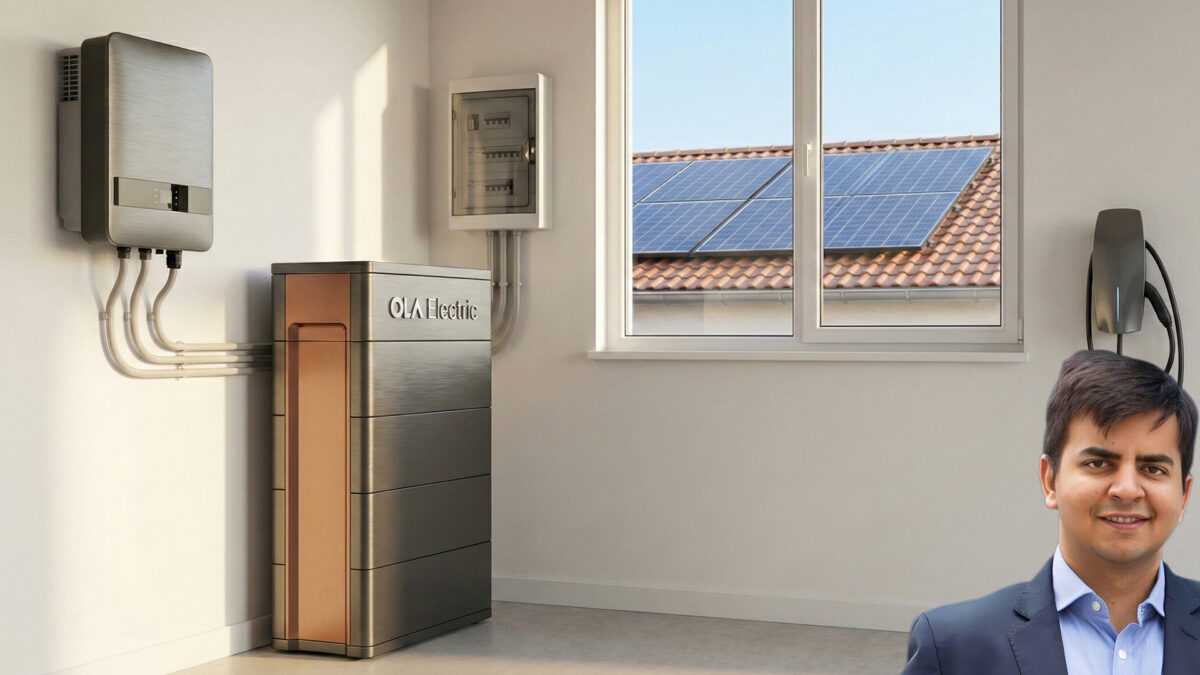
In a bid to revive fortunes, founder Bhavish Aggarwal is betting big on a new business vertical, Ola Shakti. The initiative offers lithium‑ion battery packs for homes and small businesses, using the same proprietary 4680 “Bharat” battery cells developed for Ola scooters. Aggarwal expects the home‑battery venture to generate around ₹100 crore in revenue in the quarter beginning March, potentially reaching ₹1,000 crore by March 2027, almost a third of Ola’s projected annual revenue.
While the move could diversify Ola’s income, experts warn that home battery storage is a highly competitive segment dominated by low-cost lead-acid systems. Making a lithium-ion battery business profitable also requires large-scale production, with analysts suggesting Ola would need to reach roughly 10 GWh to break even.
Despite these challenges, Aggarwal remains optimistic that leveraging technology developed for scooters could provide a strategic edge. However, analysts caution that the home-battery push alone may not be enough; a revival of Ola’s core EV business is critical for long-term success. The company’s ability to balance innovation, production scale, and investor confidence will determine whether Bhavish Aggarwal’s bold bet on Ola Shakti can turn around the struggling EV maker.
Also Read: Premier Energies sees 32% upside, Nuvama turns bullish