Categories
Technology

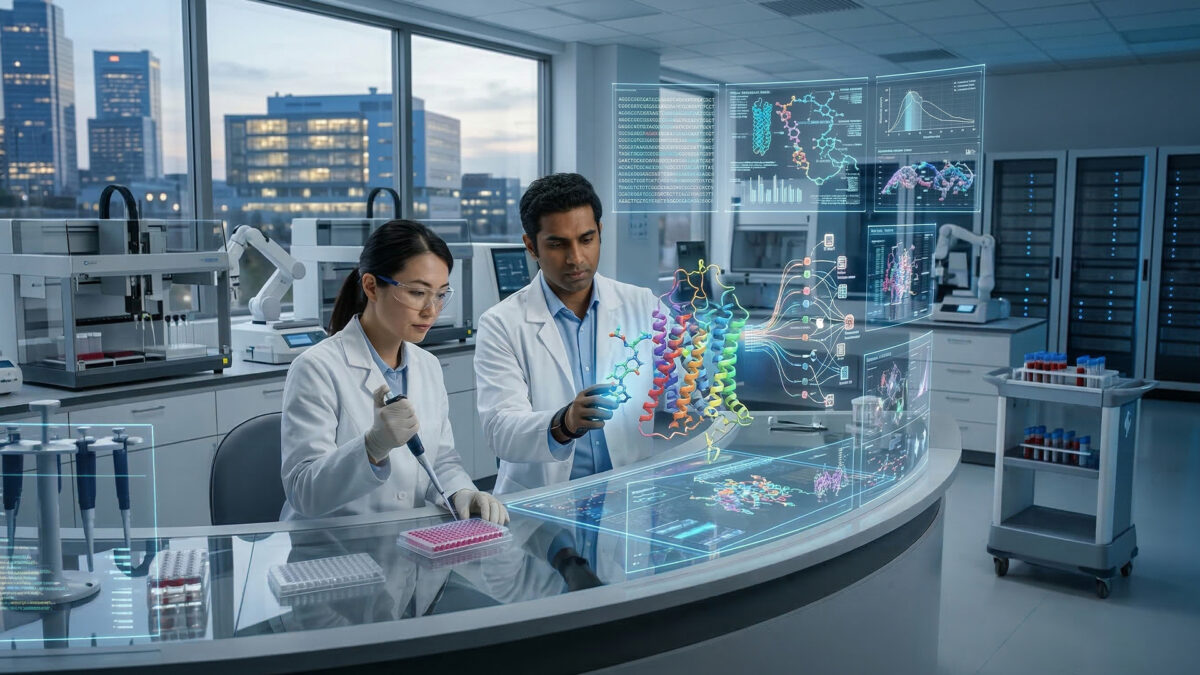
AI enters the lab, transforming drug discovery

Artificial intelligence is beginning to transform the way scientists discover and develop new medicines. Researchers and pharmaceutical companies are now using AI tools to analyse large amounts of biological data and identify potential drug compounds much faster than traditional methods.

Developing a new drug has traditionally been a long and expensive process, often taking more than a decade and costing billions of dollars. Scientists must test thousands of chemical compounds before finding one that works safely in the human body. AI is helping shorten this early research stage by quickly analysing huge chemical databases and predicting which molecules could be effective against specific diseases.

New AI systems can study millions of chemical structures and protein targets in a short time, something that would take years using conventional laboratory screening. By identifying the most promising compounds early, researchers can focus their experiments on the best candidates and avoid unnecessary testing.

In some laboratories, AI is also being combined with robotics to create automated research environments. These “self-driving labs” can run experiments, study the results and plan the next set of tests without constant human intervention. This allows scientists to test more ideas quickly and explore complex chemical combinations that might otherwise be overlooked.

AI will not replace scientists but will act as a powerful tool to support their work. By handling massive datasets and complex calculations, AI allows researchers to focus more on designing experiments and understanding results.

Large pharmaceutical companies and biotechnology firms are investing heavily in AI technology to improve their research pipelines. The technology is being used not only to design new drug molecules but also to help identify disease targets and analyse clinical trial data.

Also Read: Jagsonpal Pharmaceuticals shares rise, board considers buyback
Categories
Leaders

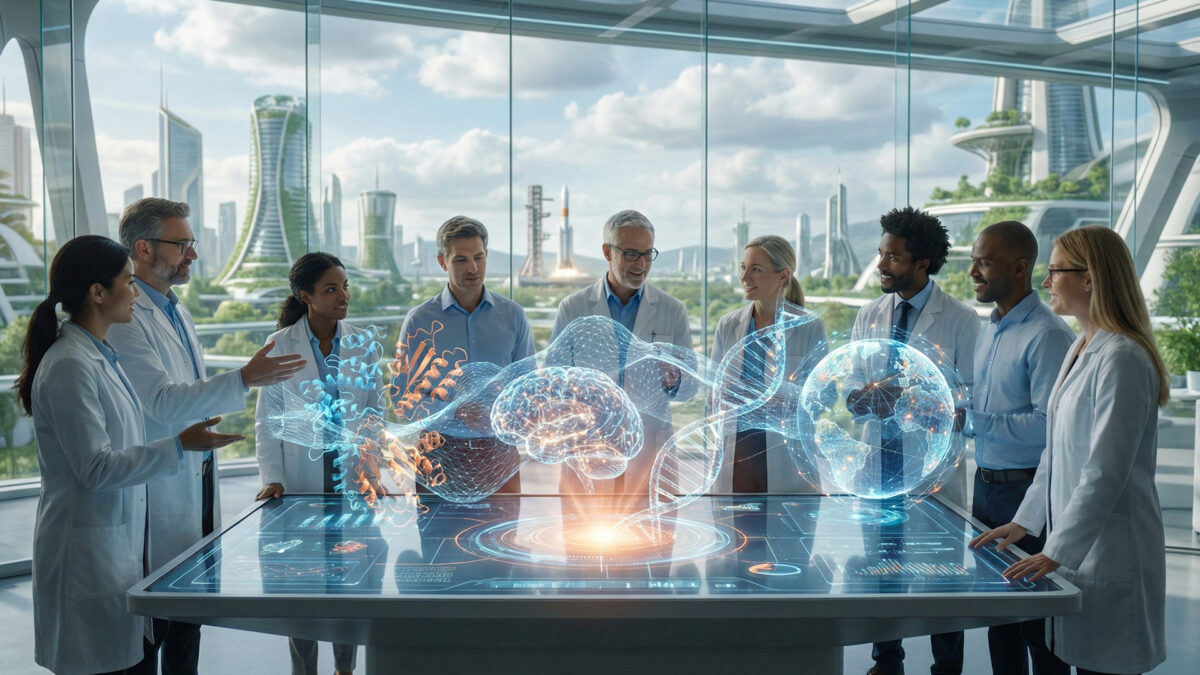
AI will transform science, medicine, states DeepMind CEO

Artificial intelligence is set to dramatically change the way science is conducted and how new medicines are discovered, but its benefits must be shared globally and developed responsibly, said Demis Hassabis, CEO of Google DeepMind.

Speaking at the AI Impact Summit in New Delhi, Hassabis described AI as a powerful tool that can significantly accelerate scientific research. He noted that advanced AI systems are no longer limited to analysing data but are increasingly capable of generating new ideas and helping scientists solve complex problems in areas such as biology, chemistry and physics.

He highlighted the growing role of AI in healthcare, particularly in understanding diseases and speeding up drug discovery. Processes that traditionally took many years can now be completed much faster with the help of AI models, raising the possibility of developing treatments more efficiently and at lower cost. This, he said, could improve access to life-saving medicines across the world.

Hassabis also pointed out that AI could help address some of the biggest global challenges, including climate change, energy sustainability and food security, by enabling faster innovation and deeper scientific insights.

At the same time, he cautioned that the rapid progress of AI brings important societal and ethical questions. Ensuring safety, fairness and equal access to the technology will require strong international collaboration. No single country or company, he said, can manage the impact of such a transformative technology alone.

He emphasised the need to make advanced AI tools available to researchers and institutions worldwide so that scientific progress is not limited to a few regions. Wider participation, he added, will lead to more inclusive innovation and better outcomes for humanity.

Also Read: Ashwini Vaishnaw opens WAVES Creators’ Corner at India Summit