
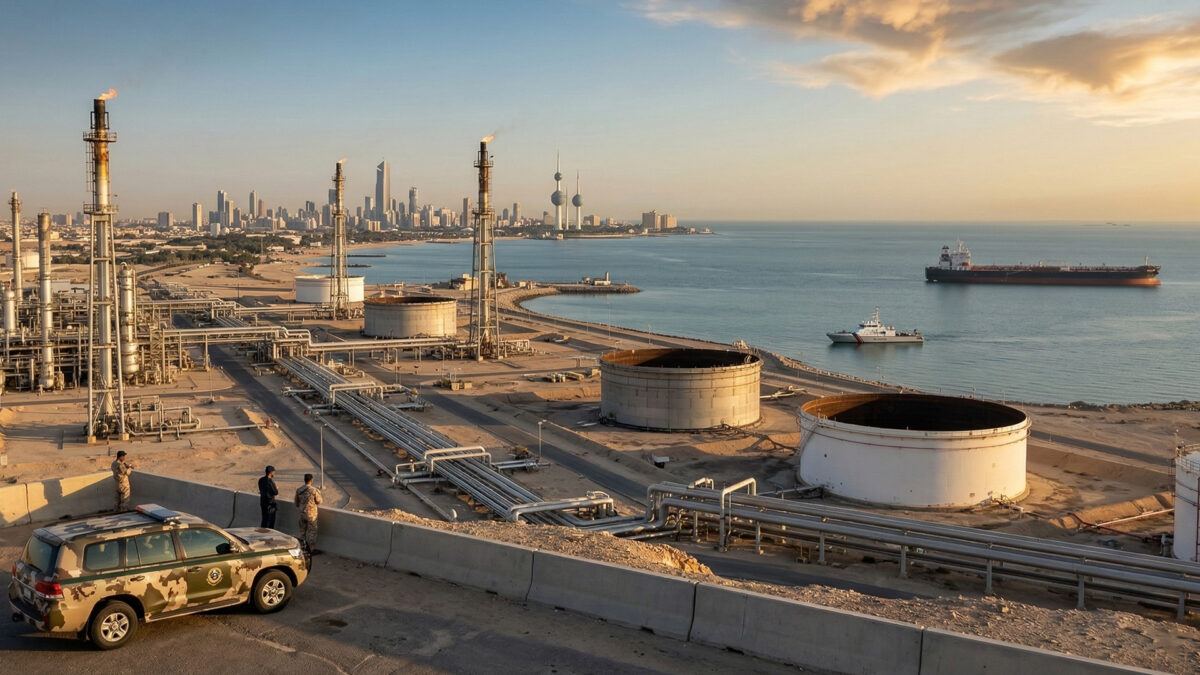
Kuwait has reduced its oil production and refinery operations after shipping activity slowed in the Strait of Hormuz, one of the world’s most important oil transit routes. The decision comes as rising tensions in the Middle East disrupt tanker movement and create uncertainty in global energy markets.
Officials said Kuwait took the step as a precaution because fewer oil tankers are currently able to pass safely through the strategic waterway. The slowdown in shipments has affected the flow of crude oil from the Gulf region to international markets.
The Strait of Hormuz connects the Persian Gulf with the Arabian Sea and is considered a crucial passage for global energy trade. Around one-fifth of the world’s oil supply normally moves through this narrow route. Any disruption there can quickly impact global oil prices and supply chains.
Recent tensions involving Iran, the United States, and Israel have increased security concerns in the region. As a result, tanker traffic has slowed significantly, prompting several oil-producing countries to reassess their production levels.
Kuwait, a member of the Organization of the Petroleum Exporting Countries, decided to scale back both crude production and refining operations until the situation becomes clearer. The move is aimed at avoiding excess supply while exports remain uncertain.
The disruption has already affected global oil markets. International crude prices have risen sharply, with Brent crude crossing $100 per barrel amid fears that prolonged tensions could further reduce supply from the Gulf region.
The situation could have wider economic consequences, especially for countries that rely heavily on imported oil. For example, India imports a large share of its crude oil from Gulf nations, and much of it passes through the Strait of Hormuz. Any prolonged disruption in this route could increase fuel costs and put pressure on the country’s economy.
The current developments highlight how geopolitical tensions in the Middle East can quickly affect global energy markets. If tanker traffic continues to remain slow, oil prices may stay elevated, potentially increasing inflation and energy costs worldwide.