
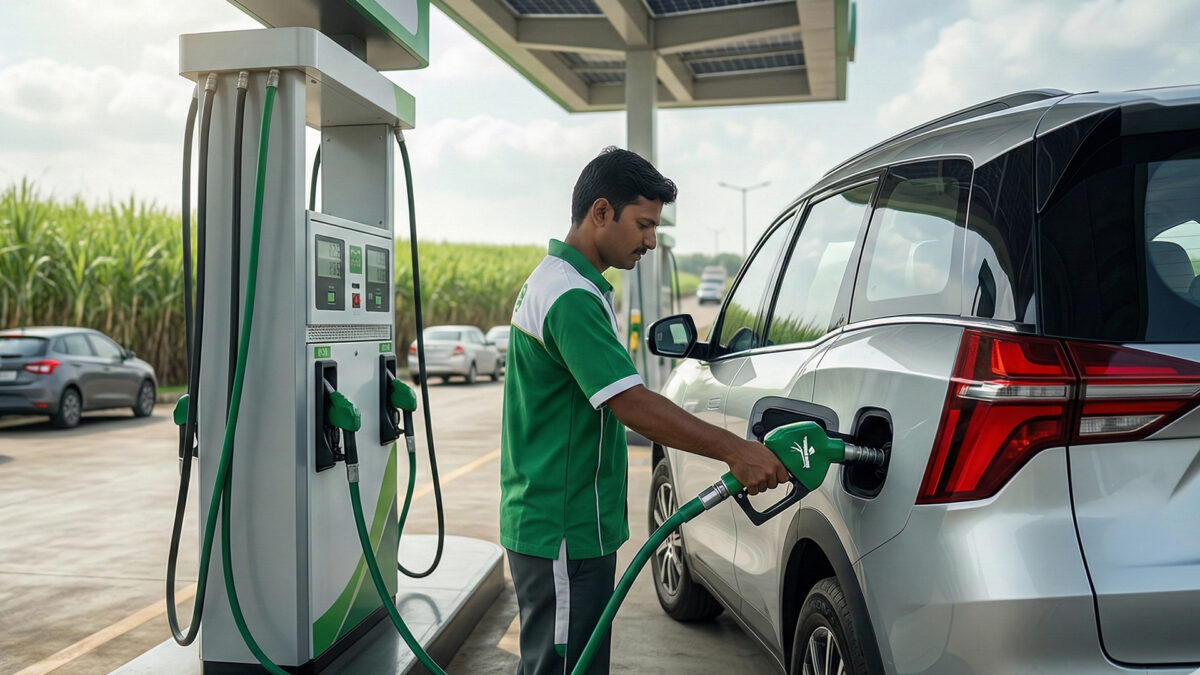
Starting April 1, 2026, every petrol pump across India will sell E20 petrol, fuel blended with 20% ethanol. The decision, announced by the Ministry of Petroleum and Natural Gas, marks a major change in the fuel Indians use every day.
For millions of motorists, the shift may go largely unnoticed at the pump. But behind the scenes, it reflects India’s push to cut pollution, reduce crude oil imports and support farmers who produce crops used to make ethanol, such as sugarcane and maize.
Ethanol is a biofuel made from plant-based materials. Blending it with petrol helps lower harmful emissions from vehicles. Officials say the move will help India reduce its carbon footprint while also saving foreign exchange by importing less crude oil.
Under the new rule, all petrol sold must meet a minimum standard of RON 95, which refers to fuel quality and engine performance. Higher RON fuel reduces engine knocking and supports smoother functioning. Most cars manufactured in recent years are already compatible with E20 fuel.
However, owners of older vehicles may have concerns. Experts say while older cars can generally run on E20, there could be a slight drop in fuel efficiency. Automobile companies have gradually upgraded engines to handle higher ethanol blends, and consumers are being advised to check their vehicle manuals for compatibility.
For farmers, the policy offers a potential boost in income. Increased demand for ethanol means higher demand for crops used in its production. For the government, it is also a step toward energy security and reduced dependence on volatile global oil markets.
While drivers may simply notice a new label at fuel stations, the change represents a broader shift in how India balances environmental responsibility, economic growth and everyday mobility.
Also Read: Narayana Murthy urges youth to master AI