
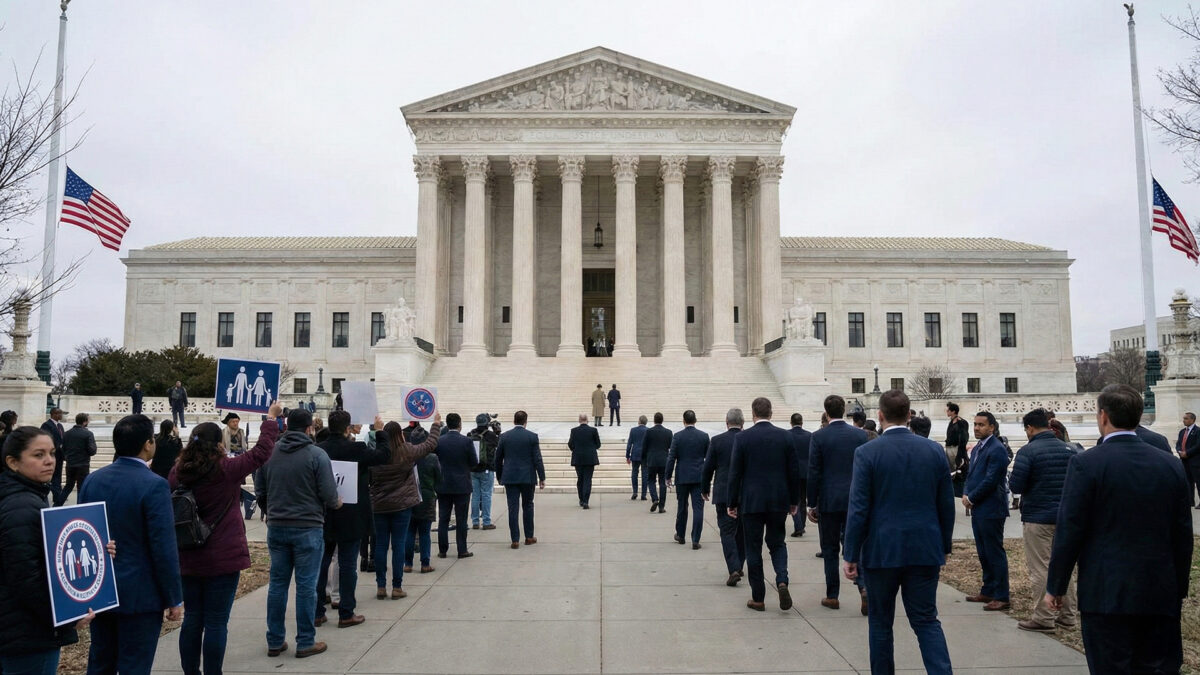
The US Supreme Court has agreed to hear a major case that could determine the future of birthright citizenship in the country. The decision comes after a series of legal battles over an executive order issued by President Donald Trump in January 2025, which seeks to deny automatic US citizenship to children born in the United States if their parents are undocumented or living in the country on temporary visas.
For more than 125 years, the United States has followed the principle that almost anyone born on American soil becomes a US citizen at birth. This practice is rooted in the 14th Amendment, which states that all persons born in the country and “subject to the jurisdiction” of the United States are citizens. Trump’s order challenges this interpretation, arguing that children of non-citizen parents do not fall under this jurisdiction.
Multiple lawsuits were filed soon after the order was announced, leading to nationwide injunctions from lower courts. Judges consistently ruled that the executive order likely contradicts the Constitution and longstanding legal precedent. One of the key cases, which began as a class-action suit on behalf of families who would be directly affected, eventually made its way to the Supreme Court after the administration appealed these lower-court decisions.
By accepting the case, the Supreme Court will now decide whether the executive branch has the authority to limit birthright citizenship without a constitutional amendment or congressional action. The hearing is expected to take place in the spring of 2026, with a final ruling anticipated by early summer.
The stakes are extremely high. If the Supreme Court upholds the order, hundreds of thousands of children born each year could lose the automatic right to citizenship, marking a dramatic shift in US immigration and nationality law. It would also redefine how the 14th Amendment is applied in modern America. On the other hand, if the Court strikes down the order, the traditional interpretation of birthright citizenship will remain firmly intact.
Until the ruling is delivered, the executive order remains blocked and unenforceable across the United States. The upcoming decision is expected to become one of the most consequential immigration rulings in decades, with long-term implications for families, legal status, and national identity.
Also Read: Zepto becomes public company, plans IPO by June 2026